Yesteryear Is Not A Novel
Source: Yesteryear Is Not A Novel Publisher: Holly’s Substack | Author: Holly MathNerd Published: May 1, 2026 | Archived: May 5, 2026
This book review is much shorter than my usual ones, and does not have much in the way of spoilers, at least not beyond what is out there via this book’s current, incredible mountain of publicity. If you intend to read it, this review will not spoil it for you.
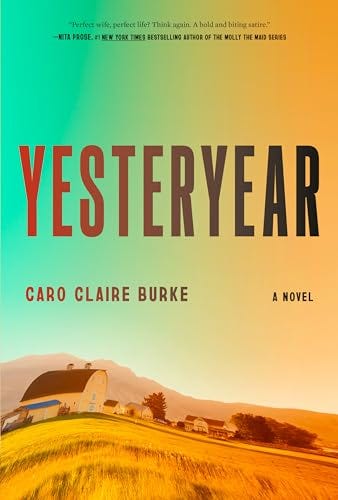
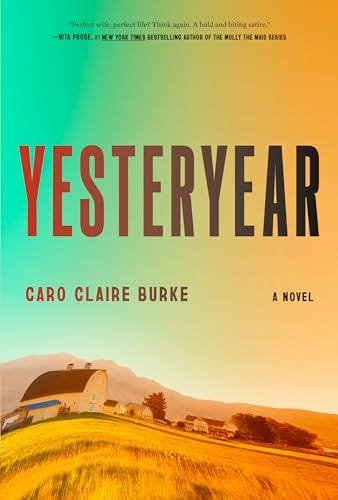
The premise of Yesteryear is that a tradwife influencer wakes up in 1855 and has to actually live the life she promotes, and pretends to live, on social media.
Reader, I wanted to love this book.
I grew up in the evangelical world, where the highest possible achievement ever presented to me for my intelligence was homeschooling my future children. (Yes, the same intelligence. No, no one saw the contradiction.) I was encouraged to pretend not to know things that R — the boy the adults around me had decided God was “calling me” to one day marry and submit to — didn’t know. I was supposed to stop competing with him for good grades. I was, to my eternal shame, briefly willing to try.
In my defense, I was twelve and the alternative was being told I had a feminist attitude, which in that world is a more serious charge than tax evasion and frequently led to cutting a switch so I could be put back into my place via ritual humiliation.
So I have, shall we say, opinions about tradwife influencers. I think they’re universally full of shit, and I think this mostly on grounds of pure logical inference: if your deepest joy in life is “serving” your husband and kids, you are too busy doing those things to spend all day, every day, online telling the world how happy you are and how much you love it, how much you really really really really really love it, you do goddamn it you do.
You know how you can tell I love drawing and reading? Because there is a lot of evidence of me doing those things, and zero footage of me staring soulfully into a ring light explaining how fulfilled I feel while doing them.
So: one of these superficial, obvious liars gets dropped into the actual life she’s been cosplaying for the algorithm? Reader, I am a big enough and mean enough bitch that this premise had me cackling before I even cracked the cover.
I cleared my evening.
I made hot chocolate — the gourmet stuff, with sprinkles.
I used my milk frother.
I was ready.
And I can’t love it, because it’s so badly done that the only word that fits is lazy.
It’s such a fantastic idea, and so lazily and stupidly executed, that it actually made me angry — the specific flavor of angry where you keep reading just to confirm it isn’t going to get better, and then it doesn’t, and somehow that feels like a personal betrayal even though the author owes you nothing.
It’s a waste.
It’s like watching someone born with a trust fund and two parents who love them complain — bitterly — about how hard it is to find meaning in life.
Really?!?
You got a gift of this magnitude from the universe, and this is what you did with it?
The Protagonist Is Not A Person
I want to be clear about what I mean when I say Natalie doesn’t work as a character, because “unreliable narrator” is having a moment and I don’t want anyone to think I’m complaining about that. Unreliable narrators are great. Self-deceiving narrators are great. Narrators who lie to themselves and don’t realize it are some of the best narrators in fiction.
Consider Johnny Wheelwright in A Prayer for Owen Meany.
Johnny spends the entire novel — the entire novel — narrating his life alongside Owen, and the reader gradually figures out, long before Johnny ever does, that Johnny is gay and is in love with Owen. Johnny never figures it out.
That’s the point. The reader doesn’t figure it out from a single jarring inconsistency; the reader figures it out from the slow accumulation of how Johnny talks about Owen, what he notices, what he doesn’t, what he never asks himself about the shape of his own adult life.
It works because the line between “my dearest and only friend” and “the person I’m in love with” is a genuinely blurry one, and Johnny lives in the blur on purpose, because the alternative is unbearable in the world he was raised in. There is no internal chaos. There is internal quiet, and the reader hears what’s underneath it.
That’s craft. That’s a person on the page.
Natalie is not that. Natalie has contradictory thoughts in the same sixty seconds and seems to notice none of them. She thinks “Jesus Christ” as an internal swear word, and a minute later asks God to forgive her for a different, milder swear, and there is no flicker — none — of the obvious incongruity.
This is not subtle self-deception. This is not the protective blur Johnny lives in. This is a character who has, within the span of one paragraph, taken the Lord’s name in vain (the textbook Third Commandment violation, the one a Sunday school five-year-old can identify) and then turned around and pleaded for forgiveness for fuck, and the narrative voice does not register this as anything. Not as hypocrisy she’s hiding from herself. Not as a crack in her piety. Not as a tell. Nothing.
That isn’t an unreliable narrator. That’s a narrator with zero continuity of consciousness.
There are exactly two ways this kind of moment-to-moment self-contradiction reads as believable on a page: the character is in active psychosis, or the character is on drugs. That’s it. That’s the list.
Outside those two cases, a human being who blasphemes and prays in the same minute notices. They might rationalize it, they might double down, they might feel a flash of guilt and bury it, they might tell themselves it doesn’t count, they might be furious at themselves — but something registers. Something moves. The interior weather changes, even a little.
With Natalie it doesn’t, because there isn’t any interior weather. There’s just whatever sentence the author needs her to think next.
Burke is clearly going for “deeply unlikable.” She gets partway there and then trips, because deeply unlikable is a coherent construct. Eva Khatchadourian narrating We Need to Talk About Kevin is deeply unlikable — cold, withholding, possibly culpable, definitely an unreliable witness to her own marriage and her own motherhood — and she is legible. Rachel Price’s sections in The Poisonwood Bible are a masterclass in self-deception — she lies to herself about Africa, about her family, about her own complicity, for decades — and every lie has a shape you can trace. Tom Ripley is a murderer and a fraud, and you can predict, two hundred pages in, exactly what he would do in a new situation, because Highsmith built him. All three of them have been built.
Natalie hasn’t been built. She’s been assembled, scene by scene, out of whatever reaction the moment seems to call for. Which means that yes, she’s unpleasant to spend time with — but she’s unpleasant the way a malfunctioning chatbot is unpleasant, not the way a real bad person is unpleasant.
It’s the wrong kind of repulsion. You’re not recoiling from her; you’re recoiling from the gears.
Unlikable characters earn the reader’s loathing. Natalie squanders it.
She’s such a non-person that even watching her get slapped across the face landed wrong — like watching a mannequin fall over.
On the Perils of Shitty Research
In an interview with Kirkus, Burke described her research process. She “spoke to a lot of Mormon and evangelical women,” listened to podcasts, and lurked on Reddit threads of women who had left fundamentalist communities. Then — and I want to be precise about her wording — she said: “Once I started writing, I stopped researching.”
Reader, I had to put down my hot chocolate.
Let’s take this in pieces. First, the source material. Burke’s primary corpus for understanding fundamentalist Christian womanhood was deconversion narratives — testimonies from women who left. This is, to be fair, a rich and important body of material. I have read a great deal of it and written some of it. But it has one structural feature that matters enormously for what Burke was trying to do: the narrator has, by definition, left. The frame is retrospective. The interpretive lens is “here is what was wrong with the thing I was inside of.” It is an excellent corpus for understanding the experience of leaving. It is a terrible primary source for ventriloquizing a character who is, per the conceit of the novel, still in it and sincere about it.
It’s a bit like trying to write a convincing married protagonist by reading nothing but divorce memoirs. You’ll learn a great deal about the failure modes of marriage. You will not learn what marriage feels like from the inside on a Tuesday.
Second, and worse: in the same interview, Burke said her takeaway from all that research was that “whether it’s Mormonism or evangelicalism or Jehovah’s Witness, it’s really all the same in terms of how women are treated and what the expectations are for them. There are, of course, minor differences.”
Minor differences.
Mormonism and evangelical Christianity are not minor variations on a theme. They have entirely different scriptures, entirely different cosmologies, entirely different views of the afterlife, entirely different sacraments or non-sacraments, entirely different relationships to authority, entirely different histories, entirely different vocabularies. A Mormon woman and a Southern Baptist woman and a Jehovah’s Witness woman do not pray the same way, do not understand salvation the same way, do not relate to their clergy the same way, do not raise their children the same way in any but the most surface-level “modesty and submission” sense.
Treating these as interchangeable is roughly equivalent to saying that Catholicism and Orthodox Judaism are basically the same because both involve fasting and a lot of guilt.
This is the framework Burke brought to building Natalie. Of course Natalie calls her clergyman both pastor and priest, which made me notice a Daddy Longlegs on the ceiling as I rolled my eyes. Of course her piety has no denominational grammar. Of course she blasphemes and prays in the same sixty seconds with no internal friction.
To Burke, those distinctions are minor. They are aesthetic variation on a single underlying sociological category called “fundamentalist Christian woman,” which is itself defined, per Burke, by “how women are treated.”
That is not a religion. That is a sociology paper about a religion. And you cannot write a believable interior life out of a sociology paper, because nobody has ever lived inside a sociology paper.
Third, the showstopper: “Once I started writing, I stopped researching.”
I understand the impulse. Research can become a procrastination device, and at some point you have to commit to the page. Fine. But the sentence implies a model of writing in which research is a discrete preparatory phase that one completes and then closes the file on, rather than a thing one returns to constantly because one keeps discovering, mid-scene, that one does not know how a specific kind of person would speak in a specific kind of moment. Working novelists who write outside their own experience do not stop researching when they start writing. They research harder, because the writing is what tells them what they don’t know.
Burke wrote the manuscript in six months. The book sold in a thirty-minute preempt. The film rights were auctioned weeks later, with Anne Hathaway attached to star and produce for Amazon MGM. The book did not need to be accurate to succeed; it needed to be legibly satirical about a thing the buyers already disliked. Accuracy would, if anything, have been a liability.
A real fundamentalist Christian woman — sincere, intelligent, contradictory, embedded in a specific tradition with specific words and specific practices — is harder to dismiss than a composite sketch.
The market wanted the composite sketch. And so we got it.
I want to say one more thing here, because it would be unfair not to. Burke’s own background is relevant. She was raised Catholic in what she describes as a secular household, attended a New England prep school, went to UVA, did her MFA at Bennington, and worked as a culture editor at Katie Couric Media before co-hosting a culture podcast. Nothing in that biography is disqualifying — plenty of great novels have been written by outsiders to their subject matter. But it does mean that Burke had no felt sense of the thing she was satirizing, and the research she did was insufficient to build one.
You can write about something you’ve never lived. You cannot write from inside something you have never even sat next to. The view from inside requires either lived experience or the kind of patient, sustained, humble research that Burke explicitly says she did not do.
The premise of Yesteryear required the view from inside. That’s the whole conceit. A tradwife who fetishizes 1855 has to be a real person with a real interior religious life, or the book has nothing for 1855 to break against.
Burke didn’t build that interior.
She didn’t know she needed to.
Imagine the book this could have been. A real tradwife — sincere, terrified of hell, raised on specific scripture in a specific tradition, performing piety she half-believes and half-resents — wakes up in 1855 and meets the actual women her aesthetic was built on. Women whose theology was rigorous, whose suffering was real, whose certainty was earned in a way Instagram cannot manufacture. The collision of those two interiorities is a novel I would have read on my knees.
That book does not exist. Burke wrote a different one.
The book is a brilliant idea, terribly executed, and the biggest disappointment of my reading life in years.
0/10 do not recommend.
Coming Soon
My new project is a comic strip, launching Summer 2026. Check it out!
When my student loans are paid, there will never be another paywall around here. To speed up that day, become a paid subscriber!


Write a comment