The Creative Director Shuffle
- WHAT’S HAPPENING. Creative Directors as Cards in Fashion’s Poker Game.
- WHY YOU SHOULD CARE. Creative Directors as Cards in Fashion’s Poker Game.
- It is worth noting that this reshuffle resembles a game of poker: the cards might be dealt differently, but they’re largely the same. Likewise, the same big-name creative directors cycle between major fashion houses. Occasionally, an unexpected wildcard - such as an emerging talent given the chance to lead a major brand - emerges, but the industry’s risk aversion makes this increasingly rare. More often than not, brands prefer to bet on established names with a proven track record of success and an established audience.
The Creative Director Shuffle
WHAT’S HAPPENING. Creative Directors as Cards in Fashion’s Poker Game.
The fashion industry is moving so fast that I’ve had to update this article twice in the last 12 hours.
The fashion world’s deck of cards has been in constant motion over the past year, with creative directors being reshuffled at an almost relentless pace. There have been so many changes lately, that I’ve had to update this article twice in the last 12 hours. Week after week, headlines announce yet another departure, appointment, or rumour about the former two, as fashion brands continue to gamble on new creative leadership in search of momentum (and sales).
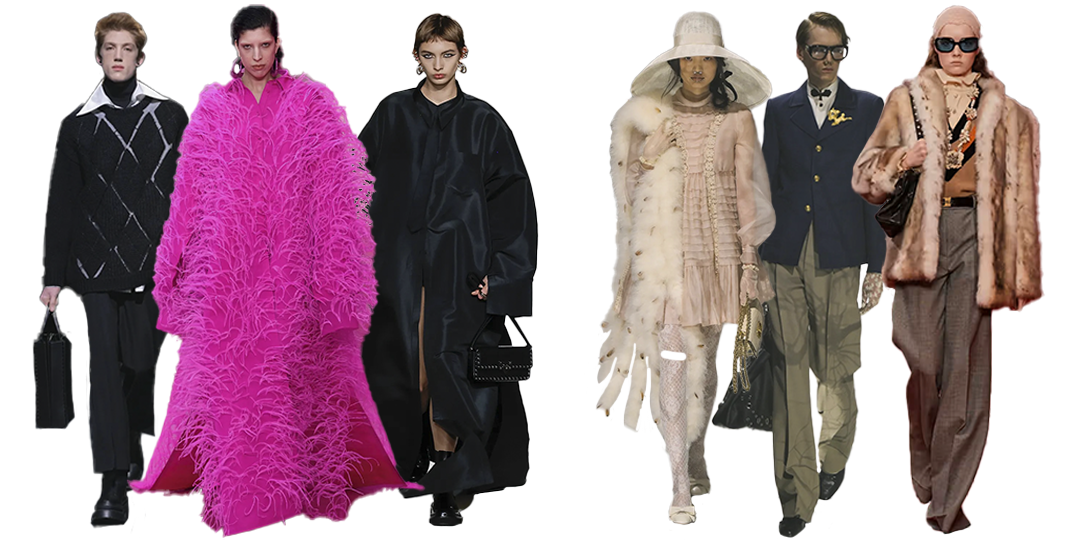
These shifts often bring profound changes to a brand’s aesthetic and storytelling, as newly appointed designers navigate the delicate balance between their vision and the house’s heritage. Alessandro Michele’s debut at Valentino was a prime example, as his distinctive style marked a stark departure from Pierpaolo Piccioli’s Valentino. Reception was mixed, with some praising Michele’s nods to Valentino’s ‘60s and ‘70s archives, while others found his signature maximalism overpowering, making the collection feel more “Michele” than “Valentino”. Last week, Sarah Burton’s first collection for Givenchy offered another striking transition: her clean, feminine, yet contemporary designs marked a strong contrast with Matthew M. Williams’s industrial and streetwear-inspired aesthetics.

These are just a few examples in an industry-wide shakeup. The latest news include Demna Gvasalia’s appointment at Gucci and Donatella Versace stepping down in favour of Dario Vitale (formerly of Miu Miu - lending even more credibility to the rumours of Prada acquiring Versace). In another major shift, Matthieu Blazy exited Bottega Veneta (replaced by Louise Trotter, formerly of Carven) and moved to Chanel, while Glenn Martens stepped into Maison Margiela’s following John Galliano’s departure. Sabato de Sarno also made a swift exit from Gucci after less than two years, and Jil Sander saw the departure of Luke and Lucie Meier, replaced by Simone Bellotti (ex-Bally).
Instead of listing every creative director shuffle, here’s a visual map of how fashion’s deck of cards is being played:
s_!3eoM!,w_1456,c_limit,f_auto,q_auto:good,fl_progressive:steep/https%3A%2F%2Fsubstack-post-media.s3.amazonaws.com%2Fpublic%2Fimages%2F3ea6e8b9-8275-471d-bf3f-fd9e9a89d34c_1080x803.jpeg)
The game isn’t over yet, as rumours about future appointments continue to spread. Loewe’s Jonathan Anderson, who recently chose to hold a presentation instead of the usual runway show, might be on his way to Dior - a role also rumored to be considered for John Galliano. Meanwhile, Pierpaolo Piccioli could be heading to Fendi.
WHY YOU SHOULD CARE. Creative Directors as Cards in Fashion’s Poker Game.
There are many reasons why creative directors leave brands. In the past, designers often led a house for years - think Tomas Maier’s 18-year tenure at Bottega Veneta. But in today’s fast-moving world, such longevity is increasingly rare.
Sometimes, change is both necessary and healthy. It can fuel innovation, attract new audiences, and inject fresh energy into a brand. Today’s fashion industry, however, seems to leave little room for pure creative exploration. Creative directors must now answer to CEOs, merchandising teams, financial analysts, and investors, in a complicated act of balancing artistic vision with business demands. Some appointments aim to refresh a brand’s image, while others capitalise on a designers’ almost cult-like following (as in the case of Alessandro Michele and Pharrell Williams). The results of these shifts vary: while new creative leadership can revitalise a brand, constant reshuffling can also lead to instability. Here’s a closer look at this phenomenon:
SOMETIMES, CHANGE IS NECESSARY.
Innovation is essential for a brand’s survival. Creative directors play a key role in driving innovation by not only designing clothes, but shaping the entire narrative of a brand. Bottega Veneta is a prime example: after Daniel Lee refreshed the brand and brought it into mainstream popularity, the brand’s identity began to risk dilution. Matthieu Blazy’s appointment brought renewed depth, as his emphasis on craftsmanship and storytelling through fabrication repositioned Bottega Veneta as a house of timeless luxury.
CREATIVITY TAKES TIME.
While change can be necessary, when it happens too fast, it can stifle innovation rather than foster it. Everett Rogers’ theory of innovation suggests that new ideas take time to gain mainstream acceptance. Even in today’s TikTok-driven world, where new products can go viral overnight, true innovation doesn’t always translate into immediate sales. Furthermore, the creative process itself is often iterative and it requires an incubation stage for ideas to mature. Building a creative project, especially for a brand with a complex heritage, takes time. For example, while Seán McGirr’s debut at McQueen was described as ‘confusing’, his Fall/Winter 2025 collection last week showed a much clearer direction and received a warmer reception.
SHORT-TERM RESULTS VS. LONG-TERM VISION.
The fashion industry, by its very nature and name, is torn between art and commerce, between creativity and the financial performance. In a stagnating sector, when a creative director fails to deliver immediate sales growth, patience among managers and investors often runs thin. Decades ago, designers like Phoebe Philo and Nicolas Ghesquière were given the time to grow and transform brands; today, however, fashion houses are far less willing to offer designers a grace period to refine their vision, prioritising quick financial returns over long-term brand building.
THE SAME BIG NAMES KEEP ROTATING BETWEEN MAJOR HOUSES.
It is worth noting that this reshuffle resembles a game of poker: the cards might be dealt differently, but they’re largely the same. Likewise, the same big-name creative directors cycle between major fashion houses. Occasionally, an unexpected wildcard - such as an emerging talent given the chance to lead a major brand - emerges, but the industry’s risk aversion makes this increasingly rare. More often than not, brands prefer to bet on established names with a proven track record of success and an established audience.
Read the full article https://whyyoushouldcare.substack.com/p/creative-director-shuffle
Write a comment