Oil A 2025 Market Analysis and Forecast for 2026
- Introduction
- Oil Market Analysis for 2025
- Supply and Demand Dynamics
- Geopolitical Influences
- Technological and Environmental Trends
- Forecast for 2026
- Price Outlook
- Market Opportunities
- Risks to Consider
- 🚀 Ratio X Trader’s Toolbox
- Practical Tips for Traders
- Frequently Asked Questions
- What factors are driving oil prices in 2025?
- How will geopolitical events impact the oil market in 2026?
- Is oil demand expected to decline due to renewable energy adoption?
- How can traders manage risks in the volatile oil market?
- CTA Section
- About the Author
- Risk Disclaimer
Oil: A 2025 Market Analysis and Forecast for 2026
Introduction
The oil market remains one of the most influential sectors in the global economy, impacting everything from energy prices to geopolitical dynamics. Understanding the trends shaping oil in 2025 is essential for traders, investors, and analysts aiming to navigate the complex landscape effectively. This article provides a comprehensive oil market analysis for 2025 and offers a forecast for 2026, helping readers grasp key drivers, risks, and opportunities. By exploring supply-demand dynamics, geopolitical factors, and technological advancements, traders can better position themselves for success in the coming years.
Oil Market Analysis for 2025
Supply and Demand Dynamics
In 2025, oil supply is expected to remain tight due to several factors. OPEC+ production cuts continue to influence global output, while geopolitical tensions in major producing regions such as the Middle East and Russia add uncertainty. Additionally, investment in new oil exploration and production has slowed, partly due to increasing environmental regulations and a shift toward renewable energy sources.
On the demand side, global economic recovery post-pandemic fuels energy consumption growth, especially in emerging markets. However, the pace of adoption of electric vehicles and alternative energy sources is gradually tempering oil demand growth in developed economies. This balance between constrained supply and moderated demand is likely to keep oil prices volatile but generally supported throughout 2025.
Geopolitical Influences
Geopolitical risks remain a significant factor in the oil market outlook. Conflicts or sanctions affecting key producers can disrupt supply chains abruptly. For example, tensions involving Iran or instability in Venezuela could tighten supplies unexpectedly. Meanwhile, diplomatic efforts and agreements within OPEC+ will continue to play a crucial role in managing production levels to stabilize prices.
Technological and Environmental Trends
Technological advancements in drilling and extraction methods, such as enhanced oil recovery and digital automation, are improving efficiency but are offset by the growing emphasis on sustainability. Environmental policies aimed at reducing carbon emissions are pressuring oil companies to adapt, influencing investment decisions and operational strategies. This dual trend creates a complex environment where innovation coexists with regulatory challenges.
Forecast for 2026
Price Outlook
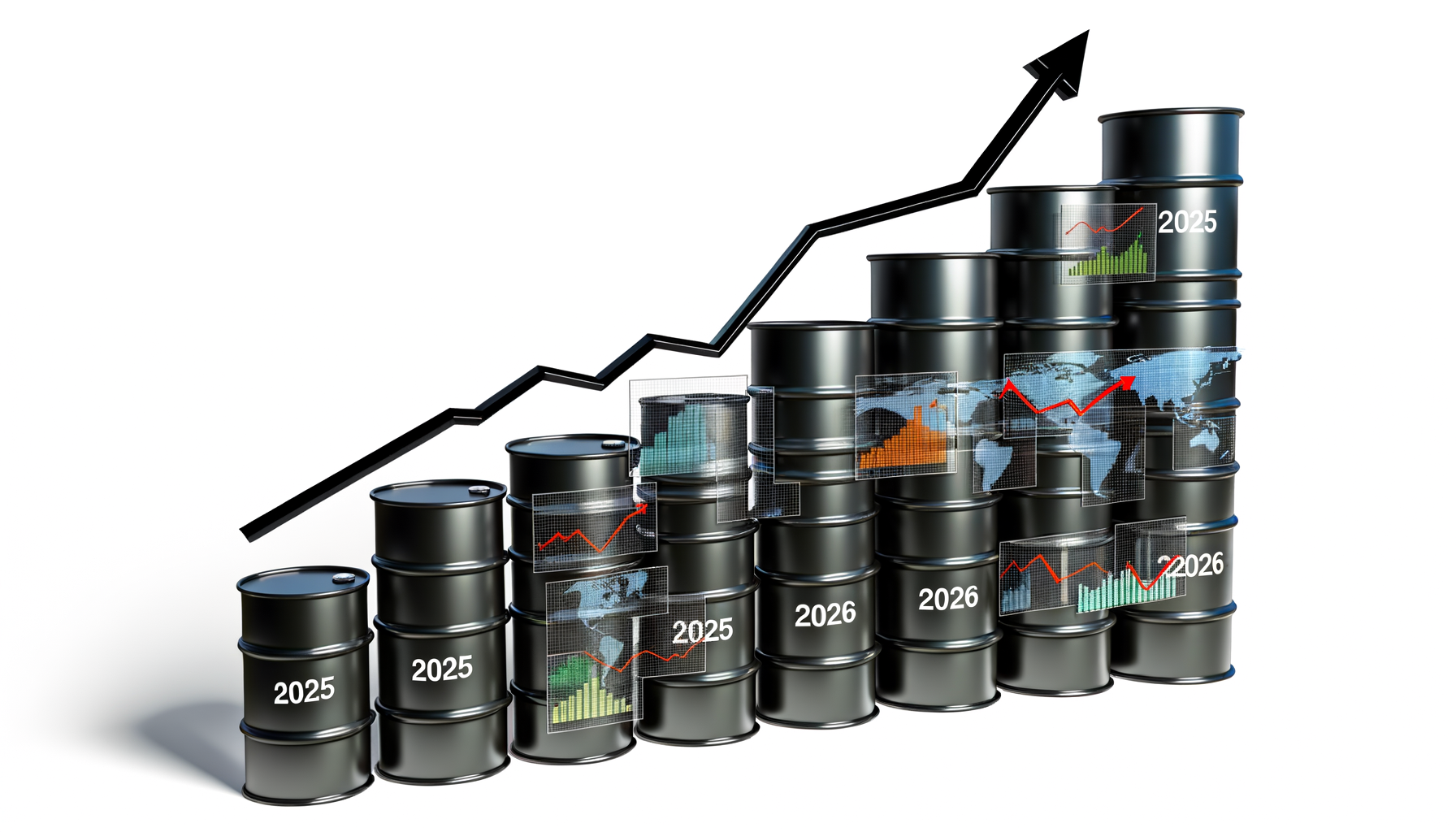
Looking ahead to 2026, oil prices are projected to experience moderate growth, supported by ongoing supply constraints and steady demand. However, price swings will likely remain common due to geopolitical events and market sentiment shifts. Traders should prepare for periods of both bullish and bearish conditions, emphasizing disciplined risk management.
Market Opportunities
The evolving oil market presents several trading opportunities. Short-term volatility can be exploited through tactical trades, while longer-term trends favor strategies aligned with structural supply-demand imbalances. Additionally, diversification into related energy sectors and commodities can enhance portfolio resilience.
Risks to Consider
Key risks include unexpected geopolitical escalations, faster-than-anticipated shifts to renewable energy, and potential economic slowdowns that could dampen demand. Traders must remain vigilant and flexible, adjusting strategies as new information emerges. ✨ 4 EXPERT ADVISORS INCLUDED
🚀 Ratio X Trader’s Toolbox
Complete arsenal with AI Trading Pro, Breakout EA, Freshbot Gold & AI Gold Fury ▶ Get Complete Toolbox 🛡️ 7-Day Money-Back Guarantee
Practical Tips for Traders
- Monitor OPEC+ announcements closely to anticipate production changes.,2. Track geopolitical developments in major oil-producing regions.,3. Use technical analysis tools to identify entry and exit points amid volatility.,4. Incorporate risk management techniques such as stop-loss orders.,5. Consider the Ratio X Trader’s Toolbox, which offers specialized expert advisors (EAs) tailored for volatile markets like oil, enabling disciplined and consistent execution.
Frequently Asked Questions
What factors are driving oil prices in 2025?
Oil prices in 2025 are influenced by supply constraints due to OPEC+ production cuts, geopolitical tensions, and moderated demand growth driven by economic recovery and energy transition trends.
How will geopolitical events impact the oil market in 2026?
Geopolitical events can cause sudden supply disruptions or shifts in market sentiment, leading to price volatility. Traders should stay informed about conflicts, sanctions, and diplomatic developments.
Is oil demand expected to decline due to renewable energy adoption?
While renewable energy adoption is increasing, especially in developed countries, global oil demand is expected to remain stable or grow moderately in emerging markets through 2026.
How can traders manage risks in the volatile oil market?
Effective risk management includes staying updated on market news, using technical analysis, setting stop-loss orders, and employing automated trading tools like those in the Ratio X Trader’s Toolbox.
CTA Section
For traders seeking a professional arsenal to navigate the complexities of the oil market, the Ratio X Trader’s Toolbox offers a versatile suite of specialized expert advisors designed for any market condition. Whether managing volatility or capitalizing on trends, this toolbox provides disciplined execution and AI-assisted analysis to enhance trading consistency and confidence.
The oil market in 2025 is shaped by a delicate balance of supply constraints, geopolitical risks, and evolving demand patterns. Looking toward 2026, moderate price growth with ongoing volatility is expected. Traders who understand these dynamics and employ disciplined strategies, supported by advanced tools like the Ratio X Trader’s Toolbox, will be better positioned to capitalize on opportunities while managing risks effectively.
About the Author
Mauricio is the Lead Developer of Ratio X and a specialist in trading systems. With extensive experience in market analysis and algorithmic trading, he is dedicated to creating tools that empower traders to achieve discipline and consistency in their strategies.
Risk Disclaimer
Trading in oil and other commodities involves significant risk and may not be suitable for all investors. Past performance is not indicative of future results. Traders should carefully consider their financial situation and seek independent advice before engaging in trading activities. The Ratio X Trader’s Toolbox is a tool to assist trading decisions but does not guarantee profits.

Write a comment