IPVM : future of decentralized computing
- Capabilities-Based Systems
- WebAssembly: The Universal Compute Layer
- Dataflow Programming
- Trust and Verification
- Handling Effects in the System
- Conclusion
Go and discover https://github.com/ipvm-wg working group is amazing.
Organization and ecosystem web page https://fission.codes/ecosystem/ipvm/
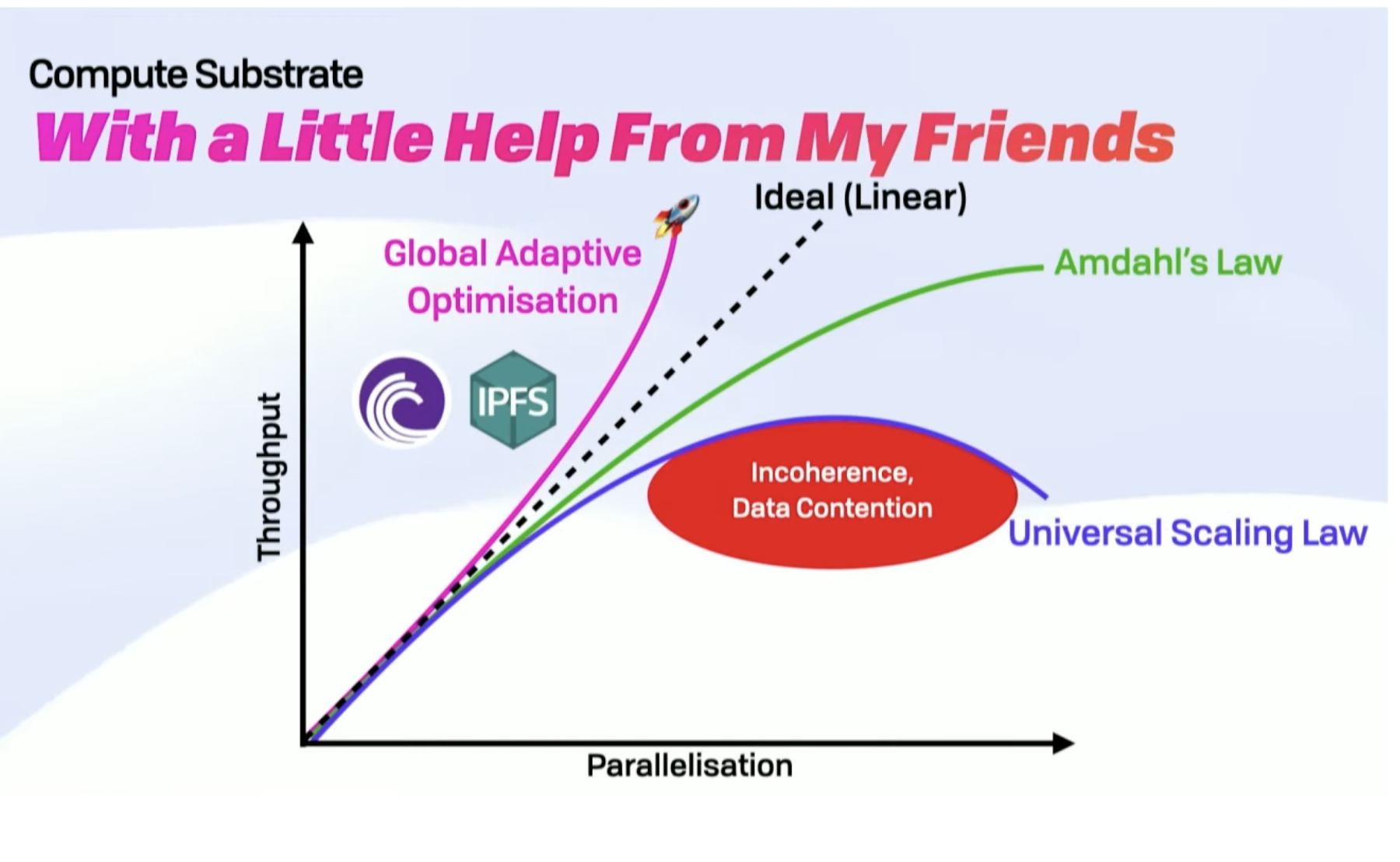
The video presents a comprehensive look at the future of computing, focusing on the role of IPVM (InterPlanetary Virtual Machine) and WebAssembly (Wasm). The speaker delves into the challenges of current computing paradigms and how IPVM and WebAssembly can offer solutions. The talk covers a range of topics, from capabilities-based systems to dataflow programming and the importance of determinism in distributed systems.
Capabilities-Based Systems
The speaker starts by discussing the complexities of current systems that rely on access control lists (ACLs). He suggests that capabilities-based systems can simplify these complexities. In a capabilities-based system, the focus shifts from a centralized list to a more decentralized approach, allowing any service to call any other service securely. This is particularly relevant for open services and secure information flow.
WebAssembly: The Universal Compute Layer
WebAssembly is touted as the technology that will “eat the world.” It’s versatile, running on browsers, mobile devices, and servers. Although it’s still in its early stages, the rapid pace of development in standards and tooling makes it a promising candidate for universal computation. WebAssembly allows for a more flexible and efficient data and compute layer, which can be moved around and executed anywhere.
Dataflow Programming
Dataflow programming is introduced as a way to manage tasks in a distributed system. Tasks can await each other, allowing for a more efficient and flexible system. The speaker emphasizes the importance of breaking down tasks into granular pieces, giving the scheduler the freedom to allocate resources optimally.
Trust and Verification
One of the challenges in a distributed system is trust. The speaker introduces a trilemma between performance, verifiability, and privacy. To address this, deterministic systems that produce receipts at every step are proposed. These receipts can be verified, either by rerunning the entire workflow or by spot-checking. This can eventually move towards zero-knowledge proofs for more efficient verification.
Handling Effects in the System
While pure functions are easy to manage, effects (like mutations) are more challenging. The speaker suggests that mutations should be handled carefully and should typically be at the end of a dataflow. This allows for better management of failure conditions and makes the system more robust.
Conclusion
The talk wraps up by emphasizing the importance of building systems based on reusable and remixable specifications. IPVM and WebAssembly offer a robust foundation for the future of computing, enabling more secure, efficient, and flexible systems.

Write a comment