You Shall Not Do As They Do
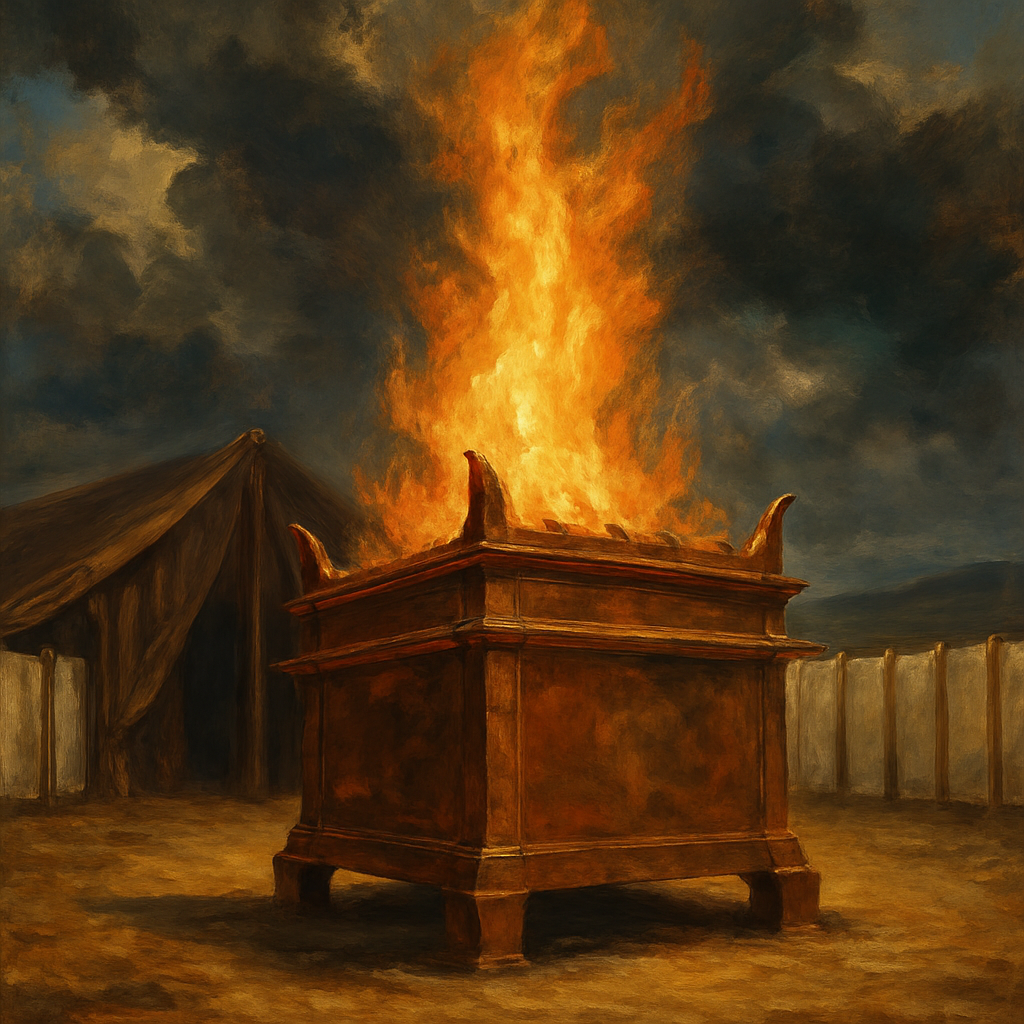
In this paper we will be looking at the types of sacrifices prescribed for the people of God in the book of Leviticus and taking special note of how they differed from the sacrifices performed by the pagan peoples of the time. Moreover, we will see how they point toward the messiah, who would be the ultimate sacrifice. My intention is to show that Israel was distinct from her neighbors both in the way the nation conducted their sacrificial offerings, and the reasons why they performed them.
The temptation when approaching the ritual sacrifices of the ancient Near East is to assume that all the people groups sacrificed to their various gods in basically the same way and for basically the same reasons. In reality, the sacrifices ordained by God for the people of Israel were specifically designed to be different from the peoples around them.
Pagans and Hebrews Compared
The first major difference between the pagans and the Israelites in their sacrificial rituals is the object of their worship. The pagans worshiped idols made by their own hands, which they believed were a physical conduit of sorts for their gods. They believed that through these totems they could access their gods, and that their gods in turn could access the physical realm. As J.I. Packer and M.C. Tenney point out, some believed that their sacrifices were “a meal for the god, the source of his nutrition.” The sacrifices were intended to placate said god in order to obtain some blessing or aid from him, whether that may be in the form of aid in battle, or a plentiful harvest.
The Hebrews, on the other hand, were forbidden from using idols in their worship. Just look at the fallout from them forming the golden calf in Exodus 32:33-35.
But the LORD said to Moses, “Whoever has sinned against me, I will blot out of my book. But now go, lead the people to the place about which I have spoken to you; behold, my angel shall go before you. Nevertheless, in the day when I visit, I will visit their sin upon them.” Then the LORD sent a plague on the people, because they made the calf, the one that Aaron made.
They were not just forbidden from making idols representing pagan gods, but even idols representing their own, true God, or any other heavenly or earthly being. (Exodus 20:4-6) Their worship was ever and always to be directed toward the invisible God who had no need to be fed by mere men, but was rather pleased by the aroma of the earnest worship of his people.
And when the LORD smelled the pleasing aroma, the LORD said in his heart, “I will never again curse the ground because of man, for the intention of man’s heart is evil from his youth. Neither will I ever again strike down every living creature as I have done. (Genesis 8:21)
And the priest shall throw the blood on the altar of the LORD at the entrance of the tent of meeting and burn the fat for a pleasing aroma to the LORD. (Leviticus 17:6)
While these offerings are customarily called “food offerings,” there is no hint of any understanding that it was God who ate them. Rather, some were specifically instructed to be eaten by the priests (Leviticus 7:6-7) or by the one who brought the offering (Leviticus 7:11-21).
This leads to the second distinction between the Israelites and the pagans. Not only do they differ in the objects of their worship, but also the method of their worship. The pagans, as John MacArthur noted in his commentary, sacrificed “horses, dogs, pigs, camels, and donkeys,” animals that the Israelites were not permitted to sacrifice, and in the case of some, such as the Canaanites, they even sacrificed human children. Similarly, the drinking of blood was also a feature in much of pagan worship, which was expressly forbidden to the Israelites (Leviticus 7:26).
Even cases where they sacrificed the same types of animals, they were not allowed to do so in the same way. For instance, according to excavations at Ras Shamra, the Canaanites would boil a sacrificial young goat in milk. While the Hebrews also sacrificed goats, they were told, “You shall not boil a young goat in its mother’s milk” (Exodus 23:19).
Finally, the Israelites were distinct from the pagans in their sacrificial practices because they sacrificed for different reasons. The pagans sought to gain favor from their gods in order to coerce them into doing what they wanted. Believing that “their gods had human desires” (Packer and Tenney), they did whatever they believed might satisfy those desires in the hopes that the god receiving their sacrifices might be grateful enough to them to grant them whatever worldly blessing they sought. In other words, they thought they could put their gods in their debt, such that they would be owed that god’s favor. Because of this, they were not particularly loyal to any single god, but readily exchanged one for another if they deemed it to be more able to supply what they wanted.
By contrast, the Israelites had no illusions that they could bribe their God into doing what they wanted. Rather, their sacrifices were geared toward gratitude for what he had already done, and toward maintaining their ceremonial cleanness so as to preserve his presence among them. Their God told them how he expected them to worship him, and in such a way as he might teach them about their greatest need—forgiveness of sin by means of a substitute—instead of the pagan practice of making demands of their gods in accordance with their own perceived needs.
The Foreshadowing of God’s Plan
The way God taught his Old Testament people, time and again, was through pictures. God did not ordain any practice for his people without infusing it with meaning. We see this even in the way that marriage was ordained as a portrait of God’s relationship with his people (Ephesians 5:22-33), and the sacrificial system was likewise a portrait of Christ as the perfect sacrifice to not merely make his people ceremonially clean, but morally clean.
This can be seen first through the substitutionary aspect of the sacrifice. The Israelites were instructed by God to place their hands upon the head of the sacrificial animal, which Raymond Dillard and Tremper Longman III point out was “an act of identification between the worshiper and the victim before the latter is slaughtered.” The Israelites were taught to place their sins upon a substitute to highlight “that salvation comes to the sinner who turns for forgiveness from his own efforts, who approaches God through the sacrificial death of a perfect substitute,” namely the coming Messiah.
Second, the manner of the sacrifice emphasized that the the substitute for their sins had to die in their place, suffering the penalty due for their sins. Because sin against God required the death of the offender (Genesis 2:16-17; Ezekiel 18:20; Romans 6:23), the only route to mercy was through a substitute bearing the punishment of death in the sinner’s place. Or as Frank Gæbelein puts it:
“God provided this substitutionary way of dealing with sin to show humanity that they owed their lives as a forfeit for their sins against God.”
This principle is seen most clearly in the burnt, peace, sin, and trespass offerings, highlighting the theme of death by the sprinkling or pouring of the blood of the sacrifice around the altar (Leviticus 1:5; 3:2; 4:6; 5:9). This pointed directly to the manner in which the Messiah would redeem his people.
Finally, the purpose of sacrifice was tied to maintaining, or else reconciling, the relationship between God and his people. The sacrifices required of the people of Israel upon the occasion of sin were, as noted by Andrew Hill and John Walton, “purifying sacrifices [that] led to reconciliation with Yahweh and restored the penitent sinner to fellowship with other persons and God.” All of this pointing to Christ, who would reconcile his people to God, not merely ceremonially, but really, fully, and permanently. For this reason the author of the epistle to the Hebrews tells us that the Messiah fulfilled the things that the sacrifices were pointing to, “not with the blood of goats and calves, but with his own blood… once for all, having obtained eternal redemption” (Hebrews 9:12).
It is because this perfect sacrifice has come that the sacrificial system of the Old Testament was done away with once and for all, with the very temple where those sacrifices had taken place being torn down in A.D. 70. Once Christ Jesus became the perfect substitute, imperfect ones were no longer needed.
He has no need, like those high priests, to offer sacrifices daily, first for his own sins and then for those of the people, since he did this once for all when he offered up himself. (Hebrews 7:27)
Write a comment