Reports Reveal Banco Master Payments to Firm of Minister Moraes's Wife
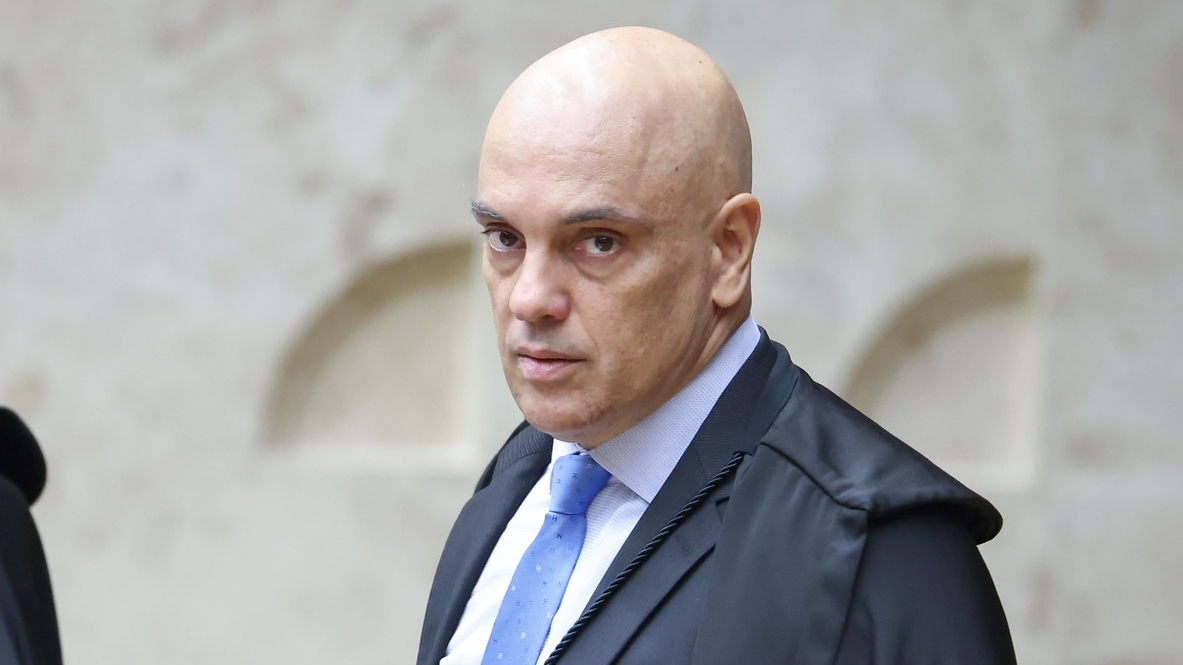
Reports Reveal Banco Master Payments to Firm of Minister Moraes’s Wife Brazil Right Brazil Right coverage portrays the more than R$ 80 million paid by Banco Master to the firm of Moraes’s wife and the tripling of the couple’s assets as powerful signs of a conflict of interest and possible influence‑peddling tied to his role in the STF. These outlets emphasize the CPI and Receita documents as credible evidence that the minister’s family has benefited disproportionately since his appointment, insisting that robust investigation and accountability are urgently needed. @h9nr…ngd4 Reports from across the spectrum agree that Banco Master made substantial payments to the law firm associated with Viviane Barci de Moraes, wife of Supreme Court justice Alexandre de Moraes, and that these transactions are now a central focus of the CPI do Crime Organizado in Congress. Right-aligned reporting cites documents from the Receita Federal and material obtained by the CPI indicating that total transfers surpassed about R$ 80 million over recent years, with around R$ 40 million reported in 2024 alone, and that these payments were for legal services provided by the Barci de Moraes office. Coverage also converges on the figures that the couple’s declared real-estate assets have roughly tripled since Moraes joined the STF in 2017, reaching about R$ 31.5 million spread over 17 properties, some held via the Lex Instituto de Estudos Jurídicos, a family company. Both sides acknowledge that the law firm disputes some of the disclosed figures and stresses that its tax and financial data are legally protected by confidentiality rules.
Common context across outlets highlights that Brazilian law does not automatically forbid relatives of Supreme Court justices from operating private law firms, but that such relationships are politically sensitive and often scrutinized for possible conflicts of interest. There is agreement that the CPI’s stated goal is to understand the nature of the services supposedly rendered by the firm to Banco Master and whether the size and timing of the payments are proportionate and lawful, rather than to criminally indict the minister directly at this stage. Both sides situate the case in a broader debate about transparency and ethics in the judiciary, the use of parliamentary commissions to investigate high-profile figures, and long‑standing concerns about how financial institutions interact with politically exposed persons. Coverage also notes that any formal determination of illegality or ethical breaches would depend on further evidence, potential actions by oversight bodies such as the Conselho Nacional de Justiça, and due process.
Areas of disagreement
Gravity and framing of the scandal. Brazil Left-aligned coverage tends to frame the story cautiously as a politically charged controversy that may reflect Brazil’s polarized climate, stressing that high earnings by elite law firms and asset growth among judicial families are common and not inherently illicit. Brazil Right sources, by contrast, present the payments and rapid patrimonial expansion as a serious scandal in itself, often describing the numbers as “explosive” and suggesting they are incompatible with normal professional practice. While the left leans toward describing this as a case that “raises questions” but requires restraint until institutions act, the right often treats the pattern as presumptively suspicious and bordering on systemic corruption.
Conflict of interest and legality. Brazil Left coverage generally distinguishes between ethical concerns and legal wrongdoing, emphasizing that relatives of STF ministers are not legally barred from practicing law and underscoring the need to prove an actual link between Moraes’s judicial actions and Banco Master’s interests. Brazil Right outlets, however, stress the circumstantial alignment between Moraes’s rise to the STF, the fivefold growth in the firm’s high‑court caseload, and the tens of millions received from a single bank, arguing that this constellation already constitutes a de facto conflict of interest. Left-leaning reporting is more likely to note that no formal finding by regulatory or disciplinary bodies has been made so far, whereas right-leaning coverage treats the legalistic distinction as secondary to the appearance of impropriety.
Role and credibility of the CPI and leaks. Brazil Left sources tend to portray the CPI do Crime Organizado and the use of Receita Federal documents as vulnerable to political instrumentalization, warning that selective leaks can be used to pressure or intimidate an STF minister who is central to high‑stakes cases. Brazil Right coverage, in contrast, generally treats the CPI as a legitimate and necessary investigative tool, highlighting lawmakers’ oversight role and presenting leaked figures as crucial transparency rather than as abuse of confidentiality. While the left often questions the timing and motivations behind the commission’s focus on Moraes’s family finances, the right emphasizes that resistance to disclosure and claims of fiscal secrecy look like attempts to shield powerful actors from scrutiny.
Political implications and narratives. Brazil Left reporting usually situates the episode within ongoing clashes between institutions, suggesting that attacks on Moraes’s family may be part of broader efforts by right‑wing actors to delegitimize the STF and weaken enforcement against antidemocratic groups. Brazil Right outlets instead depict the case as evidence that segments of the judiciary, especially Moraes, have accumulated excessive, unaccountable power and are now facing overdue exposure of their own vulnerabilities. For the left, the central risk is the erosion of institutional stability through politicized campaigns; for the right, the risk lies in impunity and double standards in how corruption or influence‑peddling are investigated.
In summary, Brazil Left coverage tends to underline institutional safeguards, the presumption of legality, and the danger of politicizing financial scrutiny of a Supreme Court minister’s family, while Brazil Right coverage tends to spotlight the magnitude and timing of Banco Master’s payments as strong indications of a conflict of interest that demands aggressive investigation and public accountability. Story coverage
Write a comment