María Corina Machado Coordinates Her Return to Venezuela With Trump Administration
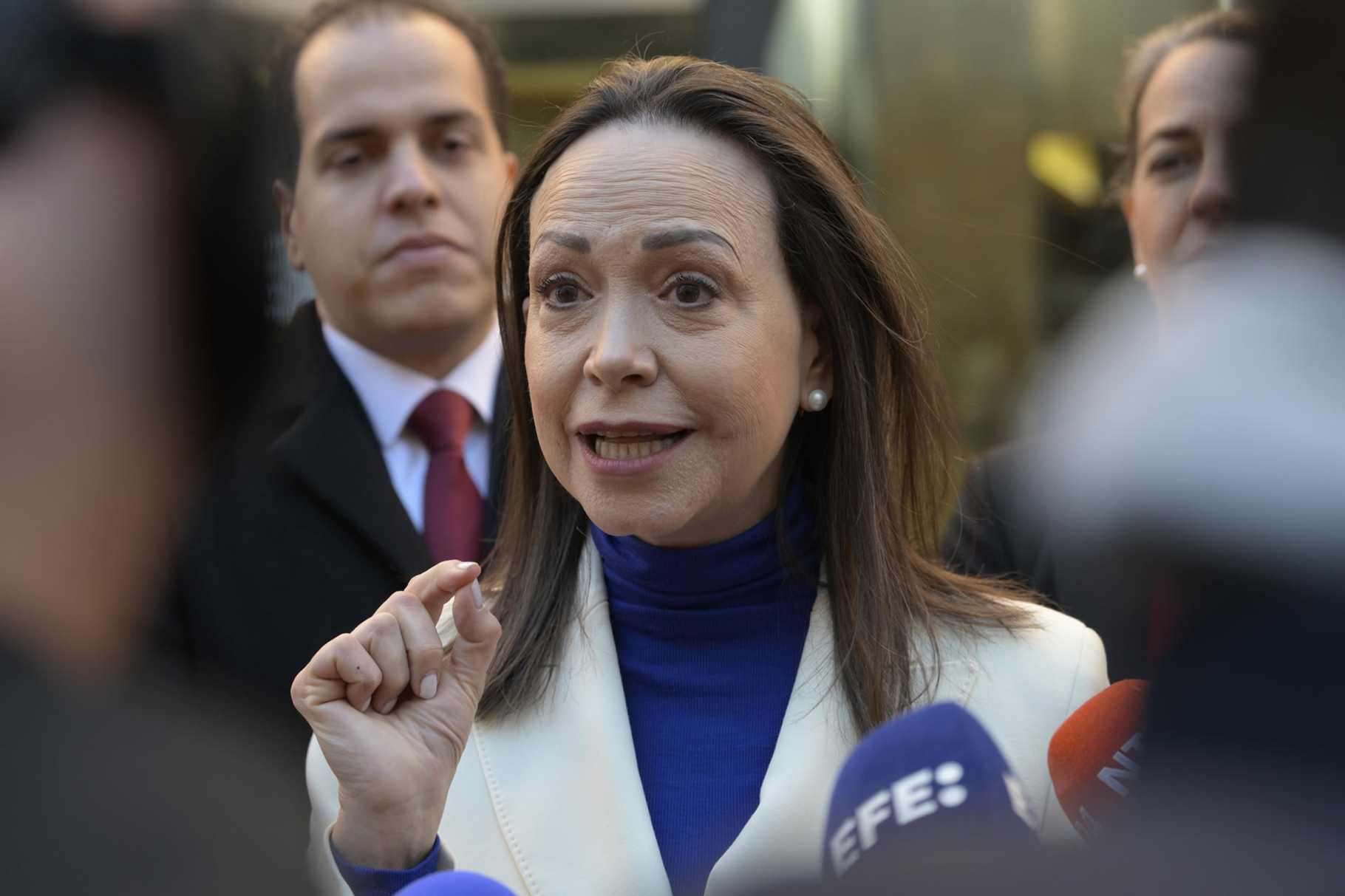
María Corina Machado Coordinates Her Return to Venezuela With Trump Administration Opposition Opposition coverage portrays María Corina Machado as a leading democratic figure who is responsibly coordinating with the Trump administration to secure conditions for free elections, her safe return, and a broader transition away from authoritarian rule. These outlets emphasize that U.S. support and a clear, technical roadmap are crucial for restoring institutions, stabilizing the economy, and eventually enabling the return of the Venezuelan diaspora. @htcq…4692 @dgj2…hzme María Corina Machado, a prominent Venezuelan opposition leader, has stated in recent interviews that she is coordinating with officials in the administration of former U.S. president Donald Trump to prepare her return to Venezuela and to support what she calls a democratic transition. Across opposition-aligned coverage, there is agreement that Machado has spoken on Fox News, that she proposes an electoral calendar of roughly nine to ten months once conditions are in place, and that she links her personal return to broader political change inside the country. These reports consistently describe her intention to go back “as soon as possible,” her emphasis on creating conditions for free elections by dismantling current structures of repression, and her portrayal of this coordination with Trump’s team as part of a broader strategy to restore democratic institutions and facilitate the eventual return of the Venezuelan diaspora.
Shared context in the opposition narratives frames Venezuela as a country under an authoritarian regime whose institutions need to be rebuilt, with international backing—especially from Washington—seen as pivotal for any sustainable transition. They describe the Trump administration, and U.S. policy more broadly, as historically significant for Latin America and for the Venezuelan crisis in particular, suggesting that external pressure and technical support are essential to recover the rule of law and stabilize the economy. These accounts situate Machado’s plans within a longer process of institutional, economic, and security reforms, presenting the crisis as one with hemispheric security implications and arguing that Venezuela’s eventual recovery will depend on coordinated efforts between domestic democratic actors and foreign allies.
Points of Contention
Legitimacy of foreign coordination. Opposition-aligned sources present Machado’s coordination with the Trump administration as a legitimate, even necessary, form of international support to counter an entrenched authoritarian regime and enable credible elections. Government-aligned outlets, by contrast, typically depict such coordination as foreign interference or collusion, framing any role for a former or current U.S. administration as an assault on Venezuelan sovereignty and a pretext for destabilization. While opposition narratives stress technical assistance and diplomatic backing, pro-government narratives tend to characterize the same contacts as part of a regime-change agenda directed from Washington.
Characterization of Machado and the opposition. In opposition coverage, Machado is portrayed as a “democratic leader” with a clear technical roadmap for institutional and economic recovery, whose return symbolizes hope for millions of exiled Venezuelans. Government-aligned media generally describe her as a radical or elitist politician with limited popular support, often highlighting her alignment with U.S. conservative figures to suggest she represents foreign or oligarchic interests rather than the Venezuelan majority. Thus, while opposition outlets elevate her as a central protagonist in a democratic transition, government-aligned outlets aim to marginalize her as a fringe or discredited figure.
Role of the United States and Trump. Opposition narratives underscore what they see as the historic role of the Trump administration in backing democratic forces in Latin America and maintaining pressure on the Venezuelan government, casting U.S. engagement as a protective factor for regional security. Government-aligned coverage, by contrast, tends to present Trump and broader U.S. policy as hostile, imperial, and responsible for sanctions and economic hardship, arguing that any deepening of ties with Washington exacerbates Venezuela’s problems. Whereas opposition sources highlight U.S. “accompaniment” as determinant for reconstruction, pro-government outlets emphasize national self-determination and portray U.S. involvement as a threat rather than a solution.
Diagnosis of the crisis and path to transition. Opposition-oriented reporting frames Venezuela’s crisis as primarily the result of authoritarian governance, institutional decay, and mismanagement, concluding that dismantling repressive state structures and holding new elections within a defined timeline are prerequisites for recovery. Government-aligned media usually blame external economic warfare, sanctions, and internal “traitors” for the crisis, proposing dialogue under existing authorities and gradual reforms instead of a rapid, opposition-led transition. As a result, while opposition outlets stress the need for regime change followed by international-supported rebuilding, government-aligned narratives defend continuity of the current leadership and resist externally anchored transition plans.
In summary, Opposition coverage tends to legitimize Machado’s coordination with Trump as essential international backing for a democratic transition and institutional rebuilding, while Government-aligned coverage tends to depict such coordination as foreign interference, question her political standing, and defend a sovereignty-first path that rejects U.S.-centered transition schemes. Story coverage
Write a comment