UN Experts Call for Venezuela's Amnesty Law to Cover All Victims
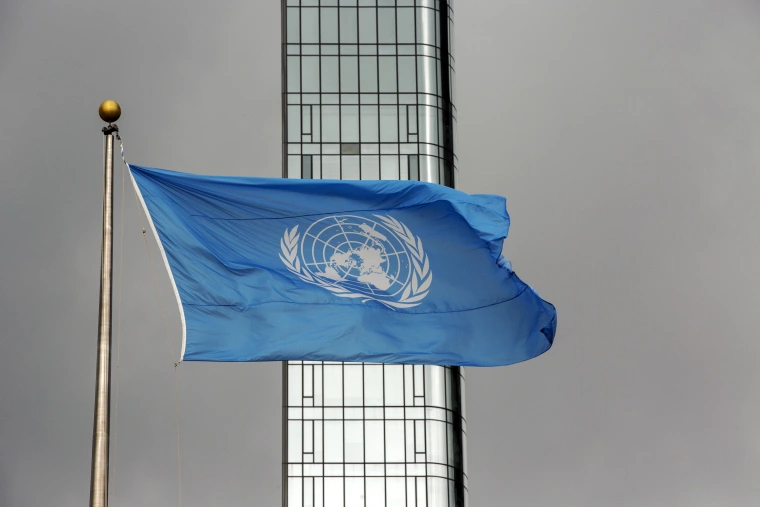
UN Experts Call for Venezuela’s Amnesty Law to Cover All Victims Opposition Opposition outlets present the UN experts’ intervention as confirmation that Venezuela has engaged in widespread illegal prosecutions and that the amnesty must clearly recognize and repair these abuses for all victims, including exiles and political prisoners. They emphasize that true amnesty must be part of a broader transitional justice process that reforms institutions and excludes perpetrators of serious international crimes from impunity. @htcq…4692 @r83x…ptvy UN human rights experts have publicly welcomed a draft amnesty law in Venezuela and called for it to cover all victims of illegal prosecution. In their statement, six UN special procedures mandate holders acknowledged the law as a positive step and urged Venezuelan authorities to ensure that the benefits extend to individuals who have faced unlawful persecution, including those forced into exile, those prosecuted for exercising their civil and political rights, and other victims of arbitrary judicial action.
The experts situate their recommendations within broader international human rights and transitional justice frameworks, stressing that any Venezuelan amnesty must align with obligations under international law. They emphasize that the law should be embedded in a comprehensive transitional justice process that includes truth, reparation, and guarantees of non-repetition, and that it must clearly distinguish between victims of human rights violations and individuals accused of serious international crimes, such as crimes against humanity, who should be explicitly excluded from amnesty.
Points of Contention
Scope and beneficiaries. Opposition-aligned outlets highlight the UN experts’ insistence that the law cover all those they describe as victims of illegal persecution, including political opponents, protesters, and exiles, framing this as a corrective to years of selective criminalization. Government-aligned media, where they reference the issue, tend to underscore the government’s discretion in defining who qualifies under the amnesty and are more likely to portray beneficiaries as participants in past political conflicts rather than clearly defined victims of rights violations. While opposition coverage stresses maximal inclusion and clear recognition of political persecution, government-aligned narratives tend to emphasize legal criteria and national stability over broad expansion of the beneficiary list.
Nature of the alleged abuses. Opposition sources characterize the cases targeted by the amnesty as systematic abuses and illegal prosecutions driven by the executive and security apparatus, aligning these patterns with long-standing UN and NGO critiques of Venezuela’s judiciary. Government-aligned outlets, when they discuss similar episodes, typically downplay the systemic dimension and frame prosecutions as lawful responses to destabilization, violence, or foreign-backed plots. Thus, opposition coverage presents the UN call as confirmation of a pattern of political repression, whereas government-aligned coverage reframes or minimizes that allegation and focuses on isolated excesses, if mentioned at all.
Transitional justice and accountability. Opposition-aligned reporting leans on the experts’ language about transitional justice to argue for deeper institutional reforms, independent investigations, and explicit safeguards against future abuses, insisting that accountability for perpetrators of serious crimes cannot be waived. Government-aligned coverage is more inclined to present amnesty as an instrument of national reconciliation and political normalization, without prominently featuring demands for structural judicial reform or prosecutions of high-level officials. As a result, opposition narratives treat the UN intervention as a roadmap for rights-based transition, while government-aligned narratives tend to frame it as technical input into a controlled process of political pacification.
International oversight and sovereignty. Opposition outlets portray the UN experts as legitimate external arbiters whose recommendations strengthen victims’ claims and increase pressure on Venezuelan authorities to comply with international standards. Government-aligned media, by contrast, often stress national sovereignty and may depict intensive UN involvement as politicized or as part of broader foreign interference, even when they acknowledge the experts’ comments. Consequently, opposition coverage amplifies UN scrutiny as a protective mechanism for citizens, whereas government-aligned coverage tends to circumscribe or contest that oversight, emphasizing state prerogatives.
In summary, Opposition coverage tends to frame the UN experts’ call as validation of claims of systematic political persecution and as a lever for broad, victim-centered transitional justice, while Government-aligned coverage tends to present amnesty as a sovereign tool for controlled reconciliation, downplaying systemic abuse and limiting the scope of international pressure.
Story coverage
Write a comment