Freddy Superlano to Receive Full Freedom, According to His Wife
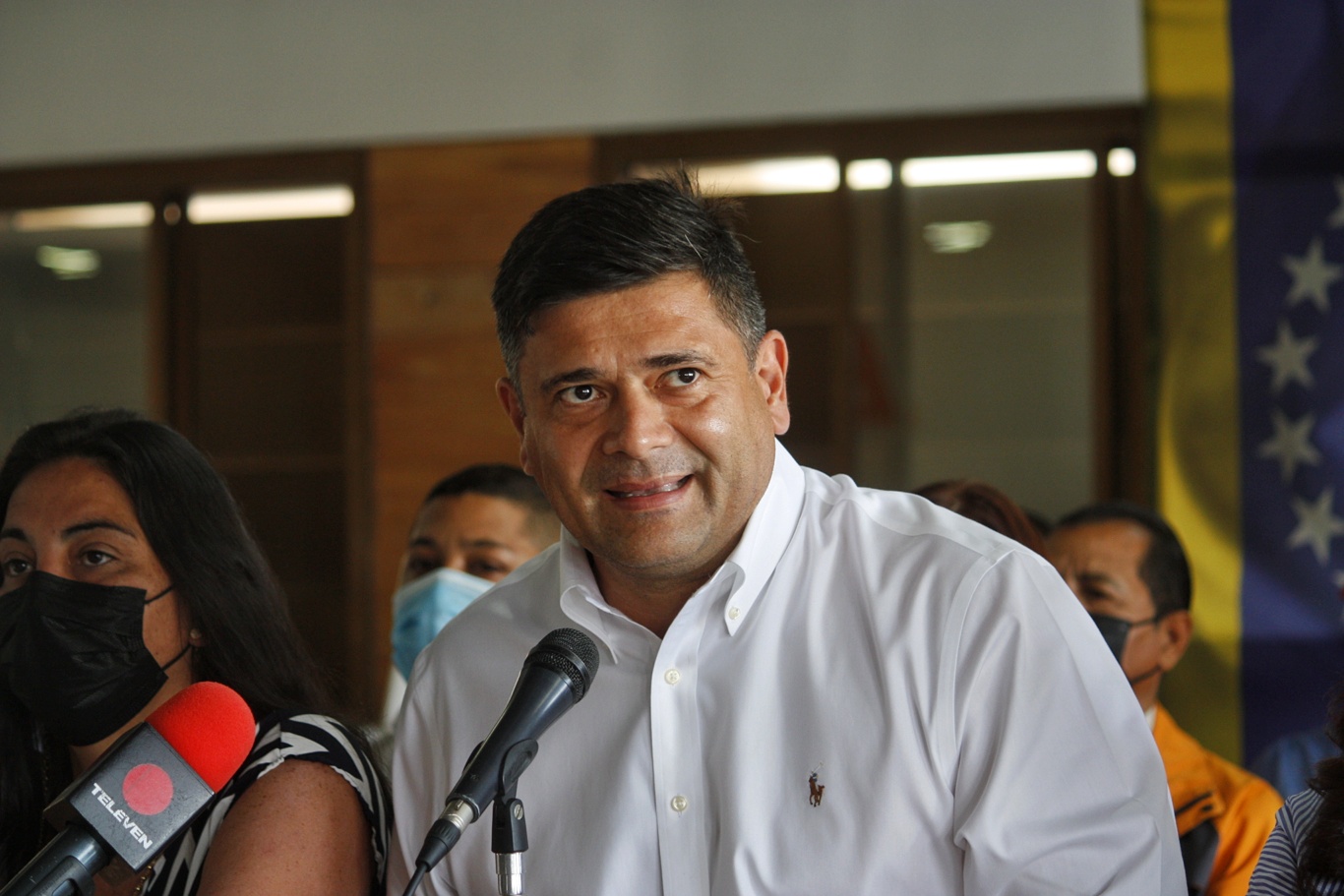
Freddy Superlano to Receive Full Freedom, According to His Wife Opposition Opposition outlets report that although Freddy Superlano has been formally notified he will receive full freedom under the new Amnesty Law, he remains under house arrest with an electronic monitor, which they cite as evidence of selective and incomplete implementation of reconciliation measures. They frame his detention and delayed release as politically motivated and indicative of the government’s reluctance to fully honor its commitments to free political prisoners. @htcq…4692 @4u9e…n83g @r83x…ptvy Freddy Superlano, opposition politician and former deputy, remains under house arrest with an electronic ankle monitor despite being formally notified that he will receive full freedom, according to multiple accounts from his wife, Aurora Silva. Opposition-aligned outlets agree that his release is linked to the recently approved Amnesty Law passed by the National Assembly, that he left prison on 9 February after 18 months in detention, and that he has since been under house arrest pending the lifting of all remaining restrictions. These reports consistently state that he was one of the first detained after the 2024 elections and that he was publicly associated by prosecutor Tarek William Saab with the dissemination of electoral tally sheets. They also agree that his wife has publicly said he will receive full freedom in the “next few hours” or by 20 February 2026, framing this as an imminent transition from conditional to total liberty.
Across these opposition reports, there is shared context that Superlano’s case is part of a broader wave of releases or sentence reductions following the government-promoted Amnesty Law and other supposed national reconciliation measures. The outlets concur that he would be at least the second high-profile opposition figure to benefit after the absolution of Juan Pablo Guanipa, situating his case within a sequence of opposition excarcerations. They emphasize the institutional role of the National Assembly in approving the amnesty framework and the executive and judicial authorities in implementing it, while noting that the promised automatic liberation of political prisoners has been uneven in practice. There is agreement that the delays and partial compliance in Superlano’s case raise questions about how fully and how quickly the amnesty and reconciliation commitments are being applied on the ground.
Points of Contention
Nature of the “full freedom” announcement. Opposition-aligned coverage portrays the notification of Superlano’s full freedom as a formal legal act that should have already resulted in the immediate removal of his electronic monitor and lifting of all restrictions, stressing the gap between the promise and his ongoing house arrest. In the absence of explicit government-aligned narratives, it is likely that pro-government outlets would frame the same announcement as part of a gradual, procedurally complex process in which administrative steps and security reviews must be completed before full liberty is operational. Opposition media therefore depict the situation as an unmet legal obligation, while government-aligned narratives would probably treat it as an evolving administrative implementation.
Implementation of the Amnesty Law. Opposition sources present the Amnesty Law as a binding framework whose spirit and letter require prompt and automatic release of political detainees like Superlano, and they highlight delays as evidence that the law is not being faithfully enforced. Government-aligned outlets, by contrast, would be expected to emphasize that the law is being applied in an orderly, case-by-case manner, possibly stressing that security-related or procedural conditions justify a phased approach. Thus, opposition media characterize the law’s implementation as selective and incomplete, whereas government-friendly narratives would likely claim it is methodical and responsible.
Framing of political persecution vs. legal process. Opposition reporting describes Superlano as a victim of political persecution, referencing his early detention after the 2024 elections and his linkage to the publication of electoral actas as part of a crackdown on dissent. Government-aligned coverage would more likely repeat the official line that his detention stemmed from alleged legal violations connected to electoral processes, presenting his case as a matter of justice rather than repression. As a result, opposition outlets see his pending full freedom as a partial rectification of an abusive process, while pro-government narratives would frame it as a gesture of clemency or reconciliation after due process.
Meaning of reconciliation measures. Opposition-aligned media treat Superlano’s case as a test of the sincerity of the government’s reconciliation discourse, stressing that incomplete or delayed freedom undermines trust in broader political agreements. Government-aligned outlets would likely argue that the very existence of the Amnesty Law and the sequence of releases, including Superlano’s move from prison to house arrest and then to full freedom, demonstrate a genuine commitment to peace and dialogue. Consequently, opposition narratives question whether reconciliation is more symbolic than real, while government-friendly narratives would portray these steps as concrete proof of political opening.
In summary, Opposition coverage tends to depict Superlano’s still-incomplete release as proof of broken promises, selective amnesty, and ongoing political persecution, while Government-aligned coverage tends to emphasize legal procedure, gradual compliance with the Amnesty Law, and the releases themselves as evidence of the government’s goodwill and commitment to reconciliation. Story coverage
Write a comment