Cardinal Baltazar Porras Recovers Passport Confiscated by Venezuelan Authorities
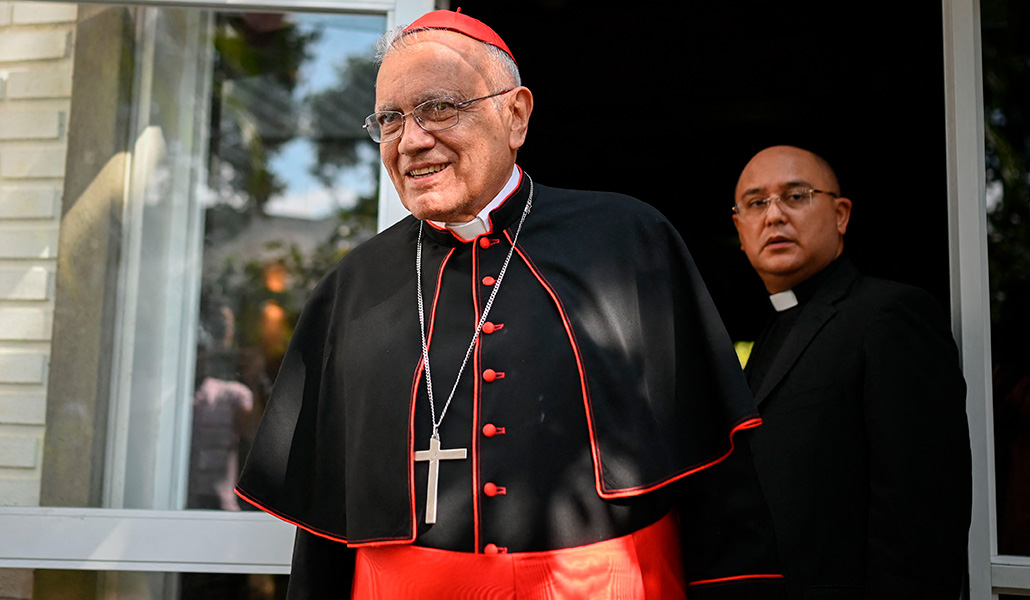
Cardinal Baltazar Porras Recovers Passport Confiscated by Venezuelan Authorities Opposition Opposition outlets frame the confiscation of Cardinal Porras’ passport as a politically motivated, humiliating act by the chavista government against a vocal critic, later reversed under pressure. They situate the incident within escalating tensions between the state and the Catholic Church, and within a broader pattern of arbitrary measures against dissenters. @dgj2…hzme @htcq…4692 Cardinal Baltazar Enrique Porras Cardozo, a prominent figure in the Venezuelan Catholic Church, has recovered his Venezuelan passport after it was confiscated and annulled by immigration authorities in December at Maiquetía International Airport. At the time of the incident, officials prevented him from boarding an international flight for church-related commitments, alleging that the document had problems or technical/administrative issues, and the passport was rendered invalid. Opposition-aligned reports agree that the passport has now been returned to Porras, that the episode occurred within an official migration-control setting, and that it unfolded against the backdrop of his public profile as a critic of the authorities.
These outlets also converge on contextual elements: Porras is a high-ranking Catholic leader whose voice carries weight in national debates, and the incident took place amid broader tensions between the Venezuelan state and the Catholic Church. They emphasize that this dispute comes at a time of heightened political conflict, with ongoing debates over political prisoners and civil liberties, and that the Catholic hierarchy has increasingly been drawn into confrontations with government institutions. Across the shared factual and contextual narrative, the case is framed as occurring within Venezuela’s wider institutional struggle involving migration controls, church–state relations, and political polarization.
Points of Contention
Characterization of the incident. Opposition-aligned coverage portrays the December confiscation as a punitive, politically motivated act by what they describe as the chavista regime, highlighting that the passport was annulled and that Porras was prevented from fulfilling church duties abroad. They underscore descriptions of the situation as humiliating, suggesting an intent to intimidate a critical religious leader. Government-aligned outlets, where they address such cases, tend to frame similar incidents as routine administrative or technical irregularities in documentation, downplaying any suggestion of deliberate targeting or political reprisal.
Political versus administrative framing. Opposition sources present the return of the passport as a reluctant step by authorities after an arbitrary measure, fitting it into a pattern of harassment against dissenting voices and the Catholic Church. They connect the episode to Porras’ prior public criticism and his calls for the release of political prisoners, implying direct causality between his stance and the state’s actions. Government-aligned narratives, by contrast, typically describe these issues as isolated bureaucratic errors or standard security procedures, avoiding any link to Porras’ political or moral positions and framing the resolution as a normal correction once paperwork or system flags were cleared.
Implications for church–state relations. Opposition media use the case to illustrate a deteriorating relationship between the government and the Catholic Church, arguing that the treatment of a cardinal signals broader intolerance toward religious actors who question official policies. They highlight the symbolic weight of blocking a senior cleric’s travel for pastoral commitments as evidence of disrespect toward institutional religion. Government-aligned coverage, when referencing church–state dynamics, tends to stress dialogue, national sovereignty, and respect for legal norms, suggesting that any friction is overstated by critics and that isolated procedural disputes should not be read as systemic hostility.
Human rights and political climate. Opposition outlets embed the episode in a wider narrative of shrinking civic space, linking it to reports of political prisoners and restrictions on critics’ mobility to claim that travel and identity documents are being used as tools of control. They argue that what happened to Porras is consistent with other cases of opposition figures and activists facing document retention or travel bans. Government-aligned sources, on the other hand, usually emphasize stability, institutional order, and the legality of migration checks, portraying human rights concerns raised around such incidents as part of a politicized campaign to discredit Venezuelan authorities.
In summary, Opposition coverage tends to depict Porras’ passport confiscation and recovery as a politically charged episode that exemplifies repression and strained church–state relations, while Government-aligned coverage tends to either recast such events as ordinary administrative matters or minimize their political and human-rights significance.
Story coverage
Write a comment