Contra Everyone On Taste
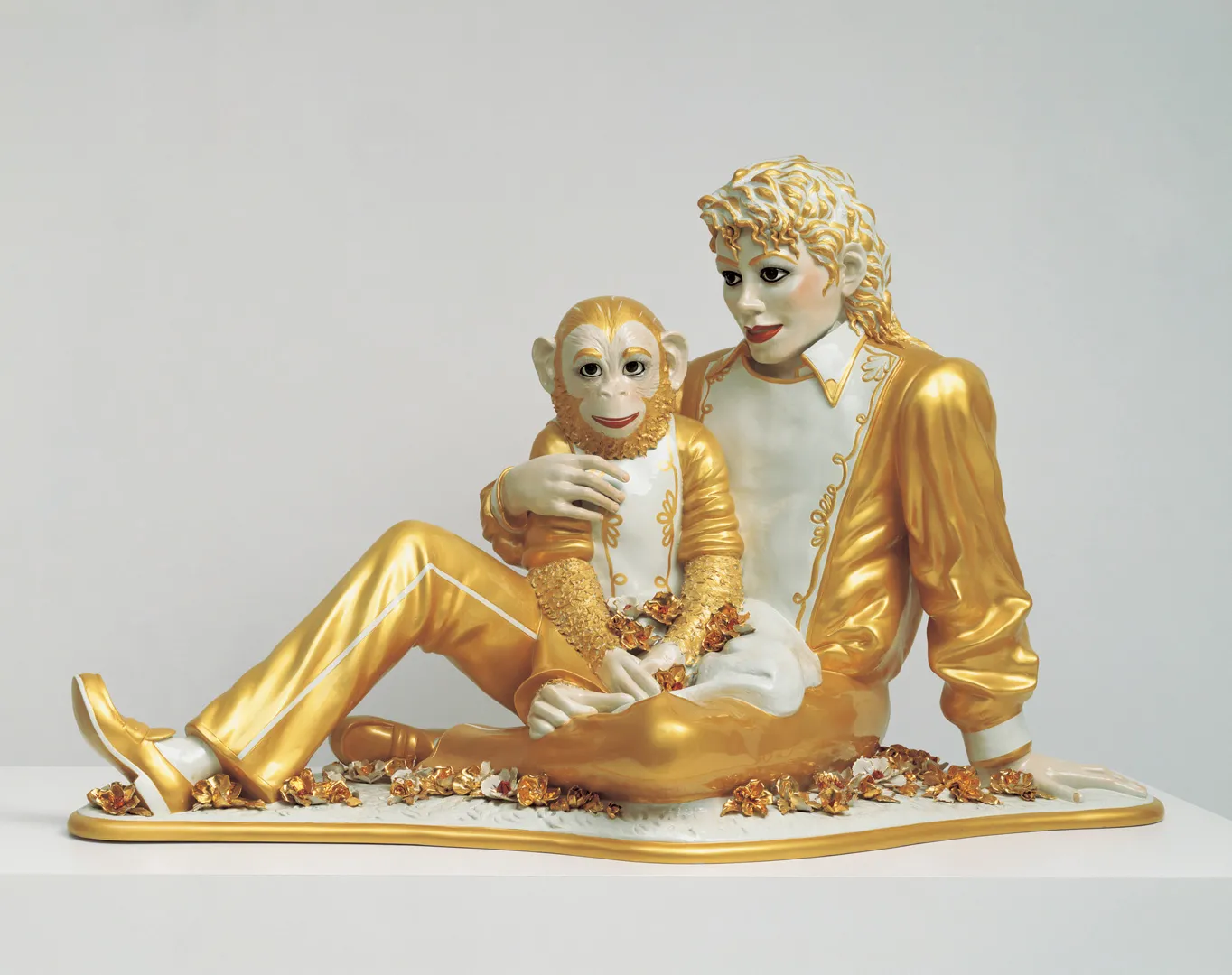
Last year I wrote a piece on artistic taste (https://www.astralcodexten.com/p/friendly-and-hostile-analogies-for), which got many good responses from (eg) Ozy (https://thingofthings.substack.com/p/in-defense-of-the-reality-of-good), Frank Lantz (https://franklantz.substack.com/p/artt-in-the-age-of-artifficial-intelligence), and Sympathetic Opposition (https://www.sympatheticopposition.com/p/contra-scott-on-taste). I tastelessly forgot to respond to them until now, but I appreciate how they forced me to refine my thinking. In particular, they helped me realize that “taste” and “good art” are hard to talk about, because the discussions conflate many different things: 1: Sensory Delight. Ode To Joy makes the listener feel joyful. Michelangelo’s David fills the viewer with awe at the human figure. The great cathedrals are impressive buildings, in a way that hits you like a punch to the gut. These judgments are preconscious, widespread, and don’t necessarily require artistic sophistication. 2: Novelty and Innovation: Someone gets credit for doing art in a way that has never been done before. The early Impressionists invented a new way of looking at the world and explored all of its little corners. A modern Impressionist painter may be able to match their technical skill, but not their novelty; therefore, the modern would be a mere curiosity while the originals were great artists. For a modern person to be a great artist, they would have to explore entirely new media - hence the surprising and transgressive nature of modern art. 3: Paying Attention / Pattern Language: Tasteful people, viewing art over the generations and paying deep attention to it, have developed a sense of balance, composition, contrast, and what should and shouldn’t be done. We can debate how predetermined the exact grammar of this language was a priori, but for better or worse people are sensitized to it and will judge works with it in mind. A good work of art should either conform to this language, or defy it deliberately and thoughtfully (that is, in a way that transcends it rather than ignores it). Along with these three big ones, here are smaller ones that might or might not be combinations or subvarieties of these: 4: Context And Discussion: Some great art raises questions, and subsequent great art proposes answers, or variations on the questions, or further elucidates the subject. The great artists of any given time are in conversation with their peers and the great artists of all past ages; new art can be judged on whether it shows awareness of, and contributes to, this conversation. Other forms of context are more personal - is a book about human evil more aesthetic if its author survived the Holocaust? 5: Literal Ability To Understand A Work: You can’t fully appreciate Animal Farm unless you know the history of Soviet communism and recognize the book as an allegory for that history. If someone who knew nothing about this liked it as a cute story about talking animals, their appreciation would be different from (inferior to?) that of more knowledgeable people. 6: Changing Fashions: In 1940, Beaux-Arts and Frank Lloyd Wright were the heights of American architecture. By 1950, nobody who was anybody was doing Beaux-Arts or Prairie; it was all International Style. One could very charitably attribute this to the novelty-seeking drive above; but it’s implausible that Prairie style architecture was novel and beloved in 1940, a few houses completely exhausted its potential, but the explosion of International Style buildings didn’t restore the balance such that the low-hanging-fruit level level was lower in Prairie style again. More likely this was just a fashion effect where Prairie style was cool in 1940, then uncool in 1950. 7: Political And Ideological Point-Making: Great art may convey some truth about the world. This could be a purely aesthetic truth. But in the case of Uncle Tom’s Cabin, the truth was “slavery is bad”. Other truths are conveyed symbolically (for example, cathedrals being shaped like crosses) or through design choices (for example, the austerity of Bauhaus architecture making it more suitable for socialist housing). 8: Ability To Profoundly Affect Or Transform You: Maybe this one is emergent from some combination of sensory delight, novelty and point-making. But some people say they come away from art transformed, in a way which is neither just sensory delight nor just political ideology. Philosophers have argued for millennia about exactly what way this is, but hopefully we’ve all had this experience and can accept an extensional definition. These people enumerated these things to defend taste. I will instead take the bold stand that conflating many different things is bad: it frees people from thinking too hard about any particular one of them, or the ways they interact. Here are my arguments for deliberately ignoring about half of these. The Parable Of The SteakhouseAll discussion of aesthetics must in some sense be personal. So: young Scott was deeply disappointed to learn how restaurant critics worked. In his imagination, a critic’s assistant would deliver dishes to her house, so she wouldn’t know which restaurant it came from. Otherwise, the critic might let her preconceptions influence her judgment, and a restaurant’s reputation would become self-reinforcing. She would eat blindfolded (or be spoon-fed?) so the food’s appearance couldn’t distort her judgment either. A typical tasting would intersperse food from dozens of different restaurants, with each dish tried multiple times (obviously the critic wouldn’t know it was the same dish) to ensure that the ratings were consistent. Any critic whose ratings were unreliable - two blind tastings of the same dish were no more likely to correlate than tastings of two different dishes - would be laughed out of the business. Imagine how I felt when I actually read restaurant criticism. It was all stuff like “Oh, the ambience here is very nice; I had a great conversation with the chef who told me about how his childhood in Sardinia motivated new takes on traditional dishes.” How can you be sure the chef’s personable manner isn’t influencing your impression of the food?! Haven’t you ever heard of the Pepsi Paradox (https://www.sciencedirect.com/science/article/abs/pii/S0950329317302872) in psychology? Aaargh! The type of critic young Scott dreamed of could make true discoveries. They might learn that the family restaurant down the street makes a steak that beats the $100-a-plate Michelin-starred steakhouse. Probably the average claim like this isn’t true. But probably there’s some claim like this which is true, and they could learn it. The real-world restaurant critic who writes stuff about “ambience” never will. Even if they’re honest and bold enough to risk their reputation on a crazy claim that would open them to ridicule and offend foodies everywhere, the placebo-esque effects of context and branding would bias them without their knowledge. They are doomed to repeat conventional wisdom, at best shifting it a little around the edges. I’ve since made my peace with real-world restaurant criticism. I suppose it’s true that real people go to a restaurant and soak in the ambience, and that’s part of what makes restaurants fun. I suppose it’s true that making a visually appealing dish succeeds at delighting the senses no less than making something delicious. Even getting to hear about the chef’s dumb childhood in Sardinia is potentially part of the “experience”, if you like this sort of thing. Still, it rankles. I’m at peace with there being some real-world food critics. But shouldn’t there be a few of the other type, too? It wouldn’t take a psychoanalyst too long to uncover why I think like this. I grew up in a medical family; I knew why observational studies were worse than RCTs before I was entirely sure how sex worked. In a medical study, you have to ruthlessly control out everything except the drug itself. If one center has doctors in white coats administer the drug, and another has doctors in fancy suits administer it, that’s a potential bias (Bernstein et al, 2019 (https://www.frontiersin.org/journals/psychology/articles/10.3389/fpsyg.2020.01354/pdf)). Predictive coding unifies these phenomena with their restaurant-related counterparts: all perception, whether of pain relief or the taste of a steak, is biased by contextual clues. Yet in medicine, we don’t shrug and say it’s “all part of the experience”. We challenge ourselves to isolate each factor - with the drug itself being the most important - and then recombine them in the way most conducive to patient care. Dostoevsky says that “the world will be saved by Beauty”. I’m busy trying to save the world through Truth, so I can’t personally work on Dostoevsky’s project, but I think it deserves the same level of dignity. If seekers of Truth respect their discipline enough to separate real from placebo effects, why shouldn’t Beauty-seekers do the same? If you randomized-controlled-trialled art so mercilessly (https://www.astralcodexten.com/p/how-did-you-do-on-the-ai-art-turing) that all the novelty effects and context effects and pattern language effects got eliminated, would Beauty be what was left? Okay, But Do You Like Art?Suppose you go into a museum and you see a Renaissance-style sculpture. It fills you with awe, and you feel changed by what it tells you about the vitality and divinity of the human form. Now suppose you read the placard, and it says “made c. 1995 by a Boomer from Ohio, who mass-manufactured it and sold copies of this to rich used-car-dealers to put in their McMansions.” Is there some sense in which, retroactively, you were wrong to feel awe and inner transformation? A sense in which it would have been correct to have deep feelings about the nature of humanity if it had been by a real Renaissance master, but now it’s embarrassing? Suppose that a sense of artistic responsibility (or a sense of cringe) causes you to root these feelings out of yourself, until you can only regard the sculpture with snide contempt - and then the curator tells you that the placard was a prank, and the sculpture was by Michelangelo after all? If you genuinely believe in the power of art to awe and transform, it’s strange to also care about its novelty and provenance. It would be as if people took medications based on how cool the story behind their invention was. Everyone agrees that the medications treat diseases, everyone agrees that the cool stories contribute nothing to their efficacy, but people had somehow forgotten to philosophically separate their disease-curing attribute from their fascinating provenance, and doctors would constantly be saying things like “Sure, Abilify works just as well as Thorazine with fewer side effects, but it’s boring and derivative, so take the Thorazine instead.” The synthesis here - so obvious that many of you are probably screaming at me to address it - is that the first few Renaissance statues that you see should awe you and transform your mind - whether they are by Michelangelo or a talented forger - but that by your hundredth statue your mind has already been transformed in this particular way and you should move on to other things. I agree this weasels out of the problem, but it’s not how real art lovers behave. If a Michelangelo exhibition came to their town, most art lovers wouldn’t say “Sorry, I’ve learned everything that I can from Renaissance statues, I only benefit from modern art now.” They would attend the exhibition and claim to be awed and transformed. If a new Michelangelo statue was discovered, it would be a great event in the art world (there was something like this with a new Da Vinci painting ten years ago (https://en.wikipedia.org/wiki/Salvator_Mundi_(Leonardo))) and the people who say they are awed and transformed by art would feel awed and transformed by it. But also, this isn’t my personal experience of loving great art! I have no taste in visual art, but I love some poetry - enough that I’m willing to make the cringe statement that it awes and transforms me. Not every poem. Not even every poem by universally-recognized great poets. But some small subset of poems consistently astonish me. If my usual response to modern art is “I could draw that with a bucket of crayons and ten minutes”, my response to a really good poem is “I couldn’t write that in ten million years”. A really good poem feels like an artifact sent down by some god to prove his superiority to mortals, an impossible flex by a brain light-years beyond my own. I’ve read most of the poems by the really great poets who I like - I’ll use G.K. Chesterton as an example here, since a reader reviewed his work (https://www.astralcodexten.com/p/your-book-review-the-ballad-of-the) in one of our contests. I don’t feel like I have exhausted my appreciation of them, or that my love of novelty drives me on to want something different. If someone discovered a book of a hundred lost Chesterton poems, I would treat it as Christmas, Hanukkah, and my birthday all at once. And if I read those poems, and enjoyed them, and agreed they were as good as Chesterton’s best work elsewhere - but the “discoverer” triumphantly revealed they’d been a forgery the whole time - that would plunge me into some kind of aesthetic crisis. In the best-case scenario, I’d decide the forger was the same one-in-a-billion talent as Chesterton, in which case I would happily consider him one of my favorite poets - maybe less of a genius than Chesterton, since he didn’t come up with the style, but no less delightful to read. If I didn’t have that option (maybe the forger exhaustively trained and tested random members of the population, found that 5% of people could write as well as Chesterton if prompted correctly, and randomly sampled from that 5% to produce his fake book) then my crisis would be deeper, but maybe more productive. I would glut myself on Chesterton-quality poems until I really did get bored of them. I don’t know how long that would take. Maybe forever. If it took some limited amount of time, then next I would ask myself - if the top 5% of the population can write Chesterton-quality poems given the right training and prompt, doesn’t that imply that the top 0.001% of the population, given the same, could write even better poems? How do we identify these people? How do we get them to drop what they’re doing now and work on these masterpieces? But I hope I wouldn’t say “Oh, 5% of the population can write Chesterton-quality poems? Wow, I didn’t know that. You’re telling me for the first time. But I still like Chesterton better because he was the first person to write in that style, and I don’t care at all about any of these other people, and I have no followup questions.” If I said that, I would feel contempt for myself; I would have to abandon all claim to have any true poetry appreciation. Anyone who says such a thing obviously doesn’t like poetry, they like - I don’t know, the experience of affiliating themselves with cool famous poets. When people say “I think it’s really cool that this Impressionist painting was one of the first Impressionist paintings ever, and not just some modern version of an Impressionist painting that didn’t even participate in the original discussions around Impressionism”, I want to answer - okay, but do you like art? Sing, O Muse, Of RageFreddie de Boer writes his opinion on the poverty of modern literature reviewers (https://freddiedeboer.substack.com/p/what-the-book-section-likes), one which I’ve heard in one form or another from every thoughtful person with an MFA. The forms allowed for the modern novel have been constricted over the course of the century, so that now every book that “makes it big” in the critical world is a slight variation on the same form. Erik Hoel, in his version of the same essay, says (https://www.theintrinsicperspective.com/p/how-the-mfa-swallowed-literature): Consider the minimalism of many current novels, their brevity—all to shrink the attack surface. Oh, the prose is always well-polished, with the occasional pleasing turn of phrase, but never distinctive, never flowery nor reaching. This defensiveness extends even to the ontology of their fictional worlds. A lot of today’s literary fiction could be set on some twin earth where everything about history, science, philosophy, the universe, even what humans evolved to look like, could all be totally different. Yet the novel is so situated in the writer’s low-attack-surface manifest image of the world that the reader would never know. Unnamed narrators and characters are given only descriptors like “my divorced friend” or “L came over,” making everything surface. What is auto-fiction but a form of defense? For if it really happened, who can criticize? Similarly, a dominant theme of a lot of contemporary fiction is social justice—for again, who can criticize? Even the use of first-person, so ubiquitous now, is defensive, for it protects you from getting the inner life of someone unlike yourself wrong. And none of this is helped by social media, which has increased the attack surface of pretty much everything and everyone, meaning that all art is now far more defensive and wary. Without saying anything that thousands of other people haven’t said before me - there is a million-item checklist every modern book must follow not to get panned as “gauche” or “unsophisticated”, and almost no great book of the past followed any of these rules. The Iliad certainly didn’t. Which is more likely - that Homer (and millennia of classical and medieval commentators) simply didn’t realize the eternal truth that all prose must consist of short clear sentences vaguely reminiscent of Hemingway - a truth which can be grasped by anyone who pays sufficient attention to art and to their own emotions upon reading a book? Or that moderns have gotten trapped in a pointless cage of their own devising? When I ask art critics about this, they say that it would sound ridiculous to write a Homeric-style epic poem today. It would be a conscious choice to take an extreme outlier literary position, in a way where it wasn’t a conscious choice for Homer. Homer was just describing the Trojan War in the idiom that felt most natural to him. You would have to either be engaging in self-parody, or be the least in-touch person in the world. This is true, but it’s the failure mode that Lincoln memorably called “killing your parents, then begging clemency because you are an orphan”. Yes, if critics make a pact to excoriate any book more than 5% different from the median Jonathan Franzen novel, then every book outside that 5% margin of error will sound weird and jarring and involve a conscious decision to ruin one’s own career. And since Homer wasn’t trying to ruin his career, that makes the book different from Homer, and hard to judge outside the context of weirdness and professional self-immolation. But why stop there? If critics decided to pan any book that wasn’t about Joe Biden eating a hot dog (https://xkcd.com/915/), then after a decade of this, any book about any other topic would sound weird and jarring and cringe. We haven’t discovered a new aesthetic truth that, in the context of the 21st century, all art must be about ex-presidential meat consumption. We’ve just gotten stuck in a bad equilibrium. Insofar as there’s such a thing as Art - as opposed to mere sophistication - shouldn’t its chief job should be to escape? The Angel Of HistoryI want to look in more detail at Frank Lantz’s reply to my post on taste (and AI Turing Test) (https://franklantz.substack.com/p/artt-in-the-age-of-artifficial-intelligence). Lantz basically says - yeah, the AI Art Turing Test was an interesting examination of one aspect of art - the picture itself, abstracted into a 600 x 400 JPEG. But real art is situated in the world. It comes from an artist. It’s painted on some medium and displayed in some gallery. There’s discussion around it. It sits at a particular historic moment, and alters the stream of artistic history in some distinct way. The meaning and purpose of an individual work of art is inextricably linked to its context, to the situation within which it was created, to the other works that came before, beside, and after it, and which form a larger conversation of which it is a part. This is true of 18,000-year-old bison drawings, Renaissance church frescos, Dada collages, Warhammer 40k fanart, and everything else […] In fact, this is a point that has, in one way or another, been at the heart of art as a project for over a century, wrestled with by the very people who make up this clique, and for whom these codes and signals, and the profound and sacred activity they represent or simulate or obscure, have become a subject of endless, obsessive, self-critical fascination. How else do you explain Jeff Koons (https://www.thebroad.org/sites/default/files/styles/webp_convert_only/public/art/koons_mjacksonbubbles_cmyk.jpg.webp?itok=xXBRrPgl)? How do you explain Andy Warhol? When you look at art as a project, you recognize that Koons, and Warhol before him, and Duchamp before him, were themselves wrestling with the kinds of questions raised by this very quiz, questions about the relationship between art and jpegs, between what art purports to do and what it is actually doing, between the serious pursuit of profound and sacred truths and a speculative market in tax-avoidant ultra-luxury hyper-objects, between tacky, obscene wealth and abject, hipster coolness, between looking as optical experience and looking as social ritual, between a bunch of recursive, cerebral puzzles about the structure and limits of meaning and a bunch of pictures that may or may not make you feel a special tingle in the bathing suit area, between philosophy and decoration, between what kinds of image-making can and can’t be automated, between the irreducible particularity of the trembling human hand and the generalizing universality of formal symbol manipulation, and the capacity of either to gesture at, point to, grasp, or transmit, the infinite […] He concludes: I would like to be able to defend art, fine art, modern art, as a project, in terms that they would find convincing, but I haven’t figured out how to do that yet. Perhaps, as a preliminary sketch of such a defense, I would start by calling attention to the dynamic nature of art - its necessary and unavoidable restlessness. Every work of art is both embedded within a process of perception, reaction, evaluation, and interpretation, and also an intervention into this process. Think of, at a basic level, the relationship of an artist to their audience, the artist’s desire to make something that is both genuinely new and recognizably good, the audience’s desire to see something they can understand and appreciate and, at the same time, their aversion to the formulaic, the rote, the predictable, the corny. This is the process at the heart of creativity, a process which, by its very nature, is recursive, dialogical, even, in a way, adversarial. And it is deeply relevant to a number of important issues within the general scope of the rationalist project as I see it - the reach and limits of formal systems, our ability to recognize, avoid, or extract ourselves from collective traps in behavior space, the origin and evolution of values, value drift and meta-values, coherent extrapolated volition, prediction markets, the alignment problem, all of the complicated theoretical and practical questions about how to make a loving, joyful, interesting world without using lies, and superstition, and fear. How to be embedded in a system and, at the same time, outside of it, looking in and looking out. He offers as an example Paul Klee’s Angelus Novus, which I agree is an inspired example. I’d actually heard of this one before, in the same context Lantz uses it: art historian Walter Benjamin wrote a spectacular commentary on it: There is a painting by Klee called Angelus Novus. An angel is depicted there who looks as though he were about to distance himself from something which he is staring at. His eyes are opened wide, his mouth stands open and his wings are outstretched. The Angel of History must look just so. His face is turned towards the past. Where we see the appearance of a chain of events, he sees one single catastrophe, which unceasingly piles rubble on top of rubble and hurls it before his feet. He would like to pause for a moment so fair, to awaken the dead and to piece together what has been smashed. But a storm is blowing from Paradise, it has caught itself up in his wings and is so strong that the Angel can no longer close them. The storm drives him irresistibly into the future, to which his back is turned, while the rubble-heap before him grows sky-high. That which we call progress, is this storm. I’m not usually one for art history, but Benjamin has caught me. As a writer, I tip my hat to him: I will never compose a paragraph this good. If Angelus Novus can spark commentary like this, surely it - and the artistic project itself - is deeply valuable. Except that I guarantee you that you will not be prepared for the actual Angelus Novus painting. Whatever you imagine it to be, it’s not that. I read Benjamin’s commentary first and I Googled Angelus Novus second, and I thought somebody was playing some kind of prank. Better if I had never seen it, and had kept the beauty of Benjamin’s prose unsullied in my mind. Still, if you insist on looking, you can see it here (https://en.wikipedia.org/wiki/Angelus_Novus#/media/File:Paul_Klee_~_Angelus_Novus_~_1920.jpg). If a food critic writes a restaurant review that rings with the beauty of a Byron or Shakespeare; if it praises the food as ably as a Handel oratorio praises God - and then you eat it and it’s lukewarm slop - how many Michelin stars should that restaurant get? Can we give it a star for being part of a cultural thread that ends in greatness? Or is that a betrayal of the food critic’s solemn duty? Am I revealing myself as an autistic high-decoupler for even worrying about this? Even if you think that dialectic and “being part of the conversation” is important, it’s obnoxious and in some sense parasitic to demand that it occupy the same part of semantic space as sensory delight. Imagine that you go to a restaurant and the food tastes terrible. When you complain to the chef, he objects “Ah, but this is a response to Mario Alberti’s famous meal of 1974, trying to demonstrate that the difference between lasagna and tortellini is only in your mind. Didn’t you catch that the juxtaposition between cloves and truffle salt represents the juxtaposition between fascism and the superego?” I think a reasonable response is to wish the chef good luck with whatever he is trying to do, but suggest that he make more of an effort to advertise that he isn’t doing the normal thing where people try to make food that tastes good. This was my original objection in the architecture review (https://www.astralcodexten.com/p/book-review-from-bauhaus-to-our-house) too. It’s cute that architects can argue with each other about the nature of socialism in a unique language made entirely of housing projects, I just would also like to be able to go outside and see something other than concrete boxes. If the whimsical adversarial philosophical point-scoring game has the same name as the creating-beautiful-things game, everyone will get confused, and only one of them can survive. This is sort of like the steelmanned argument against cultural appropriation. If Native Americans are doing their traditional rain dance, and white people riff off of it to create some hip new form called the “rain dance” which goes viral and makes millions of dollars, then the conceptual beacon becomes so confused that traditional rain dancers can no longer coordinate with each other: any institution they form quickly gets infiltrated by a separate competing tradition that doesn’t even realize it’s a separate competing tradition. This is especially true if the white people keep rolling their eyes and saying “Oh, that rain dance is so five years ago, don’t you realize we’ve moved beyond that and all rain dances are trance synthwave techno now?” The Eternal Return Of Dolphin Pancreas BabyBut fine, whatever, grant that all art is historically-informed commentary on the nature of art. I still think it’s bad commentary that fails to say interesting things. The five hundredth dissected shark in formaldehyde (https://en.wikipedia.org/wiki/Damien_Hirst) (or equivalent) just doesn’t add much to the conversation. My understanding of this, from the little art history I’ve read (including this review (https://www.astralcodexten.com/p/your-book-review-the-complete-rhyming)) suggests that artists thought the traditional forms were played out. There was nowhere left to go with poetry that rhymes - nowhere left to go with heavily ornamented buildings - nowhere left to go with representational painting. The ancients might have been able to combine beauty and novelty, but they picked all the low-hanging fruit, and now all that’s left is to go mechanically through a checklist of things that have never been done before. In 1920, declaring a urinal to be art had never been done before, but Duchamp ruined that one, guess the next step is sharks in formaldehyde. Next year it’ll be, I don’t know, a baby with a dolphin pancreas on its head. People will say the same boring things - “This challenges us to ask whether a baby with a dolphin pancreas on its head can truly be art - the answer may surprise you!” Some rich person will buy it for $200 million as part of a tax evasion scheme. The people who scoffed at Dolphin Pancreas Baby will get told that by expressing an opinion at all, they are participating in exactly the kind of conversation that Dolphin Pancreas Baby was meant to evoke, and therefore retroactively vindicating its existence. • • I admit that I cannot, personally, figure out some way to marry beauty and novelty into a greater whole which both Michelangelo and Salvador Dali would admit are worthy successors to their respective traditions. That’s why I’m not some tortured genius living in a flat in Paris with only a crust of bread, a canvas, and a personality disorder diagnosis to my name. But if you are that person, surely there is nothing more valuable you could be doing with your life. Surely, even if you fail, this is a worthier goal than drowning yet another marmoset in vodka. (“Could a marmoset drowned in vodka really be art? The answer may surprise you!”) This is why I find it so obnoxious when people say things like “You wish that this concrete cube looked more like a Gaudi building? Aha! You’ve fallen into a trap! Don’t you realize that Gaudi himself was trying to break with stale tradition and expand the horizon of what was possible?” Yes, I do realize that. But he was good at it and you are bad. If you can’t figure out how to do it well, stick to the stale stuff within the existing horizon and wait however long it takes for the next genius to come along.

Write a comment