Day 85: Building Production-Ready RESTful APIs for Distributed Log Processing
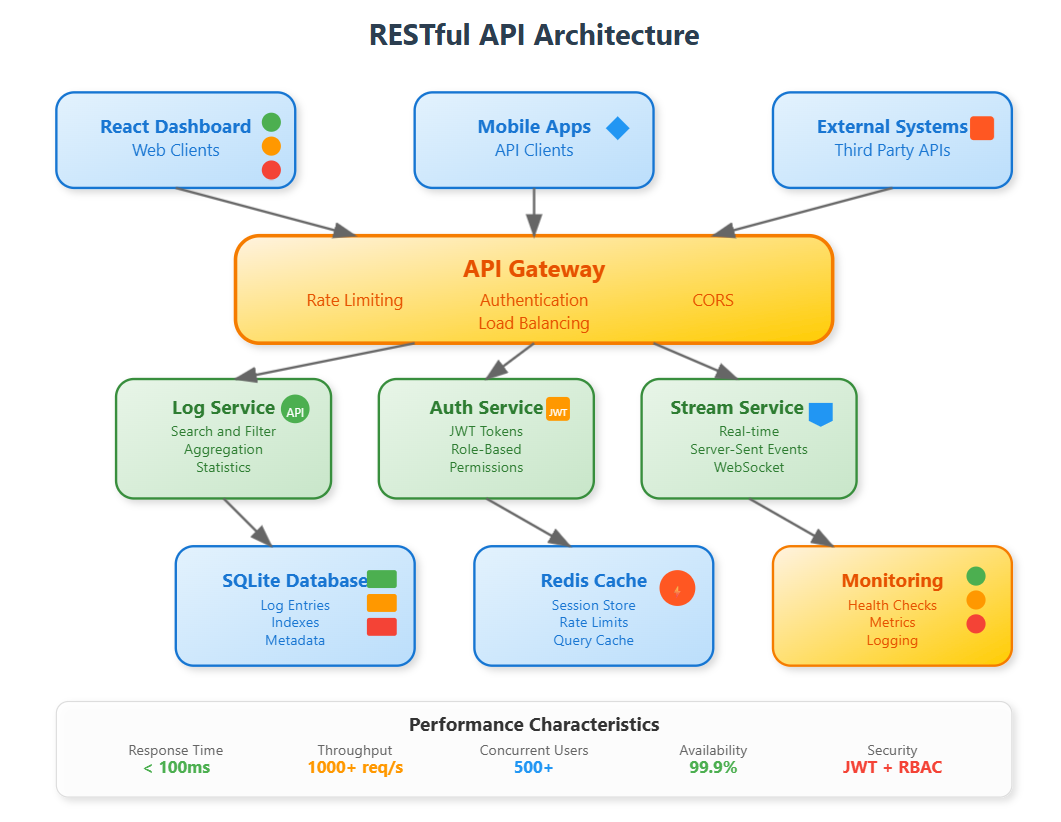
Day 85: Building Production-Ready RESTful APIs for Distributed Log Processing
What We're Building Today
High-Level Agenda:
Today's Mission: Transform Your Log Platform into an API-First Service
You've built powerful log processing engines and added intelligent NLP capabilities. Today, we're creating the gateway that makes your system accessible to the world - a production-ready RESTful API that handles millions of log queries while maintaining sub-100ms response times.
Why APIs Matter in Distributed Log Processing
Think about how engineers at Netflix access their log data - they don't SSH into servers or run complex database queries. They use elegant APIs that abstract away the complexity of distributed storage and processing. Your API becomes the bridge between raw system complexity and developer productivity.
Modern log platforms handle diverse use cases: developers debugging applications, ops teams monitoring system health, security analysts investigating incidents, and business teams analyzing user behavior. Each group needs different data views and access patterns, all served through a unified API interface.
[

](https://substackcdn.com/image/fetch/\)s!FpN9!,fauto,qauto:good,flprogressive:steep/https%3A%2F%2Fsubstack-post-media.s3.amazonaws.com%2Fpublic%2Fimages%2F84d66f2b-1c97-442b-ba90-387acb6d3f4b_1061x822.png)
Core REST API Design Principles
[Read more](https://sdcourse.substack.com/p/day-85-building-production-ready)
You can include dynamic values by using placeholders like: https://drewdru.local.press/articles/d25aff1d-5af5-43ec-88dc-a29adaae8a91, Drew Dru, https://sdcourse.substack.com/p/day-85-building-production-ready, drewdru, drewdru, drewdru, drewdru These will automatically be replaced with the actual data when the message is sent.
Write a comment