Day 81: Building Smart Troubleshooting - AI-Powered Incident Resolution
Day 81: Building Smart Troubleshooting - AI-Powered Incident Resolution
What We're Building Today
Today we're creating an intelligent troubleshooting system that learns from past incidents to suggest solutions for current problems. Here's what you'll build:
Core Components:
Key Technologies:
The Troubleshooting Intelligence Problem
When Netflix's streaming service encounters an issue, their engineers don't start from scratch. They leverage a sophisticated system that matches current symptoms against millions of past incidents, instantly surfacing relevant solutions. This isn't just pattern matching - it's intelligent correlation that considers context, timing, and system state.
Traditional troubleshooting relies on human memory and documentation searches. Smart systems analyze error patterns, system metrics, and resolution outcomes to build predictive models that get better over time.
[

](https://substackcdn.com/image/fetch/\)s!IYl1!,fauto,qauto:good,flprogressive:steep/https%3A%2F%2Fsubstack-post-media.s3.amazonaws.com%2Fpublic%2Fimages%2F2936c4b2-0517-40a0-a032-9ab95d70e956_1619x1259.png)
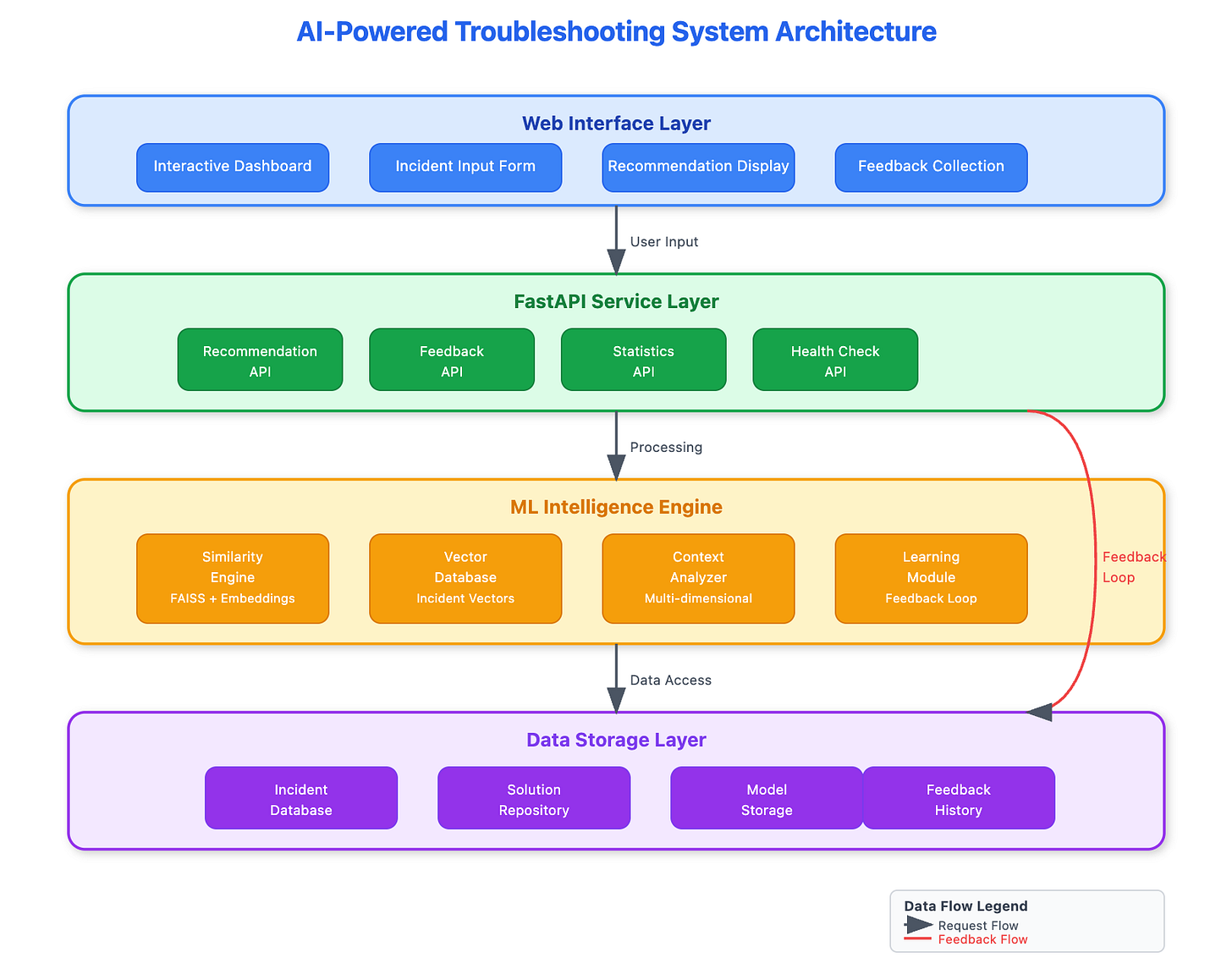
\[ ARCHITECTURE DIAGRAM\]
Core Architecture: The Recommendation Engine
Our system operates through four key stages:
[Read more](https://sdcourse.substack.com/p/day-81-building-smart-troubleshooting)
You can include dynamic values by using placeholders like: https://drewdru.syndichain.com/articles/8289d254-1305-4330-843f-7a304ebf67b1, drewdru, https://sdcourse.substack.com/p/day-81-building-smart-troubleshooting, drewdru, drewdru, drewdru, drewdru These will automatically be replaced with the actual data when the message is sent.
Write a comment