Those who "follow the data" die early

- Ex. Cigarette Marketing Campaigns & Health Claims 🚬📢
- 📋 Popular Marketing Strategies & Health Claims:
- 📊 Misleading “Data” & Pseudoscience:
- 🚨 The Turning Point:
If you are one who “follows the data,” it is likely that you would have smoked a pack of cigarettes back in the 1940s.
I encourage always questioning the motives of those providing the data. The greatest example is cigarette companies’ tactics to get people smoking before the “data” about its health risks were proven mainstream.
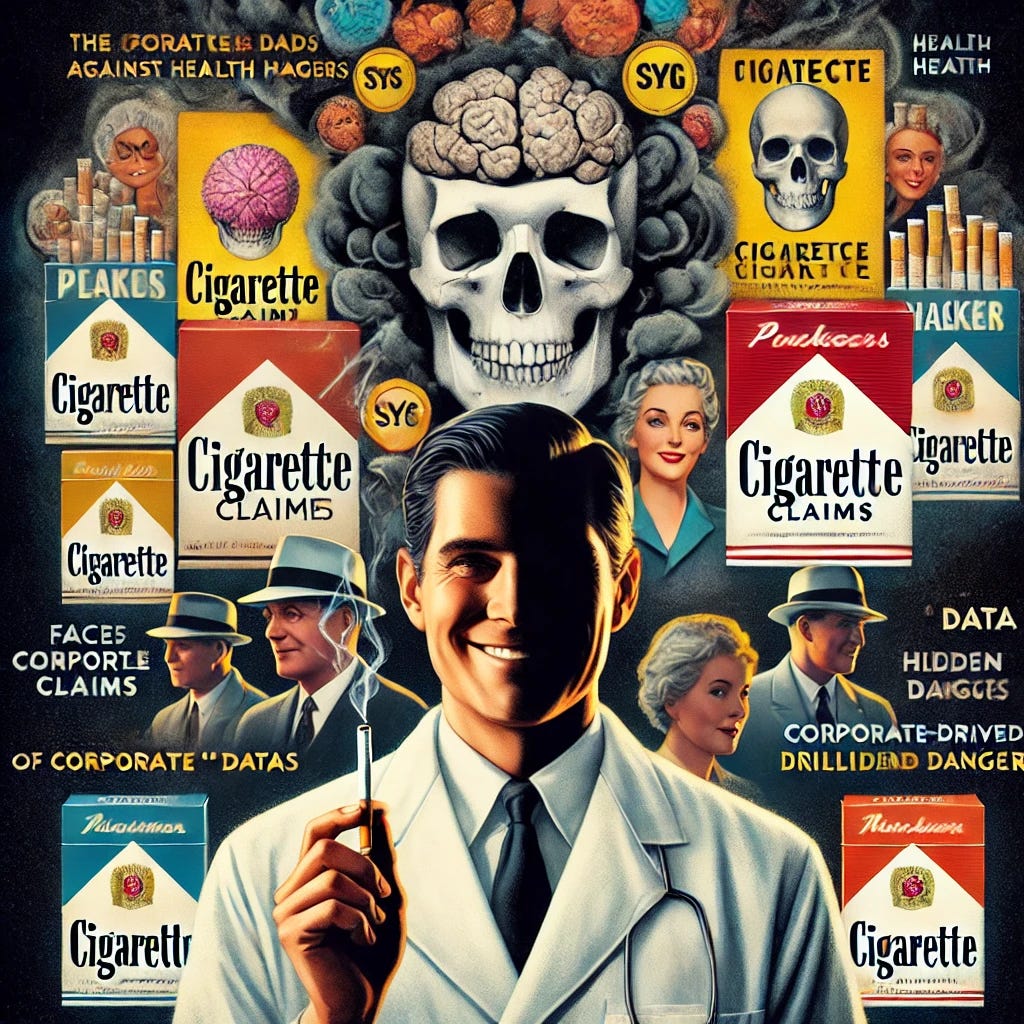
Ex. Cigarette Marketing Campaigns & Health Claims 🚬📢
During the early-to-mid 20th century, cigarette companies launched aggressive marketing campaigns, often using false health claims and trusted figures to promote smoking as safe—even healthy. Here’s how they did it:
📋 Popular Marketing Strategies & Health Claims:
1️⃣ Doctor Endorsements (“Doctors Recommend”) 🩺
- Campaign Example: “More Doctors Smoke Camels than Any Other Cigarette” (1940s–1950s).
- Strategy: Tobacco companies funded biased surveys and ads showing doctors smoking, implying cigarettes were medically approved.
- Health Claim: Suggested smoking was safe, and some ads even claimed certain brands were “gentler on the throat.”
2️⃣ Cigarettes as a Cure for Coughs & Throat Irritation 🌬️
- Campaign Example: “L&M Filters Are Just What the Doctor Ordered” (1950s).
- Strategy: Marketed filtered cigarettes as being healthier and smoother for the throat.
- Health Claim: Early ads claimed cigarettes could soothe throat irritation or were less harsh on the lungs.
3️⃣ Weight Loss & Appetite Suppression Claims ⚖️
- Campaign Example: “Reach for a Lucky Instead of a Sweet” (1930s–1940s, Lucky Strike).
- Strategy: Targeted women by promoting cigarettes as an appetite suppressant.
- Health Claim: Implied smoking was a way to stay slim and avoid gaining weight.
4️⃣ Athletic & Lifestyle Endorsements 🏃♂️
- Campaign Example: Ads featured athletes, pilots, and cowboys (e.g., Marlboro Man) promoting cigarettes.
- Strategy: Portrayed smokers as strong, adventurous, and masculine.
- Health Claim: Suggested smoking was compatible with an active, healthy lifestyle.
5️⃣ “Safer” Filtered & Low-Tar Cigarettes ⚗️
- Campaign Example: “Now! Best Taste, Lowest Tar!” (1970s).
- Strategy: After health risks became harder to deny, companies marketed filtered or “light” cigarettes as healthier alternatives.
- Health Claim: Implied that filters removed harmful substances, though studies later showed these claims were misleading.
6️⃣ Use of Celebrities & Cultural Icons 🌟
- Campaign Example: Ads featured Hollywood stars like Lucille Ball and Ronald Reagan promoting brands.
- Strategy: Linked smoking with glamour, fame, and social status.
- Health Claim: Not direct, but the association with success and beauty made smoking seem desirable and harmless.
📊 Misleading “Data” & Pseudoscience:
- False Medical Studies: Tobacco companies funded studies to downplay health risks, often promoting biased data suggesting no strong link between smoking and cancer.
- Filtered Cigarettes: Promoted as “safer,” but studies revealed that filters often made smokers inhale more deeply, increasing exposure to toxins.
- Nicotine Safety Claims: Some early ads suggested that nicotine wasn’t addictive, despite internal company knowledge to the contrary.
🚨 The Turning Point:
- In 1964, the U.S. Surgeon General confirmed that smoking causes lung cancer and heart disease, leading to:
✔ Warning labels on cigarette packs (1966).
✔ A ban on TV and radio ads (1971).
✔ The rise of anti-smoking campaigns in the 1980s and beyond.
It took 40+ years, from the time cigarettes became popularized in the 1920s to the time the government revealed “data” suggesting its true nature and how it is bad for you.
Cigarette companies make more money the more people smoke their products. Their motivation is clear. Of course, they will tell you cigarettes are good for you.
This is no different than modern-day pharmaceutical companies. If everyone was healthy, they would go out of business.
So it comes as no surprise that Bayer owns both Monsanto (the company behind the glyphosate-ridden, cancer-causing product of RoundUp) and the cancer drugs that “cure” it.
It comes as no surprise that most studies on drugs are funded by Pharmaceutical companies.
The question that needs to be asked when looking at “data” is who is providing the “data,” where did they get it, and what are their motivations?
You can only get data after the fact so anything new to the market should be avoided as there is no real evidence to validate the things they suggest.
With Truth & Love 🥛🍯,
Shaughnessy
Write a comment