Major Winter Storm Hits US, Causing Fatalities and Widespread Outages
Major Winter Storm Hits US, Causing Fatalities and Widespread Outages government Government-aligned coverage portrays the winter storm as a dangerous but controlled natural event, highlighting seven reported deaths, over a million customers without power, and emergency declarations in 23 states alongside assurances that emergency services are fully prepared. The emphasis is on official actions, public safety guidance, and a narrative of coordinated response rather than on structural failings or political accountability. @@czfy…lhuw
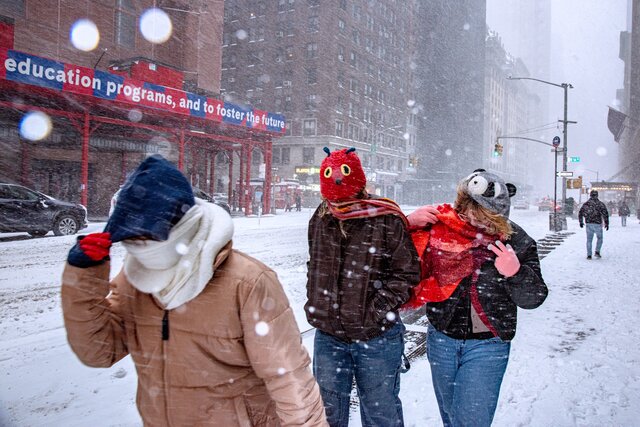
opposition Opposition coverage presents the storm as a historic and deeply disruptive crisis, citing at least 11 fatalities, hundreds of thousands without electricity, and around 16,000 canceled flights while underscoring strains on infrastructure and everyday life. It leans into systemic critiques and practical survival advice, implying that government preparedness is insufficient and that individuals must compensate for institutional shortcomings. @Meduza @Novaya Gazeta Europe A major winter storm has swept across large parts of the United States, with both government-aligned and opposition outlets agreeing that it has caused multiple fatalities, widespread power outages, and severe disruption to transportation. Reports converge on the central and southern states as particularly hard-hit, including Texas, Tennessee, Kansas, Missouri, Louisiana, Alabama, Georgia, and extending toward New England and parts of the East Coast. Both sides note that hundreds of thousands to over a million electricity customers have lost power, and that thousands of flights have been canceled at major hubs, leaving travelers stranded and complicating emergency responses. There is shared acknowledgment that states of emergency have been declared across a broad swath of the country, numbering roughly in the low twenties, as authorities urge residents to stay indoors and avoid nonessential travel.
Coverage across the spectrum also agrees that the storm is historic in scale and intensity, bringing dangerous cold, heavy snowfall, and ice that strain aging infrastructure and emergency services. Both government and opposition sources describe a federal and state-level emergency response framework being activated, including formal emergency declarations and mobilization of local responders to manage outages, road closures, and public safety messaging. They similarly emphasize the vulnerability of residents not used to extreme cold and the need for basic precautions such as staying warm, conserving heat, and monitoring official advisories. There is shared context that the storm fits into a recurring pattern of severe winter weather events that test resilience of power grids, transportation networks, and preparedness planning across multiple US regions.
Points of Contention
Scale and severity. Government-aligned coverage emphasizes seven confirmed deaths and more than one million customers without power, framing the event as severe but numerically bounded while stressing that the situation is being monitored. Opposition outlets highlight higher casualty and disruption figures, citing at least 11 deaths, more than 800,000 people without electricity, and roughly 16,000 canceled flights, thereby underscoring a larger and more chaotic impact. This difference in numbers, time-stamped only loosely in both cases, leads government sources to portray a serious but manageable disaster, while opposition sources depict a broader, rapidly escalating crisis across more states and sectors.
Government preparedness and response. Government reporting foregrounds official action, stressing that 23 states have declared emergencies and quoting the president’s assurance that emergency services are ready and properly equipped to handle the storm. Opposition coverage mentions emergency declarations in at least 20 states but focuses less on political reassurance and more on the practical consequences for people on the ground, such as prolonged power cuts and airport paralysis. As a result, government-aligned narratives lean toward demonstrating competence and control, whereas opposition narratives imply that declared emergencies have not fully translated into effective protection for all affected residents.
Framing of responsibility and accountability. In government-aligned stories, the storm is framed mainly as an unavoidable natural disaster, with emphasis on extreme weather conditions and calls for public cooperation rather than on policy failures. Opposition outlets, while also acknowledging the natural causes, more strongly hint at systemic vulnerabilities, particularly of the power grid and transportation infrastructure, implying that authorities bear responsibility for longstanding underinvestment and lack of preparedness. Thus, government coverage tends to mute discussion of blame, while opposition reporting subtly uses the storm’s impact to question the adequacy of current governance and infrastructure policy.
Human impact and practical guidance. Government-aligned coverage focuses on aggregated statistics, official warnings, and the status of critical systems like power and emergency services, offering limited detail on everyday coping strategies. Opposition sources not only enumerate casualties and disruptions but also provide practical survival advice drawn from colder countries, stressing how individuals can stay warm, manage without heat, and adapt to extreme conditions. This contrast means government outlets prioritize institutional messaging and macro-level impact, while opposition outlets center individual experience and self-help, implicitly suggesting that state measures alone may not be sufficient.
In summary, government coverage tends to frame the storm as a serious but contained natural disaster managed by a ready and responsive state, while opposition coverage tends to stress higher impact figures, systemic weaknesses, and the need for individual coping strategies that fill perceived gaps in official preparedness.
Story coverage nevent1qqswsmmenlwku4230xgjv5zs03au4e7v80ja20pn5qnh5wqrztqavhs56j3ze nevent1qqstdcne2yws660r3rnkww8jzl2u8hgux0262cnhaqe434860h35xygsmpa47 nevent1qqs03ww2wk3mfg87f8tce6s9hnvnl39ydpzc0x56j5sqmc0ax6txeycnglfvu
Write a comment