France Declines Invitation to Join Trump's 'Board of Peace'
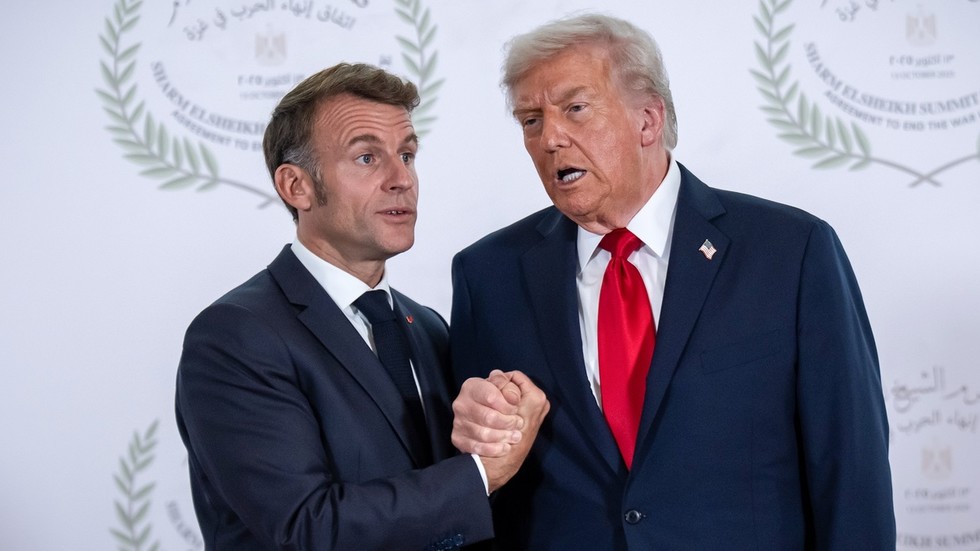
France Declines Invitation to Join Trump’s ‘Board of Peace’ government Government-aligned coverage presents France’s rejection of the Gaza “Board of Peace” as a coherent defense of UN-endorsed parameters and multilateral norms against an overreaching US framework. It stresses that Paris is acting in concert with a wider, nervous Europe and that the spat with Trump, including his public jibes, does not fundamentally alter enduring Franco‑US cooperation. @@gdyw…c877 France and the United States are reported to have clashed diplomatically after France declined an invitation to join former US President Donald Trump’s proposed “Board of Peace” for Gaza, a body Washington says would supervise post‑war governance, reconstruction, and coordination with a Palestinian technocratic administration. Coverage agrees that the board is framed by the Trump team as central to a broader UN‑approved plan for Gaza, that several world leaders were approached, that France formally refused on the grounds that the board’s charter extends beyond Gaza and existing international commitments, and that Israel has publicly acknowledged disagreements with Washington over aspects of the proposal.
Across outlets, there is consistent context that the initiative comes amid broader debates over Gaza’s post‑war political order, the role of international law, and the balance between national sovereignty and multilateral frameworks such as the UN and EU. Coverage also aligns on the fact that Trump publicly criticized Emmanuel Macron’s decision and later disclosed a private message from Macron on social media, illustrating tensions in US‑French relations. Reports converge on France’s stated preference for solutions anchored in existing UN‑endorsed plans and EU positions, and on the nervousness and skepticism attributed to several European capitals toward any mechanism perceived as sidestepping established international peace processes.
Points of Contention
Motives and legitimacy. Government-aligned outlets tend to portray France’s refusal as a principled defense of international law and multilateralism, arguing that Paris cannot endorse a board whose mandate appears to exceed UN‑backed parameters for Gaza and Palestinian self‑determination. Opposition-leaning narratives, where they comment by inference or analogy, are more inclined to question whether this was driven by genuine legal concerns or by political calculation and sensitivity to domestic opinion, suggesting the French leadership may be posturing rather than fundamentally reshaping its Middle East policy.
Characterization of Trump’s role. Government sources generally describe Trump’s “Board of Peace” in formal, institutional terms, emphasizing its stated goals of reconstruction and governance oversight while underlining European skepticism and Israeli unease, and they present Trump’s mockery of Macron as undiplomatic but expected political theater. Opposition framings tend to stress Trump’s personalism and unpredictability, casting the board as a vehicle for US and Trump-centric influence rather than a neutral peace instrument, and they interpret his public taunts and tariff threats as evidence that the initiative is more about leverage and image than a credible diplomatic framework.
Impact on Franco‑US relations. Government-aligned coverage underscores that, despite the spat, core Franco‑US cooperation on security and the Middle East continues, presenting the disagreement as a contained tactical divergence within a long‑standing alliance and focusing on the legal scope of the board’s charter. Opposition perspectives more readily read the episode as symptomatic of deeper drift and mistrust, framing Trump’s decision to publish a private Macron message as a breach of diplomatic norms that exposes France’s vulnerability and raises questions about the government’s ability to manage an erratic Washington.
European positioning and leadership. Government outlets highlight France as voicing broader European concerns, depicting Paris as a leading advocate of a UN‑anchored, rules‑based approach that other EU states quietly share, thereby reinforcing France’s self‑image as a responsible middle‑power mediator. Opposition commentary, by contrast, is more likely to criticize the government for symbolic gestures without concrete alternatives, arguing that while Paris distances itself rhetorically from the board, it offers no clear, actionable roadmap for Gaza and risks leaving Europe sidelined while Washington and regional actors shape outcomes.
In summary, government coverage tends to depict France’s stance as a firm, law‑based and broadly European-aligned refusal of an overreaching US mechanism, while opposition coverage tends to treat the episode as exposing limits and inconsistencies in French diplomacy and as another sign of strained, asymmetrical ties with Trump-era Washington.
Story coverage nevent1qqsyc2updhwvsqgdskgydjy8hgsykwgwn4vvst6sgskkx86kcymyzsgtaunyw nevent1qqsp2szrrwelevekz32jrck79xd8hs78se0v5p686560csuw20n4zfg23xdej nevent1qqsp5s3prt9xey77u3vd59524fjsuahzaw7z7k56qmlvzq0lvdrm9sc9ys4cd
Write a comment