US Vice President Vance Says US Expects Share of Greenland's Resources for Protection
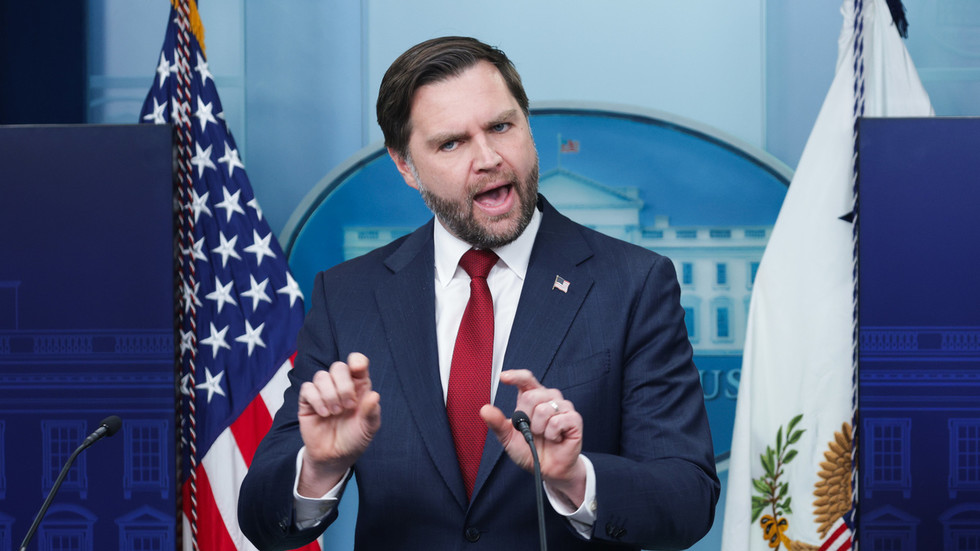
US Vice President Vance Says US Expects Share of Greenland’s Resources for Protection government Government-aligned coverage presents Vance’s demand for a share of Greenland’s resources as a logical, transactional recognition of the US role as the island’s true security guarantor against Russia and China. It casts the proposed “Greenland deal” as a continuation of Trump-era strategic thinking that would formalize US access, strengthen missile defense, and generate mutual economic benefits. @@czfy…lhuw @@gdyw…c877 US and government-aligned coverage report that US Vice President J.D. Vance has publicly argued that the United States should receive rights to or a share of Greenland’s natural resources in return for providing the island’s security. The reports agree that Vance framed the US as the real guarantor of Greenland’s defense, emphasized Greenland’s role in the US missile defense architecture, and cited potential threats from Russia and China to justify the US military presence. They also concur that Vance connected his comments to ongoing or proposed arrangements under which the US would secure expanded military access and mining rights in Greenland, and that he referenced former President Donald Trump’s efforts to structure a broader “Greenland deal.”
Across the available coverage, there is shared context that Greenland, while part of the Kingdom of Denmark, holds major strategic significance in the Arctic, especially for US early-warning and missile defense systems. Both sides agree that the region’s growing geopolitical importance is tied to great-power competition with Russia and China and to untapped natural resources that are becoming more accessible as Arctic ice recedes. They also acknowledge that the United States already maintains a military footprint on the island and that any expanded deal would involve formal arrangements on access, security cooperation, and resource extraction that intersect with international law, NATO frameworks, and the longstanding US-Danish relationship.
Points of Contention
Legitimacy of claims. Government-aligned sources present Vance’s assertion that the US deserves a share of Greenland’s resources as a reasonable form of compensation for security guarantees, framing it as a transactional but legitimate extension of long-standing defense commitments. In the absence of explicit opposition coverage, it is likely that opposition outlets would instead question the legal and moral basis for tying territorial defense to resource claims, suggesting it resembles a neo-colonial or protection-racket posture. Government narratives stress that US power is what practically deters Russian or Chinese advances in the Arctic, whereas opposition narratives would be more inclined to highlight Denmark’s sovereignty, Greenlandic self-rule, and international norms limiting resource claims linked to military leverage.
Framing of security and threat. Government coverage emphasizes Russian and Chinese ambitions in the Arctic, portraying Vance’s remarks as a pragmatic response to real and growing threats that justify both a strong US posture and some form of compensation. Hypothetical opposition coverage would likely argue that the threat environment is being overstated to rationalize an expansion of US military basing and corporate mining interests, questioning whether such a linkage truly enhances Greenland’s or Denmark’s security. While government-aligned outlets focus on deterrence and missile defense infrastructure, opposition voices would be more prone to scrutinize the securitization of economic negotiations and its impact on regional stability and alliance politics.
Characterization of Trump-era dealmaking. Government-aligned reporting situates Vance’s comments as consistent with former President Trump’s earlier ideas about a Greenland deal, portraying them as part of a broader strategic plan to formalize US access and resource rights. Opposition-oriented coverage, if present, would likely recall Trump’s past remarks about “buying” Greenland as diplomatically clumsy and damaging, and would treat Vance’s framing as a continuation of that controversial approach under a new label. Government narratives tend to treat the proposed framework as a serious negotiation to be worked out with partners, whereas opposition narratives would more likely focus on reputational costs, alliance friction with Denmark, and domestic sensitivities in Greenland.
Impact on Greenland and Denmark. Government-aligned outlets mostly center the US perspective, assuming that increased resource extraction tied to security guarantees would be mutually beneficial and bolster Greenland’s development alongside US strategic interests. Opposition sources would be more inclined to foreground Greenlandic and Danish concerns, pointing to risks of environmental degradation, unequal economic benefits, and the marginalization of local decision-making if Washington’s security leverage dictates terms. While government coverage implies that US defensive contributions justify a larger role in managing Greenland’s resources, opposition coverage would stress the need for stronger protections of sovereignty, environmental standards, and indigenous rights against great-power bargaining.
In summary, government coverage tends to frame Vance’s remarks as a pragmatic, strategically justified proposal for compensating US security commitments with resource rights, while opposition coverage tends to portray such linkage as legally dubious, diplomatically risky, and potentially exploitative of Greenland’s and Denmark’s sovereignty.
Story coverage nevent1qqsrdvfaze8edqwz2elpl5q3668fg6648fhv6drzmjjmuxtrfckulxsuhg7au nevent1qqs95g3screknef5m83hshtw49sdfkmr323rrms296m25taclel75fcd5dmgc
Write a comment