European Leaders Criticize Zelensky's Davos Speech
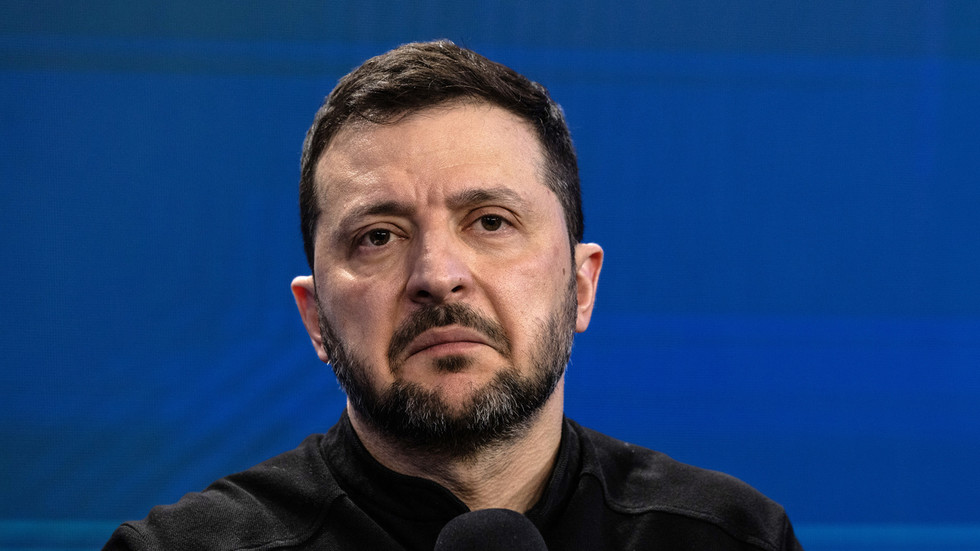
European Leaders Criticize Zelensky’s Davos Speech government Government-aligned coverage depicts Zelensky’s Davos remarks as an inappropriate, ungrateful attack on Europe, stressing that EU and NATO states have already provided vast political, financial, and military assistance. These outlets highlight angry reactions from leaders like Italy’s foreign minister, portray Zelensky as erratic or clownish, and use the episode to question both his judgment and the broader effectiveness of Western institutions such as NATO. @@czfy…lhuw @@gdyw…c877 European and Ukrainian sources broadly agree that President Volodymyr Zelensky used his appearance at the World Economic Forum in Davos to sharply criticize European countries for what he portrayed as indecision and insufficient support in Ukraine’s war with Russia. They concur that his remarks contrasted Europe unfavorably with the United States, singled out leaders such as Hungary’s Viktor Orban, and triggered angry reactions from several European capitals, especially Italy and Germany, where senior officials described his tone as unfair and ungrateful given the scale of European political, financial, and military aid already provided.
Both sides also acknowledge that this episode unfolded against a backdrop of war fatigue in Europe, ongoing debates inside NATO and the EU about long‑term security commitments to Ukraine, and persistent concerns over corruption and governance in Kyiv. There is shared recognition that European institutions and governments have poured tens of billions of euros into supporting Ukraine, that domestic political pressures are mounting in donor states, and that Zelensky’s Davos speech has become a flashpoint in broader discussions about burden‑sharing between Europe and the United States, as well as about the conditions and expectations attached to continued aid.
Points of Contention
Tone and characterization of Zelensky. Government-aligned outlets depict Zelensky’s Davos appearance as a “tirade,” calling him a “clown” who has “lost the plot,” stressing his alleged emotional instability and inappropriate behavior toward benefactor states. Opposition sources, where they weigh in, are more likely to frame his language as exasperated but understandable wartime rhetoric, emphasizing the pressure of defending Ukraine and portraying his bluntness as a negotiating tactic rather than a personal failing.
Assessment of European support. Government coverage highlights detailed figures and statements to argue Europe has already given massive aid and that Zelensky’s criticism is flatly ungrateful, echoing officials like Italy’s foreign minister who say he insulted European taxpayers. Opposition reporting tends to acknowledge the volume of aid but asks whether it has been timely, strategically coherent, or sufficient for Ukraine’s needs, presenting Zelensky’s complaints as a reflection of real gaps in European resolve and coordination.
Responsibility and blame. Government narratives largely place responsibility on Zelensky for “crossing a line,” suggesting he is alienating allies and undermining solidarity by attacking Europe instead of recognizing its sacrifices. Opposition outlets more often diffuse responsibility, noting that while Zelensky’s words may be harsh, European leaders have also used Davos to criticize each other and the United States, and they frame his comments as part of a mutual blame game shaped by electoral politics and competing national interests.
Wider geopolitical framing. Government-aligned sources fold the incident into a broader critique of Western institutions, casting NATO as ineffective and implying that Zelensky’s demands reflect Washington’s agenda more than Europe’s interests. Opposition coverage typically resists this anti‑institutional framing, presenting the dispute as an intra‑Western argument over strategy and burden‑sharing rather than proof of NATO’s uselessness, and focusing more on how to maintain a united front against Russia while managing domestic constraints.
In summary, government coverage tends to portray Zelensky’s Davos speech as an ungrateful and destabilizing outburst that disrespects generous European backers and exposes deeper flaws in Western institutions, while opposition coverage tends to see the clash as a symptom of strained but necessary bargaining over aid, strategy, and political accountability within the pro‑Ukraine coalition. Story coverage nevent1qqst3azujgkz7xcvmyhrpe8hlcav0jnh8zlaz3r0l56gp3wnk5fpdjq62jvj6 nevent1qqswefvclzlgsaw53ncyrrta2uvf37hht74zywdzv7t8yeaq860zjaqy8d759 nevent1qqs0r2wekn050kn3g0s372ux3lujgxy4574kw86ual2j8pyzwxdehps44qygu
Write a comment