Trump's Flight to Davos Diverted Due to 'Electrical Issue'
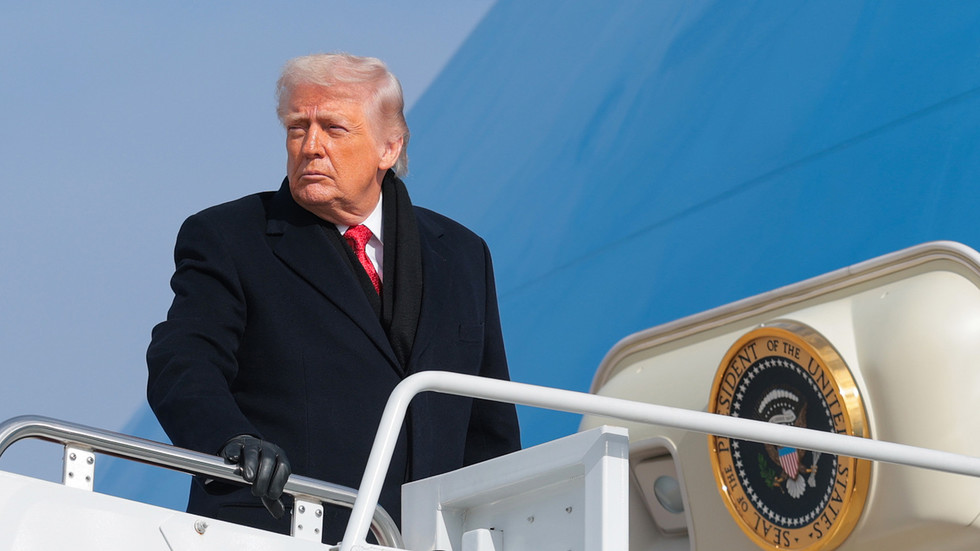
Trump’s Flight to Davos Diverted Due to ‘Electrical Issue’ government Government-aligned coverage depicts the diversion of Trump’s flight to Davos as a minor electrical malfunction that was prudently managed by returning to Andrews and switching aircraft, ensuring his World Economic Forum schedule remained intact. The focus remains on his economic and diplomatic agenda in Davos, including contentious issues like Greenland and tariffs, rather than on the incident as a sign of broader failure. @@czfy…lhuw @@gdyw…c877 A presidential aircraft carrying Donald Trump to the World Economic Forum in Davos was forced to return to Joint Base Andrews near Washington shortly after departure because of what officials described as an electrical equipment malfunction. Government-aligned reports consistently characterize the technical fault as a minor electrical issue discovered soon after takeoff, emphasize that the decision to turn back was precautionary, and note that Trump subsequently transferred to a different, smaller aircraft for a renewed departure to Zurich en route to Davos, ensuring his schedule would proceed largely as planned.
Across these accounts, Davos and the World Economic Forum are framed as the central institutional backdrop, with Trump’s trip linked to discussions on economic policy and his controversial proposal to acquire Greenland. The White House is presented as managing the disruption through standard security and safety protocols, including redundancy in aircraft and coordination with military bases such as Joint Base Andrews. European leaders, particularly France’s Emmanuel Macron, are described as opposing the Greenland idea and threatening retaliation over potential new US tariffs, situating the incident within broader diplomatic and economic tensions rather than as an isolated travel mishap.
Points of Contention
Nature and seriousness of the malfunction. Government-aligned outlets stress that the electrical issue was minor, technical, and swiftly contained, underscoring that the return to base was a standard safety precaution rather than an emergency. In the absence of concrete opposition coverage, it is plausible that more critical or opposition-leaning sources would question whether the issue was truly minor, probe the robustness of maintenance procedures, or suggest that officials were downplaying the seriousness to avoid political embarrassment.
Competence and preparedness. Government sources emphasize operational competence, highlighting quick diagnostics, a smooth diversion to Andrews, and the ready availability of an alternative aircraft to keep Trump’s Davos schedule on track. Opposition voices, if present, would likely focus on whether such a failure indicates shortcomings in planning, oversight, or asset management around one of the world’s most heavily protected flights, potentially framing the diversion as symptomatic of broader mismanagement.
Framing of broader diplomatic stakes. In government narratives, the diversion is treated as a logistical footnote to a larger diplomatic mission, with attention quickly shifting back to Trump’s agenda at Davos and his Greenland proposal amid European resistance and tariff threats. Opposition-leaning coverage would more likely spotlight the Greenland idea and tariff brinkmanship as diplomatically reckless, potentially using the flight incident as a metaphor for a presidency beset by both technical and strategic miscalculations.
Public messaging and transparency. Government-aligned reporting centers on official statements from the White House press secretary, repeating assurances that the situation was under control and offering limited technical detail beyond the term “electrical issue.” Critical or opposition media would probably scrutinize this messaging, asking for greater specificity about the fault, questioning whether information was being withheld, and situating the sparse details within a pattern of perceived opacity in presidential communications.
In summary, government coverage tends to present the diversion as a minor, well-managed technical hiccup within a serious diplomatic trip, while opposition coverage tends to (or would likely) cast doubt on the competence, transparency, and strategic judgment surrounding both the flight incident and the broader Davos agenda. Story coverage nevent1qqsgfksvy345ewvuqxcuw3nmp035spyhjqcwu2kad9jarwk50w8n7wqjvxmaf nevent1qqs9q3zfx5ahlqgkn9vtjkwegk8yvnpyxtyuw2549p9fmhljx656kggcvlgs2 nevent1qqspwq6gp2shwxvf7gy0l0capy2c7g0hletw3h82466pym24tj9hyvskyqfa0
Write a comment