Russian Films Nominated for Academy Awards
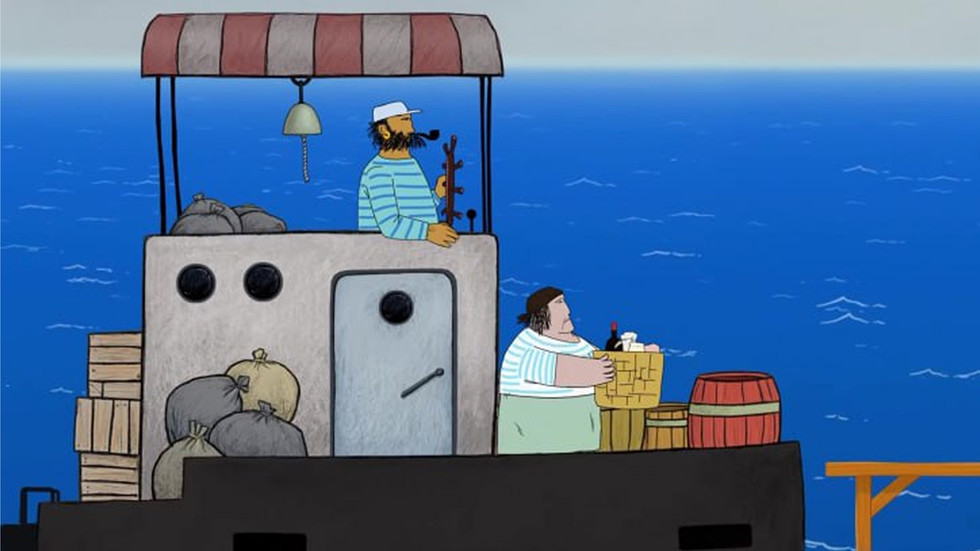
Russian Films Nominated for Academy Awards government Government-aligned outlets emphasize the Oscar nomination of Konstantin Bronzit’s “Three Sisters” as a testament to the strength and universality of Russian art, achieved despite strained relations with the West. They frame the news mainly in cultural and patriotic terms, highlighting artistic merit rather than domestic political conflict. @@gdyw…c877
opposition Opposition outlets stress that both “Three Sisters” and the documentary “Mr. Nobody vs. Putin” have been nominated, underscoring the political significance of an openly anti-Putin film reaching the Oscars. They interpret this as evidence that international institutions are amplifying critical voices from Russia and associating the country’s global image with opposition to the current regime. @Novaya Gazeta Europe Russian and opposition-leaning outlets agree that Russian cinema has secured Academy Award recognition this year, notably through the animated short “Three Sisters” by director Konstantin Bronzit, which has been nominated in the best animated short category. Both sides note that the nominations are for the upcoming Academy Awards ceremony, emphasize the international stature of the Oscars as a benchmark of global film success, and situate Russia as present on that stage through these works.
They also share the broader context that Russian films continue to appear in major Western award competitions despite the backdrop of deteriorated relations between Russia and Western countries since the 2022 invasion of Ukraine. Both acknowledge that the Academy of Motion Picture Arts and Sciences functions as an important gatekeeper of international prestige and that recognition there can significantly elevate the visibility of Russian filmmakers and narratives, regardless of domestic political alignment.
Points of Contention
Which films matter most. Government-aligned coverage foregrounds “Three Sisters” as the key achievement, often presenting it as the main or even sole Russian nominee and highlighting its artistic qualities and folklore-based plot. Opposition outlets, by contrast, stress that two Russian works were nominated: Bronzit’s animation and the documentary “Mr. Nobody vs. Putin” by Pavel Talankin, treating both as significant but giving particular weight to the explicitly political documentary.
Framing of politics. Government sources tend to describe the nomination of “Three Sisters” within a neutral or softly patriotic narrative, mentioning strained cultural ties with the West only to underscore that Russian art is still welcomed abroad, while avoiding detailed discussion of internal political criticism. Opposition media frame the nominations as inherently political, underscoring that a film directly critical of the Russian president has reached the Oscars and presenting this as evidence that international institutions recognize and validate dissenting Russian voices.
Narrative about Russia’s image abroad. Government coverage usually interprets the nomination as proof that, despite geopolitical confrontation and sanctions, Russian culture retains universal appeal and can serve as a bridge with Western audiences. Opposition outlets instead argue that Russia’s global image is increasingly tied to authoritarianism and war, and that the prominence of a film like “Mr. Nobody vs. Putin” shows that the country is being discussed internationally primarily through the lens of opposition to the current regime.
Significance of international recognition. Government-aligned reporting casts Oscar recognition as a point of national pride and soft-power success, implying that such accolades attest to the resilience and quality of Russian culture irrespective of politics. Opposition reporting emphasizes that international awards matter because they offer protection and amplification for critical artists and narratives that face marginalization or pressure at home, suggesting that the true significance of the nominations lies less in national prestige and more in giving a platform to regime-critical perspectives.
In summary, government coverage tends to highlight “Three Sisters” as an apolitical triumph of Russian culture and a sign of continued international respect, while opposition coverage tends to stress that the Oscars have elevated not only artistic achievement but also pointed criticism of the Russian leadership through “Mr. Nobody vs. Putin” and thus reflect a broader global concern with Russia’s internal politics. Story coverage nevent1qqsdt0hzsadv62atscn5uqq35vgred2mn5whxv0c9lpzgkakamvh6qgftyugk nevent1qqsf5chun0qlaa3xpjeumhnyyk6a546gaqgw0v9lws4v2vfcrpd4a0ck4n3rx
Write a comment