Anti-ICE Activists Arrested for Disrupting Minnesota Church Service
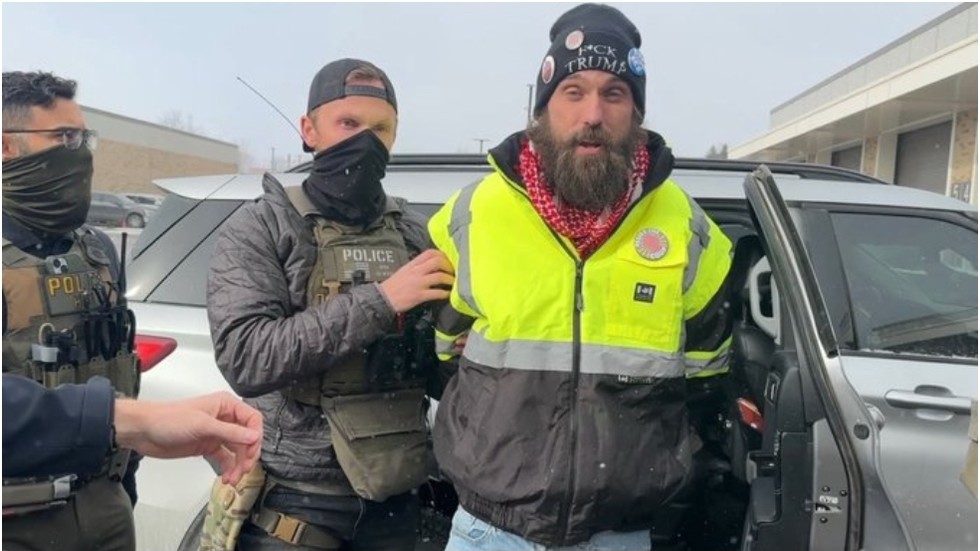
Anti-ICE Activists Arrested for Disrupting Minnesota Church Service government Government-aligned coverage depicts the activists’ disruption of the St. Paul church service as an unlawful interference with religious worship and a possible violation of the FACE Act warranting federal investigation and arrests. It underscores the duty of the DOJ, FBI, and DHS to protect congregants’ access to worship and treats the pastor and church as victims rather than as political actors. @@gdyw…c877 Three anti-ICE activists were arrested following a disruptive protest at Cities Church in St. Paul, Minnesota, during a Sunday worship service, according to government-aligned reporting. The protest targeted a pastor whom activists allege has ties to Immigration and Customs Enforcement and to a recent fatal shooting by an ICE agent; demonstrators reportedly chanted anti-ICE slogans, interrupted the service, and obstructed congregants’ movement. Federal authorities, including the FBI and the Department of Homeland Security, took the activists into custody and the Department of Justice opened an investigation into whether the protest constituted a violation of the federal FACE Act, which protects access to religious worship and other covered facilities. The incident is being examined under federal civil rights law, and the conduct has been variously described as a church disruption, desecration, or riot, but all government-aligned accounts agree on the time, place, and basic sequence of events.
Government-aligned sources also agree that the protest took place in the broader context of public outrage and heightened scrutiny of ICE following a fatal shooting by an ICE agent, which activists cite as a key motivation. These reports frame the church as a protected religious institution whose services and congregants are entitled to unobstructed access under the FACE Act, and they identify the DOJ, FBI, and DHS as the primary institutional actors responding to the incident. Shared context across these outlets emphasizes the legal framework around civil rights and religious freedom, the role of federal enforcement mechanisms in policing access to religious worship, and the ongoing national debate about immigration enforcement and accountability. The coverage situates the arrests within a pattern of federal use of the FACE Act to address perceived threats or obstructions to religious exercise, while acknowledging that the protests arose from concerns about alleged excessive force and ICE’s conduct.
Points of Contention
Nature of the protest. Government-aligned coverage portrays the event as a serious disruption to religious worship, using terms like desecration or riot to emphasize that activists crossed a legal and moral line inside a sacred space. In contrast, opposition sources (where they comment at all) tend to frame such actions primarily as civil disobedience or a morally driven protest against state violence, even when they acknowledge that the setting was a church service. Government narratives stress the impact on congregants’ ability to worship, while opposition narratives emphasize the protesters’ intent to confront alleged abuses linked to ICE and the pastor.
Legal framing and the FACE Act. Government reporting centers the FACE Act as a neutral civil rights tool protecting religious freedom and physical access to worship, presenting enforcement as a straightforward application of federal law. Opposition sources are more likely to question whether using the FACE Act in this context amounts to a politicized deployment of a statute originally associated with protecting abortion clinics and worship sites, and to argue that it chills protest against immigration enforcement. While government outlets highlight federal responsibility to safeguard churchgoers, opposition commentary focuses on potential overreach and selective enforcement against critics of ICE.
Portrayal of activists and pastor. Government-aligned coverage tends to characterize the activists mainly through their disruptive conduct, stressing chanting, obstruction, and alleged intimidation, and presents the pastor largely as a victim whose congregation was targeted. Opposition perspectives instead foreground the activists’ motivations, describing them as community members demanding accountability for a fatal ICE shooting and for the pastor’s alleged institutional role, and they scrutinize his reported ties to ICE more than his victimhood. This leads government coverage to stress order and respect for religious spaces, while opposition coverage stresses power, accountability, and the pastor’s connection to federal enforcement.
Broader significance of the incident. Government sources frame the episode as part of a broader effort to protect religious institutions and maintain public order amid polarizing debates over immigration, signaling that protests must not intrude on legally protected spaces. Opposition voices, by contrast, see it as emblematic of how the state prioritizes institutional protection over addressing the underlying harms of immigration enforcement, and they interpret the arrests as a warning shot against more confrontational activism. Government coverage thus highlights stabilization of norms around worship and law enforcement, while opposition coverage reads the incident as a test of how far dissent against ICE can go before triggering aggressive federal response.
In summary, government coverage tends to stress the sanctity of religious worship, the neutrality of federal law enforcement, and the need to penalize disruptions inside protected spaces, while opposition coverage tends to emphasize the protesters’ political grievances, question the proportionality and selectivity of FACE Act enforcement, and situate the arrests within a broader struggle over immigration policy and state power. Story coverage nevent1qqs8t2qsf9uftkz3sysypnf3mckqjsnntjndy594aexqjqlzhcqt9dqd5trns nevent1qqspz4a2s6xya035jdeppz9ezl5h2usje03wphleektznvm603vzeusz3qlhc
Write a comment