Fire Engulfs Carpentry Workshop and Spreads to House in Čačak
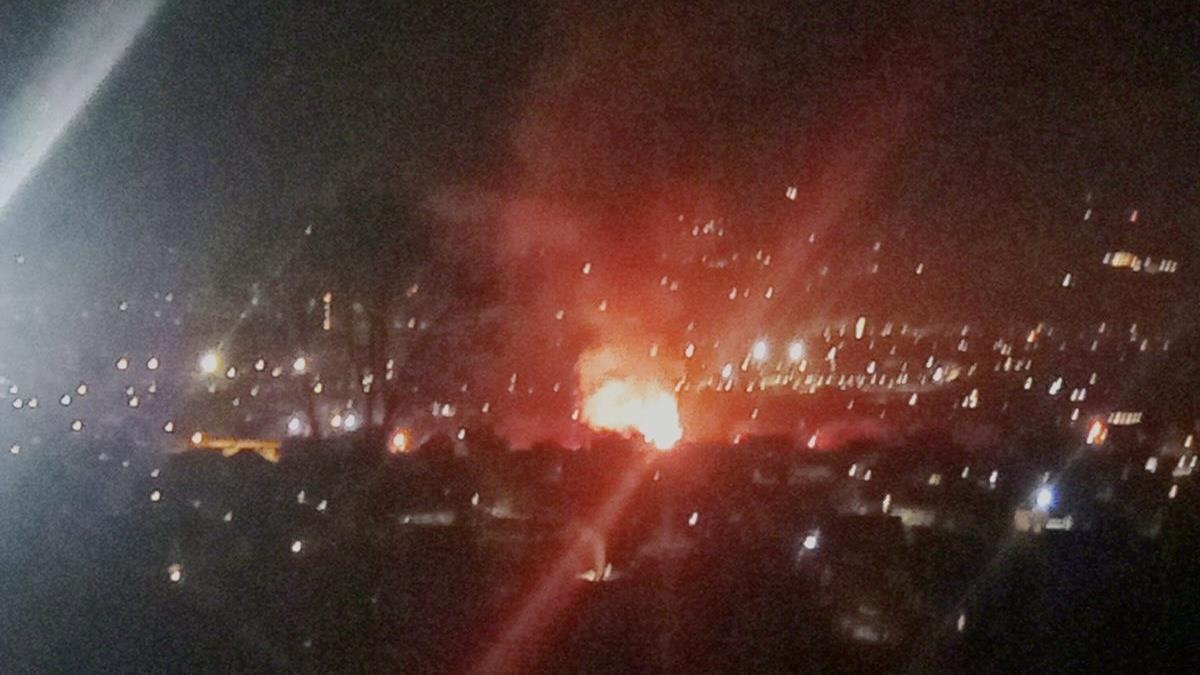
Fire Engulfs Carpentry Workshop and Spreads to House in Čačak pro-government Pro-government outlets describe the Čačak fire as a dramatic but contained local incident, emphasizing the quick deployment of fire trucks and firefighters to protect nearby homes. They highlight the scale of the flames, share eyewitness reactions and photos, and fold the story into broader reminders about individual fire safety and calm, orderly evacuation rather than questioning authorities or systemic regulation. @Kurir @Republika @Telegraf A large evening fire in Čačak is consistently described as having started in a carpentry workshop before spreading to at least one adjacent residential house. Both sides agree the incident occurred in the Ljubić/Suvi Breg area of the city, that eyewitnesses reported very large flames “devouring” nearby structures, and that the blaze caused significant material damage. Coverage across the spectrum notes a prompt response from local fire services, with reports mentioning two to three fire trucks and a small team of firefighters working on the scene. There is shared acknowledgment that photos from the scene show dramatic flames and smoke, and that the situation required a coordinated emergency response but, based on current reporting, no confirmed fatalities.
Across outlets, the broader context centers on the fire as a local emergency that highlights routine fire safety issues rather than a major national crisis. Media on both sides refer to the role of city and state emergency services, implicitly placing the event within the framework of Serbia’s civil protection and firefighting system. They mention the combustible nature of carpentry workshops, with stored wood and materials that can accelerate a blaze, and thus present the spread to a nearby house as a foreseeable risk in such mixed residential-industrial neighborhoods. Where offered, general fire safety advice about evacuation, keeping calm, and preventive measures is framed as nonpolitical, indicating consensus that the incident fits into a recurring pattern of domestic and small-business fires that test local response capacity.
Areas of disagreement
Framing of the incident. Opposition-aligned outlets tend to frame similar local fires as symptoms of broader systemic neglect of safety standards and weak enforcement, often tying them to urban planning problems and under-resourced services. Pro-government outlets, by contrast, portray this Čačak fire as an unfortunate but isolated event, emphasizing the dramatic visuals and human-interest angle rather than systemic critique. While opposition coverage would likely stress patterns and structural vulnerabilities, pro-government reports keep the narrative tightly focused on the specific workshop, house, and evening in question.
Institutional performance. Opposition sources typically highlight gaps in inspections, outdated firefighting equipment, or slow institutional modernization whenever such incidents occur, using them to question the effectiveness of local and national authorities. Pro-government media stress the speed and professionalism of the firefighters in Čačak, citing the number of trucks and personnel and implying that the response shows institutions functioning properly. Where opposition coverage might ask whether more trucks or better staffing could have limited the damage, pro-government coverage uses the same operational details as evidence that services are adequate.
Safety regulation and prevention. Opposition narratives usually point to fires in small workshops and mixed-use zones as evidence that rules on storing flammable materials and separating industrial from residential spaces are poorly implemented. Pro-government outlets, however, shift the emphasis toward individual responsibility and generic safety advice, framing the Čačak blaze as a reminder for citizens and business owners to follow guidelines rather than as a regulatory failure. As a result, opposition coverage is more likely to demand stricter oversight and accountability from authorities, whereas pro-government coverage frames prevention as a shared civic duty with less focus on state shortcomings.
Political significance. For opposition media, similar incidents often become part of a broader narrative about governance quality, local corruption, and unequal enforcement of standards, implicitly or explicitly connecting fires to political leadership. Pro-government outlets treat this fire primarily as a nonpolitical local news event, avoiding any suggestion that it reflects on national or municipal authorities beyond acknowledging their operational role. Where opposition voices look for patterns that might reveal deeper governance problems, pro-government reporting seeks to contain the story within the boundaries of immediate damage and emergency response.
In summary, opposition coverage tends to interpret such fires as manifestations of systemic regulatory and governance problems that warrant political scrutiny, while pro-government coverage tends to present the Čačak workshop blaze as an isolated local emergency highlighting effective first responders and individual fire safety responsibilities.
Story coverage
Write a comment