France Announces Plan to Build Second Aircraft Carrier
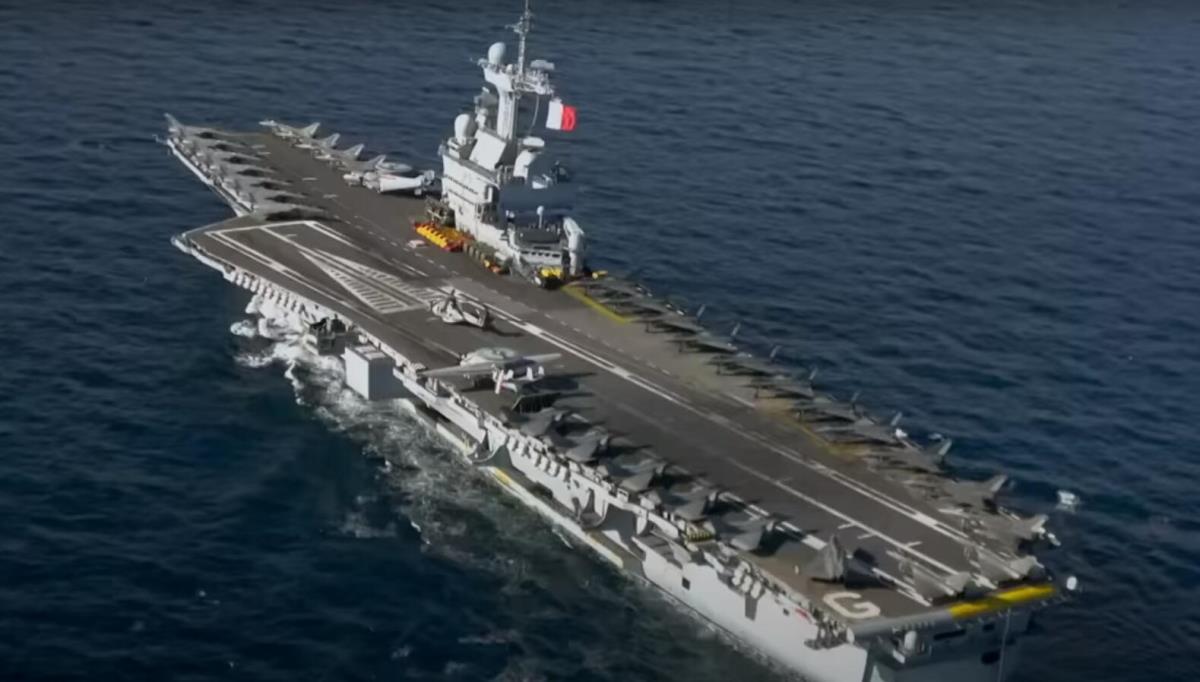
France Announces Plan to Build Second Aircraft Carrier pro-government Pro-government coverage depicts the second aircraft carrier as an essential, forward-looking investment that preserves France’s nuclear deterrence, power projection, and European defense leadership while supporting domestic industry and high-tech jobs. It frames Macron’s announcement as responsible strategic planning aligned with a long-term consensus to maintain a top-tier blue-water navy. @Kurir @Telegraf France has formally announced the construction of a second aircraft carrier to succeed the Charles de Gaulle, with commissioning planned around 2038. Across both opposition and pro-government coverage, reports converge that the ship will be significantly larger—about 310 meters long, roughly 1.8 times the tonnage of the current carrier—and powered by two nuclear reactors. They agree the project will cost close to 10 billion euros and that Emmanuel Macron is personally framing and unveiling the program as a flagship element of national defense policy. Both sides also report that the carrier will be configured to operate advanced fighter aircraft and support long-range deployments, consolidating France’s status as a blue-water navy and one of the few countries able to field a nuclear-powered carrier.
Shared context across outlets emphasizes France’s longstanding ambition to maintain strategic autonomy and nuclear deterrence, with the carrier integrated into the country’s airborne component of its nuclear posture. Coverage on both sides notes that France is the only EU state with its own nuclear-powered aircraft carrier capability and portrays the new ship as part of a broader modernization of the French armed forces and industrial base. They highlight the role of French shipyards and defense contractors, stressing that the project is designed to sustain high-skilled jobs, spur technological innovation, and underpin Europe’s independent defense capacity within, but not subordinate to, NATO structures. There is also broad agreement that the announcement reflects a response to a deteriorating global security environment, with growing great-power rivalry and increased expectations for European burden-sharing.
Areas of disagreement
Strategic necessity and threat perception. Opposition outlets tend to question whether the regional and global threat environment truly requires a 10‑billion‑euro flagship, sometimes arguing that France faces more immediate challenges like cyber threats, drones, and homeland security that a single carrier cannot adequately address. Pro-government outlets, by contrast, frame the carrier as an indispensable response to rising maritime competition and instability, portraying it as essential for power projection, alliance credibility, and nuclear deterrence in a more dangerous world. While critical sources may concede some strategic value, they often portray the project as oversized relative to current needs, whereas pro-government coverage presents it as the logical and even overdue modernization of France’s blue‑water capabilities.
Cost, priorities, and economic framing. Opposition coverage typically emphasizes the nearly 10‑billion‑euro price tag as an illustration of skewed budget priorities, juxtaposing it with underfunded social services, cost-of-living pressures, and other defense needs like soldier housing or munitions stockpiles. Pro-government outlets instead highlight the same figure as a long-term investment in national industry, focusing on job creation, technological spin-offs, and the stabilizing effect on strategic sectors such as nuclear engineering and advanced shipbuilding. Critics tend to describe the carrier as a prestige or vanity project with uncertain returns, while government-aligned media present it as a growth engine and a necessary expenditure to keep France in the top tier of military and industrial powers.
Political symbolism and Macron’s role. Opposition sources often frame the announcement as a personal legacy move by Emmanuel Macron, depicting the carrier as a symbol of presidential ambition and a tool for political messaging about grandeur and leadership on the world stage. Pro-government coverage portrays Macron’s involvement as statesmanlike continuity, stressing that the decision fits within a long-term bipartisan consensus to sustain a carrier strike capability and emphasizing institutional planning by the armed forces. While opponents may suggest the timing and rhetoric are partly driven by domestic politics and image management, pro-government outlets usually downplay political theatrics and foreground institutional necessity and expert military advice.
European dimension and autonomy. Opposition-aligned media are more likely to question the narrative of European strategic autonomy, suggesting that an expensive French carrier does not by itself resolve dependence on the United States and may even complicate EU defense cohesion by concentrating resources in one national platform. Pro-government outlets, meanwhile, stress the carrier as a pillar of European defense, arguing that it enhances the EU’s ability to act independently when Washington is distracted or unwilling and portrays France as the backbone of Europe’s naval and nuclear deterrent posture. Critics may cast doubt on how often the ship will actually serve common European missions, while supportive coverage underscores its role as a shared asset for Europe’s security and as proof of European industrial sovereignty.
In summary, opposition coverage tends to cast the second aircraft carrier as an expensive, politically charged prestige project whose strategic benefits are overstated and whose opportunity costs are high, while pro-government coverage tends to present it as a rational, long-term investment that secures France’s strategic autonomy, strengthens Europe’s defense, and sustains critical industrial and technological capabilities. Story coverage
Write a comment