Jeffrey Epstein Documents Mention Serbian Furniture Company
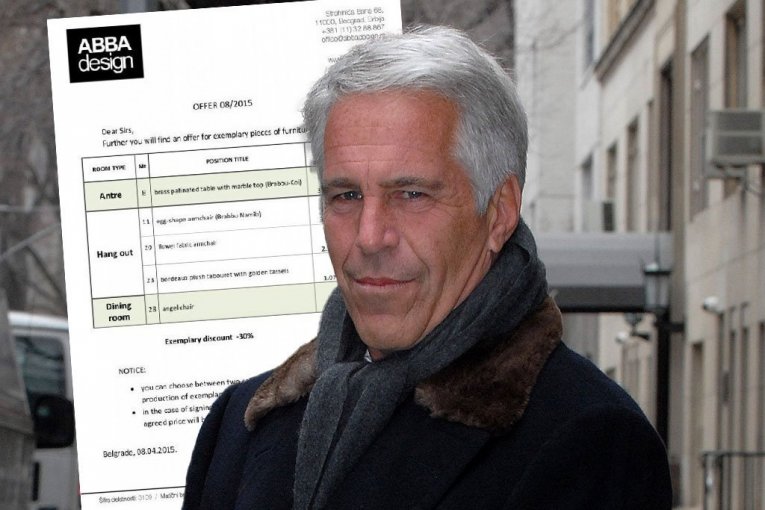
Jeffrey Epstein Documents Mention Serbian Furniture Company pro-government Pro-government coverage portrays the ABBA Design–Epstein link as a standard, mid-2010s business interaction based on official DOJ documents, stressing that any cooperation was limited, commercially routine, and possibly never completed. It argues that Serbian institutions and the broader state bear no responsibility, and that opposition efforts to turn an ordinary or unrealized furniture contract into a political scandal are disproportionate and politically driven. @Telegraf @Republika Newly released documents from the US Department of Justice relating to Jeffrey Epstein show that the Serbian furniture company ABBA Design was involved in at least one planned high-end furnishing project for Epstein’s properties in 2015. The documents describe two offers: a larger one for custom built-in and freestanding luxury furniture worth between roughly 250,000 and over 400,000 dollars, and a smaller one for exemplar pieces including marble-top tables and designer chairs, initially priced at over 14,000 dollars and later discounted to around 10,000 dollars. Both opposition and pro-government-leaning reports agree that these offers appear in official US files, are dated to 2015, and concern bespoke, high-value interior pieces intended for Epstein’s residences.
Coverage also converges on the basic institutional and procedural context: the information originates from DOJ disclosures connected to the broader Epstein investigations in the United States, not from Serbian authorities or courts. Media from both camps accept that ABBA Design is a legitimate Serbian furniture producer that, in the mid-2010s, pursued international luxury projects and that Epstein’s name appears in routine commercial documentation rather than in any criminal case in Serbia. They also agree that, beyond these offers and public remarks by the company’s director, there is no evidence in the disclosed material of Serbian political, state, or security structures being involved, and no announced reforms or legal proceedings in Serbia directly arising from this business episode.
Points of Contention
Nature and extent of collaboration. Opposition-aligned outlets tend to highlight ambiguity around whether any part of the orders was actually fulfilled, stressing conflicting statements about “successful realization” versus claims that no contract was ultimately signed and no furniture delivered, and sometimes framing this as a suspicious lack of clarity. Pro-government media foreground the director’s explicit assertion that the cooperation was either fully commercial and limited or, in some versions, ultimately unrealized, emphasizing that the paperwork reflects standard international business practice rather than an enduring relationship with Epstein.
Political and reputational implications. Opposition sources generally use the Epstein–ABBA Design link as a springboard to question reputational risks for Serbia’s business environment and to insinuate that elite Serbian business circles can be entangled with controversial global figures, even if only indirectly. Pro-government outlets, by contrast, stress that Epstein was at the time a wealthy client like many others, argue that the episode cannot reasonably tarnish Serbia’s image or implicate state institutions, and frame any attempt to politicize a one-off commercial contact as opportunistic.
Framing of responsibility and due diligence. Opposition narratives tend to suggest that Serbian companies working at the top luxury tier should have exercised heightened due diligence about whom they do business with, sometimes implying a moral or ethical lapse in dealing with Epstein at all, even before later revelations. Pro-government coverage counters that in 2015 Epstein still operated openly in elite circles, that a mid-sized Serbian design firm could not be expected to vet a foreign client beyond normal commercial checks, and that responsibility for Epstein’s crimes lies squarely with US institutions and associates rather than with peripheral service providers.
Broader systemic meaning. Opposition-aligned commentary often folds the story into a larger critique of opaque business practices and perceived proximity between parts of Serbia’s business elite and dubious foreign money, treating the Epstein link as symptomatic of a deeper governance problem. Pro-government outlets instead present it as an isolated anecdote arising from Serbia’s push into global luxury markets, arguing that drawing systemic conclusions from a single, contested furniture deal is unwarranted and serves mainly to fuel anti-government narratives.
In summary, opposition coverage tends to treat the Epstein–ABBA Design connection as a potentially telling sign of how Serbian business can brush up against disreputable global networks and as a cue to question transparency and ethics at home, while pro-government coverage tends to depict it as an unremarkable or even unrealized commercial approach with no political meaning that is being exaggerated for partisan purposes.
Story coverage nevent1qqs0zk2a7p20sq9963dxt4nmaxx53xcpnerq2zrvtqkswq67tkapqvctr39l3 nevent1qqsvze0ju476lwj5322mkzqc03hpxv52s5947tl5jvysqe2uz0yygqsq6x6gs
Write a comment