Mali's Defense Minister Killed in Coordinated Attacks
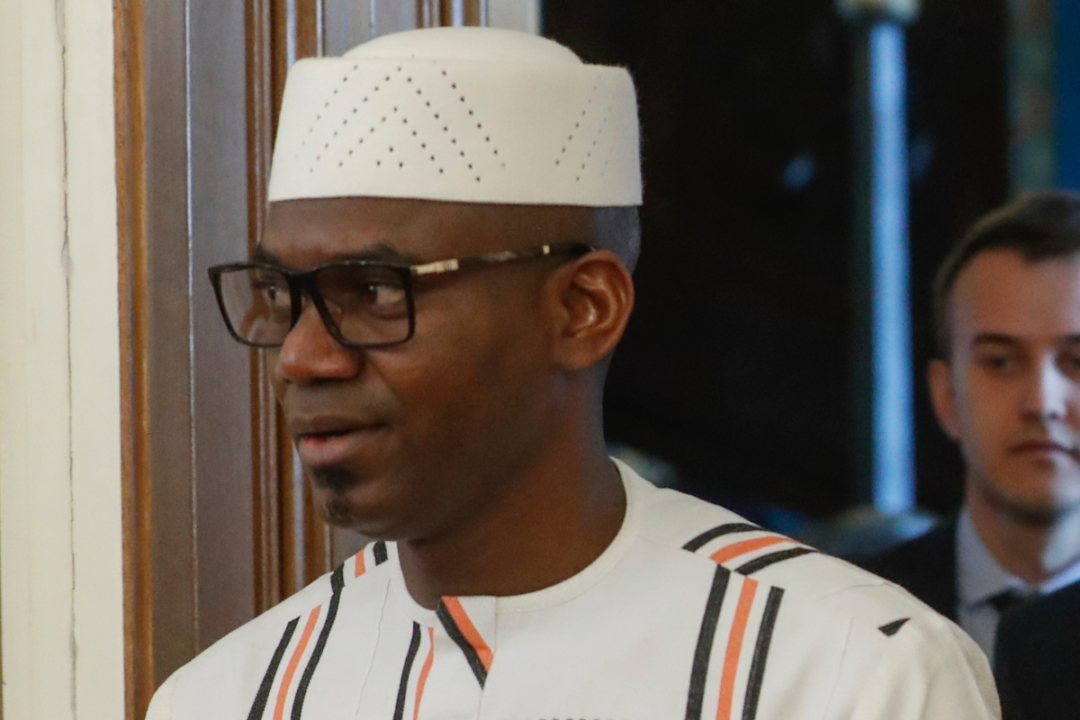
Mali’s Defense Minister Killed in Coordinated Attacks liberal Liberal coverage presents the coordinated attacks that killed Mali’s defense minister as a major indictment of the junta’s security strategy and of Russia’s Africa Corps, arguing they expose deep flaws in militarized governance and foreign-backed counterinsurgency. It stresses how jihadist and separatist advances, along with withdrawals from strategic towns like Kidal, undermine claims that the regime and its Russian partners can stabilize the country. @The Guardian
conservative Conservative coverage focuses on the assassination of Gen. Sadio Camara as a dramatic and tragic success for jihadist and rebel forces, detailing the suicide car bombing of his residence and his death from wounds sustained while fighting back. It frames the incident primarily as another escalation in Mali’s long-running battle against Islamist militancy and separatist insurgency, without dwelling on broader criticisms of the junta or its foreign alliances. @The Epoch Times Malian and international outlets across the spectrum agree that Mali has been rocked by a wave of coordinated attacks involving both jihadist militants and Tuareg-led separatist forces. Coverage converges on the facts that the Malian defense minister, identified as Gen. Sadio Camara, and the military intelligence chief were fatally wounded in these assaults, including a suicide car bomb attack on the minister’s residence that triggered an exchange of fire before he was taken to a hospital where he died. Reports note that the attacks struck multiple military bases and towns, including Kati, Gao, Mopti, and Sévaré, and involved car bombs and, according to several accounts, armed drones. Both liberal and conservative sources agree the strikes occurred in late April, that the government acknowledged the minister’s death the following day, and that the attacks were carried out by al-Qaida-linked jihadists aligned with JNIM alongside a Tuareg-led separatist formation.
There is also broad agreement that these events unfolded against the backdrop of Mali’s ongoing internal conflict, in which a military junta faces an entrenched Islamist insurgency and Tuareg separatist movements, and has replaced Western military partnerships with Russian backing. Outlets across the spectrum describe the Russian Africa Corps as a key external security patron of the junta and note that it has taken casualties amid the latest violence and agreed to withdraw from the strategic northern town of Kidal after an arrangement with separatists. Coverage consistently situates the attacks within Mali’s longstanding instability in the Sahel, the erosion of state authority outside key urban centers, and the complex web of alliances among the junta, foreign forces, jihadist groups, and Tuareg factions. All sides underscore that the killing of the defense minister, a central figure in Mali’s security apparatus and in its partnership with Russia, represents a serious blow to the junta’s efforts to assert control and project strength.
Areas of disagreement
Responsibility and blame. Liberal-aligned sources emphasize that the coordinated assaults by JNIM and Tuareg-led separatists expose the failures of Mali’s junta and the limits of Russian-backed counterinsurgency, often framing the government’s strategy as exacerbating insecurity and alienating local communities. Conservative coverage, by contrast, concentrates on the operational details of the suicide attack against Gen. Camara and portrays him as personally fighting back against assailants, placing primary blame on jihadist and rebel violence rather than on the junta’s governance or strategic choices. Liberal accounts tend to apportion responsibility upward to regime decisions and foreign patrons, while conservative pieces center culpability on the attackers themselves and avoid extensive critique of the junta’s broader approach.
Role of Russia and foreign powers. Liberal reports foreground Russia’s Africa Corps, stressing how its casualties, withdrawal from Kidal, and inability to prevent high-level assassinations demonstrate the shortcomings of Moscow’s growing footprint in Africa and call into question its reliability as a security partner. Conservative articles, in the limited coverage available, mention foreign backing only tangentially or not at all, focusing instead on the immediate security incident without drawing broader inferences about Russian strategy or geopolitical competition. Where liberal outlets explicitly connect the attacks to the perceived failure of Russia’s model of intervention and to the earlier expulsion of Western forces, conservative sources largely refrain from embedding the event in a narrative about great-power rivalry.
Broader political narrative. Liberal-oriented coverage situates the killing within a narrative of mounting turmoil under military rule, highlighting Mali’s governance crisis, the junta’s legitimacy problems, and the risk that escalating violence will further destabilize the Sahel and civilian populations. Conservative reporting narrows in on the assassination as a dramatic battlefield episode and a new chapter in Mali’s long fight against jihadists, paying less attention to questions of democratic backsliding, repression, or institutional decay. As a result, liberal stories often imply that the junta’s authoritarian consolidation and strategic choices are intertwined with the security breakdown, whereas conservative stories keep the focus on the security threat itself rather than on systemic political causes.
Implications and lessons. Liberal sources draw out regional and international implications, arguing that the attacks undermine claims that strongman rule and Russian support can deliver stability, and suggesting this should prompt rethinking of security partnerships and counterterrorism approaches in the Sahel. Conservative coverage, in contrast, offers few explicit policy lessons and tends to treat the incident as one more illustration of the danger posed by jihadists and rebels, reinforcing a narrative of ongoing counterterror struggle rather than a failed security model. Liberal outlets thus frame the episode as a cautionary tale about militarized governance and external patronage, while conservative outlets treat it primarily as an acute tragedy and tactical setback in a broader war.
In summary, liberal coverage tends to cast the coordinated attacks and the defense minister’s killing as evidence of the junta’s strategic missteps and the limits of Russian-backed security solutions, embedding the incident in a critique of authoritarian rule and great-power intervention, while conservative coverage tends to emphasize the immediate facts of the assassination, highlight the brutality and persistence of jihadist and rebel threats, and downplay broader systemic or geopolitical fault lines.
Story coverage
Write a comment