TFTC - BREAKING: Bitcoin Is Replacing This $370T Market Faster Than Experts Expected! | Sam Abbassi

Key Takeaways
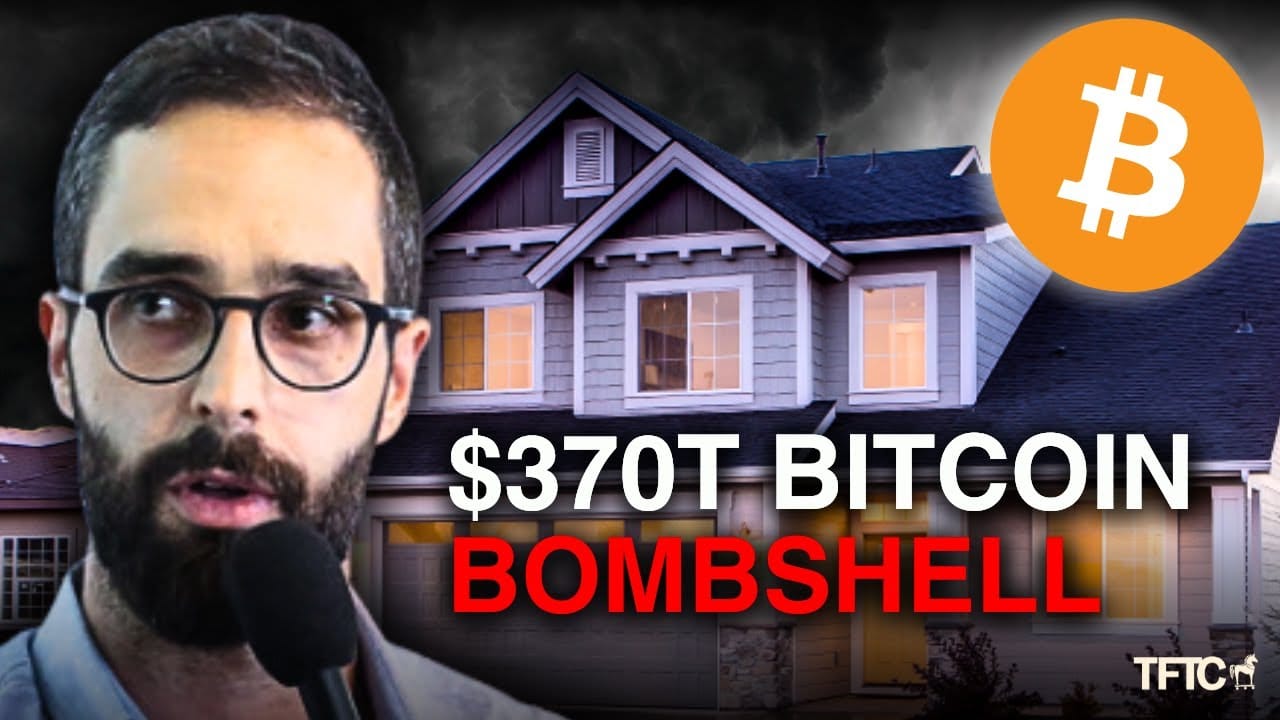
Marty Bent and Sam Abbassi, CEO of Hoseki, examine a major policy shift by the FHA that now allows Bitcoin to count toward mortgage creditworthiness, so long as it's held on regulated exchanges, a move that clashes with Bitcoin’s self-custody ethos. Abbassi explains how Hoseki is building tools that let users prove ownership of self-custodied Bitcoin through cryptographic proofs, enabling them to leverage their holdings without giving up control. The conversation highlights Bitcoin’s accelerating integration into traditional finance, the cultural divide between Bitcoin and broader crypto, and the urgent need for engagement with policymakers to ensure self-custody is respected. As the legacy system adapts to Bitcoin, platforms like Hoseki are laying the groundwork for a financial future rooted in sovereignty, transparency, and individual empowerment.
Best Quotes
“You don’t own your money if you have to ask someone for access to it.”
“Bitcoin natively enables property rights without a monopoly on violence.”
“Bitcoin doesn’t need a legislative body to validate ownership, proof is embedded in the protocol itself.”
“This isn’t the financialization of Bitcoin, it’s the Bitcoinization of finance.”
“We’re moving from horses to cars, there are no gas stations yet, no traffic lights. We’re still building the infrastructure.”
“The frustration wasn’t just needing to sell my Bitcoin, it was having to move it at all.”
“Culture is the big differentiator. Bitcoiners think in decades. Others think in pump cycles.”
“The ability to audit the entire Bitcoin supply from your laptop is unmatched by any other monetary system.”
“If El Salvador becomes the Singapore of the West, and Bhutan the Hong Kong, everything changes.”
“We're not in it to make money, we’re in it for the money. Literally changing the money.”
Conclusion
This episode makes clear that the financialization of Bitcoin is not a threat but a transformation led by Bitcoin itself, with tools like Hoseki bridging the gap between sovereignty and regulatory compliance. The FHA’s policy shift marks a turning point in mainstream recognition of Bitcoin as a legitimate asset, but it’s up to the community to ensure that core principles like self-custody and privacy remain intact. As protocol development, financial tooling, and political engagement accelerate, the legacy system is beginning to adapt to Bitcoin, and the foundation for a Bitcoin-native economy is already being built.
Timestamps
0:00 - Intro
0:42 - The proof of reserve problem
5:38 - More on Hoseki
9:56 - Bitcoin meeting tradfi
17:01 - Bitkey & Opporunity Cost
18:40 - Market opportunities from self custody
20:34 - Property rights
23:33 - Unchained
23:58 - “It’s all crypto”
31:47 - Cypherpunk ideals
41:17 - News cycle bombardment
45:50 - Proxy exposure
48:18 - Final thoughts
Transcript
(00:00) will consider Bitcoin as an asset but you got to give up your keys It's moving much faster than I anticipated or expected Let's say a 50% kagger over the next decade One half of the.1% will be Bitcoiners in 10 years And that is a lot of wealth The administration does realize is like the opportunity of Bitcoin 2.
(00:19) 14 trillion market cap It really is going to be the next global reserve currency It'll be hundreds of trillions of dollars We need to integrate Bitcoin into as many people's lives as possible without having direct exposure Bitcoin and their pension plans or dual collateralized with real estate When we talk to banks I mean I'll tell you no one cares about anything else except for Bitcoin private property rights That's something that's under attack I just realized at that moment I don't own my money Emergency rep late on a Friday My guest here has a wedding in a little
(00:48) bit I'm uh braving the storm on the back porch in my father-in-law's beach house right now But something to talk about Uh the FHA Bill PE Bill P came out on Wednesday while Sam and I were both at the Bitcoin Policy Institute summit and announced that they are essentially taking away the spending provision that Biden put in in 2022 which basically made it so if you want to get a mortgage as a Bitcoiner and have your Bitcoin count toward your net worth you need to sell that Bitcoin hold it in a bank account hold the cash in a bank account for 3 months and then the value of that Bitcoin you sold could
(01:31) be recognized towards your net worth and towards your creditworthiness Bill PTE came out on Wednesday and said "Hey we're changing this Bitcoin and crypto holders your your wealth that's held in these assets will be recognized However they need to be held on a regulated third party exchange and uh step in the right direction massively beneficial that Bitcoiners don't have to sell their Bitcoin and their assets are being recognized towards their net worth in the eyes of banks and mortgage underwriters Um but not perfect Nothing is perfect Uh and so
(02:08) I thought let's bring on Sam Abasi co-founder CEO of Hoseki which is working to solve this problem to basically give uh institutions the ability and or individuals the ability to prove that they own Bitcoin uh while retaining self-custody to institutions Uh that was a long- winded intro so I'll throw it to you Sam Uh if you have any color to add there Thanks for having me on again Marty Um yeah good not great but you know with government stuff I think that's probably the best you can ask for It seems like we'll consider Bitcoin as an asset but you got to give up your keys So obviously not you know
(02:47) pretty anothetical to how we view the space developing and I think an antithetical to this audience and how they want to hold their assets in the first place but um it shouldn't be understated I mean that's that's a that's a huge development Yeah And we were texting back and forth about this last night Like I imagine I wrote a newsletter about it yesterday and I'm just running with the assumption that the sort of clause that says you have to hold it on a third party exchange probably stems from a lack of
(03:16) understanding of the technical bit details of Bitcoin by people uh in FHA and they're probably running through the problem in their head like all right if somebody goes and they try to claim that they have a certain amount of Bitcoin to count towards their net worth how do we know that it's actually theirs Like are they just showing me their brother's wallet their mom's wallet Did they have somebody send it to that wallet before Like how do we know it's actually associated with that individual trying to take out this loan And so I imagine I
(03:45) don't have any inside information but I'm just running with these assumptions that the trade-off they made was like all right if they have it on an exchange associated with their name that is a way in which we can confirm that it's actually theirs and they're not trying to dupe the mortgage underwriter Yeah and and we're getting more information in real time too to better assess sort of what the um what the idea was and what the inspiration was for this I mean more granularly as to why assets have to be held at a at a custodian It's just it seems like it's
(04:12) more in line with how traditional finance functions These are qualified custodians There's one publicly listed um exchange in the US that you can use So for them it just felt a lot more comfortable probably you know it's it likely has to do with the lack of understanding um with some Bitcoin fundamentals Um which is sort of been our whole purpose I mean we started the company because I couldn't get a mortgage with my self-custody assets Um realizing that they probably just want a statement something that looks familiar enough or looks legitimate enough to get you through the door Um but I think
(04:44) explaining to regulators and legislators um the nuances of actually holding your keys and being able to prove that uh you are the owner is really important I I've always sort of related this to multi-IG and multi-IG companies That's a Bitcoin primitive That's what Bitcoin does the protocol level Um but what you need is you need companies and you need services that are nice wrappers around that that you know my mom could theoretically be able to use And so we're doing the same thing um with with with Bitcoin I think the most um commonly known way to do
(05:12) this and the most like generally accepted way is by signing and verifying a message Um most Bitcoin users probably haven't done that unless they were around in 2012 13,4 Um but that is a core part of what Bitcoin does and we've just developed a nice you know experience around that Um so yeah I mean again it's a step in the right direction It's not perfect but still good Yeah And so let's let's dive deeper into like what you guys have built at Hosei for anybody listening to this Sam was on the podcast a year year and a half ago U when we did a a full like debrief but I
(05:49) think for anybody who may have listened to that or anybody who hasn't listened to that yet just I mean you briefly described it but I think diving deeper into the details of what you're doing and really leaning into the idea and illuminating the fact that you can get sort of institutional grade asurances while still being able to retain the the institutions can get the asurances from individuals holding Bitcoin in self-custody Yeah So I mean our our whole purpose for existence is to help financialize
(06:22) Bitcoin uh build tooling build a platform that makes that easier makes that more accessible um and ultimately empowers sovereign individuals people that are holding their own keys Um so when we did the first podcast it might might have been maybe yea

)
Write a comment