Small matters that are overlooked may be the guiding light throughout someone's life.

Recently, my family helped out the family of one uncle, who undertook the construction work to renovate my house. What my wife and I did for this uncle's family might seem trivial in the eyes of doctors and nurses, but it was invaluable and served as a guiding light for his family. How so? Let me tell you.
For my Thai friends along with the Rightshift team, you might already know about my professional background. However, I'd like to introduce myself a little in case there are new friends who might not be familiar with me.
I am an emergency medicine specialist or an emergency room doctor.
As for my wife, she was an emergency room nurse, but currently, she is the family's financial manager, investor, homewife, and full-time mother to our children.
Since July 2023, our current home where my family resides has been in existence for 7 years and started to require repairs and renovations to accommodate the elderly who will continue to reside with us.
> #### A good contractor is worth more than half the battle
At first, I believed, but not entirely, until I experienced it myself, then I believed wholeheartedly. My family is very fortunate to have gotten to know the current team of contractors. Initially, there might have been some bumps because we weren't familiar with each other. However, as time passed, the work of this team of craftsmen proved themselves to be excellent.
We got to know each other's styles, worked well together, and produced smooth work. Even during breaks from renovations, they would still drop a message on Mondays and Tuesdays, ensuring we stayed in touch.
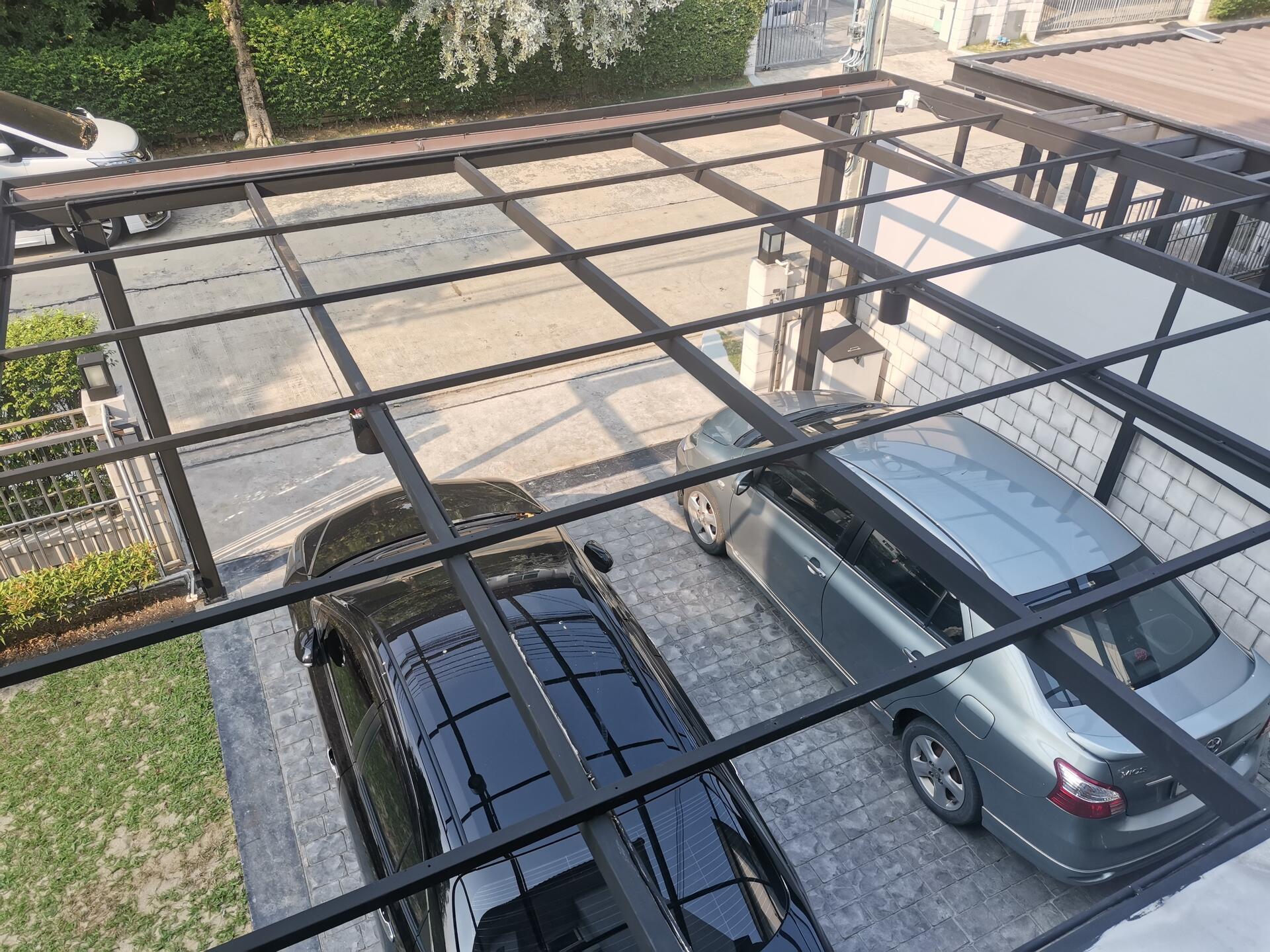
Today, as I write this article, it's April 6, 2028, another day where my home is undergoing repairs, including the dismantling and rebuilding of the old garage roof, which had deteriorated over time, as well as some renovations to the guest area at home.
)
This time, there's a new craftsman, the uncle whom I mentioned at the beginning of this article. What I noticed is that he's very meticulous in his workmanship. My wife approves his skills ... and let me tell you, my wife is extremely meticulous. She doesn't easily approve of anyone's craftsmanship. So, if someone gets her approval while working alongside her, that's something extraordinary.
Two days ago, on April 4, 2028, while the contracting team was renovating my house, during the lunch break, it was normal to have conversations over lunch.
)
Coincidentally, this uncle of mine, the craftsman I mentioned earlier in this article, has a very heavy family burden. He carries his family on his shoulders alone, being the sole breadwinner. Currently, he's facing issues with his eldest daughter, who is suffering from mental health issues despite receiving treatment.
The daughter of this craftsman uncle (whom I'll refer to as the patient from now on) was previously married to a foreigner and had one boy together. However, problems arose, leading to their separation, which caused immense stress and eventually triggered mental health issues. Some of the incidents include:
- Seeing her 5-year-old child, who bears a striking resemblance to her ex-husband, would trigger memories of her past marriage, leading to fits of rage. She would sometimes physically harm the child, squeezing their neck or restraining them, as a way to vent her frustration. At times, the violence would escalate to the point where she threatened to harm herself, but relatives intervened just in time, redirecting her anger from her past husband to her child, seeing the child as a representative of her ex-husband.
- Abandoning her child halfway on the way to school in the morning. Initially, she would hold her child's hand and accompany him to school, but later she started leaving the child halfway and letting the child walk to school alone while she returned home. Other passing relatives who noticed the child crying on the way intervened and took care of the child instead.
- Substance abuse, including marijuana and other drugs
- Burning household belongings. During severe episodes, she would burn items left behind by her ex-husband in the house. When her condition worsened, she even attempted to set the house on fire, but those who witnessed the incident intervened just in time.
- Hearing voices and speaking to herself… or hallucinating
- Wandering aimlessly, unable to find her way back home. Police officers and kind citizens found her and helped her return home.
)
The patient has the right to receive treatment for 30 baht at a certain private hospital. The craftsman uncle has taken the patient for treatment there, but due to limitations or rather, the failure of the system, whether it's the 30-baht scheme or not, the treatment outcome may not be favorable.
> #### The failure of the healthcare insurance system from my perspective
Let me start by saying that I don't have any official statistics, and I've never delved into the intricacies of the healthcare insurance system, or what we commonly refer to as the 30-baht scheme. However, I've worked in positions where I've had to care for patients under the 30-baht scheme for many years. If it's a large hospital or a medical school hospital affiliated with the patient, I must say they're extremely lucky because they have specialist doctors in every field and receive free treatment without spending a dime.
>#### But it comes at the cost of waking up at 5:00 AM to get a queue and only seeing the doctor at 2:00 PM.
However, the real downside comes when the patient's affiliated 30-baht hospital is a small one, lacking specialist doctors, equipment, or specialized personnel to treat complex illnesses.
I believe that psychiatric patients are a group that requires care from specialized personnel and equipment. One sad aspect in Thailand is that there's a very limited number of psychiatric doctors and nurses, while the current situation sees an increase in the number of people with mental health issues compared to before. The ratio of medical staff to patients is even heavier than before.
Let me elaborate a bit more. The symptoms of psychiatric patients can be broadly divided into 2 main groups:
1. Patients with Psychosis: These individuals exhibit clear symptoms of being "out of touch" with reality, experiencing hallucinations, delusions, and paranoia.
2. Patients with Neurosis: This group is more commonly heard of, encompassing conditions like depression, bipolar disorder, obsessive-compulsive disorder, and panic attacks.
The treatment for these two groups differs significantly. Patients with psychosis are heavily medicated to control their symptoms and prevent harm to themselves and others. They pose a significant risk, even to medical staff. From my own experience, I've seen nurses being attacked by psychotic patients who were acting out violently.
As for patients with neurosis, the current treatment approach for mental health patients primarily involves two main avenues: medical treatment (medication) and psychological or behavioral therapy. This latter branch encompasses various sub-specialties, each with its own experts, but they're scattered across only a few medical institutions.
By now, you might see the problem, right? In cases where a 30-baht hospital lacks specialist doctors, it's a sad sight to see mental health patients. They may get lucky and encounter a psychiatric specialist, but due to limitations such as:
- A high volume of patients overwhelming the system
- Inadequate compensation for specialists,
- Extremely short consultation times (some doctors may only have 3 hours for consultations, but with over 20 patients, it's often impossible to provide thorough therapy sessions),
- Pressure from the hospital(e.g., being told that another doctor needs the examination room soon or that the department is closing)
So the patients are often deprived of the comprehensive care they need, such as psychological therapy sessions.
)
As a result, the majority of treatments often end with medication and a follow-up appointment to monitor symptoms. Psychological therapy becomes a distant, almost unattainable goal. I must say that psychiatric patients who are admitted to the hospital may be luckier than those who simply receive medication and return home.
Psychiatric wards are confined to a few medical institutions affiliated with universities. Moreover, the number of beds is limited. Even if one gets a bed, it doesn't necessarily mean they'll see a specialist in their field. Even after receiving specialized therapy, it's not a one or two-session process. It takes time—some people need half a year to see improvement and reclaim their lives. This is the happy ending we all hope for, but returning to reality, it's not that simple—not at all.
> #### What about the patients with fewer opportunities or from lower social classes?
There are families of patients with fewer opportunities who struggle to find ways to get their relatives the best possible treatment. However, there are opposing forces that constantly hinder their efforts.
Let me tell you a story.
In the case of the uncle and our patient, they are entitled to the 30 Baht healthcare service at a certain private hospital. Normally, private hospitals do not have the capacity to admit psychiatric patients. In cases where admission to a specialized hospital is necessary, the doctor at the primary hospital must assess and determine that the patient's condition exceeds the capabilities of their facility. Even if approval is granted, they must then issue a referral document to a higher-level hospital.
> #### It might sound simple, but it's not that easy. Getting a referral from a doctor is just the first step.
Certainly, patients and their relatives only see that side of the story. But the dark truth behind the scenes is that private hospitals, as the originating institution, will try every means possible to prevent patients from leaving their premises. This is because all expenses are incurred at the destination hospital, and their own hospital will have to take full responsibility. (but how subsidies are managed behind the scenes, or what sort of chemical element play is going on, I don't know, and I don't want to know either).
So, another sad sight that often occurs is when the primary hospital refuses to approve referrals. Even if the doctor wants to write a referral, their hands are tied. They may want to help the patient, but all they can do is sit quietly. Sometimes, they get scolded by the patient or the patient's relatives.
> ##### "Is the doctor trying to hoard my father's case? Why can't you refer him? Why? If the patient doesn't get better by staying at the same hospital, why won't the doctor refer him? Can't you see that the patient is getting worse? What else are you waiting for?"
Because those doctors also don't want to risk being reprimanded by management for approving referrals. That would mean those doctors are risking getting kicked out themselves.
> #### So, who's the villain in this story? Is it the primary hospital or is it the hospital directors?
No, it's not like that, sir. It's the system that's been broken from the top down. Of course, private hospitals have to wait for allocations from the central system of the 30-baht scheme. Some hospitals are already operating at a loss, and they continue to bear the costs. There are only a few hospitals that manage their finances well under this system... It's like the Canthillon effect in the public health system.
But let's get back to the uncle and our patient. Our patient has only seen a doctor at the 30-baht hospital a few times, received medication, and had a follow-up appointment scheduled for two months later. However, the patient's condition deteriorated. She began harming themselves and those around, including her own boy. Things turned from bad to worse. The uncle couldn't find a way out. He made the difficult decision to take matters into his own hands and went to a specialized psychiatric hospital for help. I wasn't sure if he would find a doctor, but his story was heartbreaking. When he went to register for an examination, they checked the patient's eligibility and found out they were already entitled to the 30-baht scheme. They were advised, somewhat reluctantly, to go back to their originating hospital for full treatment. If it became unbearable, they could then seek a referral.
)
My wife consulted me about this matter. We decided to step in and help. I requested to meet with the patient once, on the following Friday, April 5, 2567. I observed the patient's condition and provided a referral. However, my hospital is not the patient's primary facility. I only issue a medical note summarizing the severity of the patient's condition, indicating the need for inpatient treatment. But then, the sad scenario repeated itself. The uncle took the patient to the designated hospital with my referral letter. However, they couldn't use it because it came from a different hospital, not the patient's 30-baht hospital. They needed to obtain a letter from their primary hospital before it could be used. The uncle had no choice but to give in and take the patient back home. My wife informed me of the situation later and sought my advice.
At that moment, I speculated that since the patient hadn't seen a doctor yet, the uncle might have tried to approach the registration desk. The staff there, who may not have been nurses, likely refused because the contents of my referral letter indicated a potentially dangerous condition that required immediate hospitalization. When I learned of this from my wife, the uncle had already returned home with the patient, a journey of about 15-20 kilometers through two districts.
My last resort was to call a doctor I knew at that hospital and describe the patient's condition over the phone.
"Whoa! The patient seems to be in an emergency situation. You don't need a referral for this."
That was the psychiatric doctor's response. Afterward, the doctor asked for 10 minutes to prepare their team to receive the patient and instructed me to bring the patient in. Finally, our patient received proper treatment at the specialized hospital.
I don't blame the staff for rejecting my uncle's request to admit the patient at their hospital. They were simply following orders from higher-ups. If they allowed a patient who hadn't undergone proper referral procedures to be admitted, they would have to report to their superiors, wasting their own time and breaks.
As for my approach, it was a personal connection. I happened to know that doctor. Without their intervention, my wife and I would have been at a loss.
I'd like to invite you to discuss some main points
- [ ] Everyone should try to step into the shoes of this uncle and see how they feel, from start to finish.
- [ ] People in our society have different roles and occupations, especially those who work for others. This doesn't just refer to my profession. Consider this: what we consider routine might be someone else's new world or a lifeline for someone in need. It's worth pondering.
- [ ] Think about any situations in your experiences where you've encountered something similar. Share your stories under this note. I believe valuable stories from our Nostr societycan be beneficial to those who see them.
P.S. As for the dark side of our healthcare system, whether it's the 30-baht system or social security, I won't delve into it. I believe some quality news outlets are already tackling this issue bit by bit. It's better to follow them.
Until next time , take care
Write a comment