BRANDSCAPES #2. Saint Laurent’s Marrakech
BRANDSCAPES #2. Saint Laurent’s Marrakech
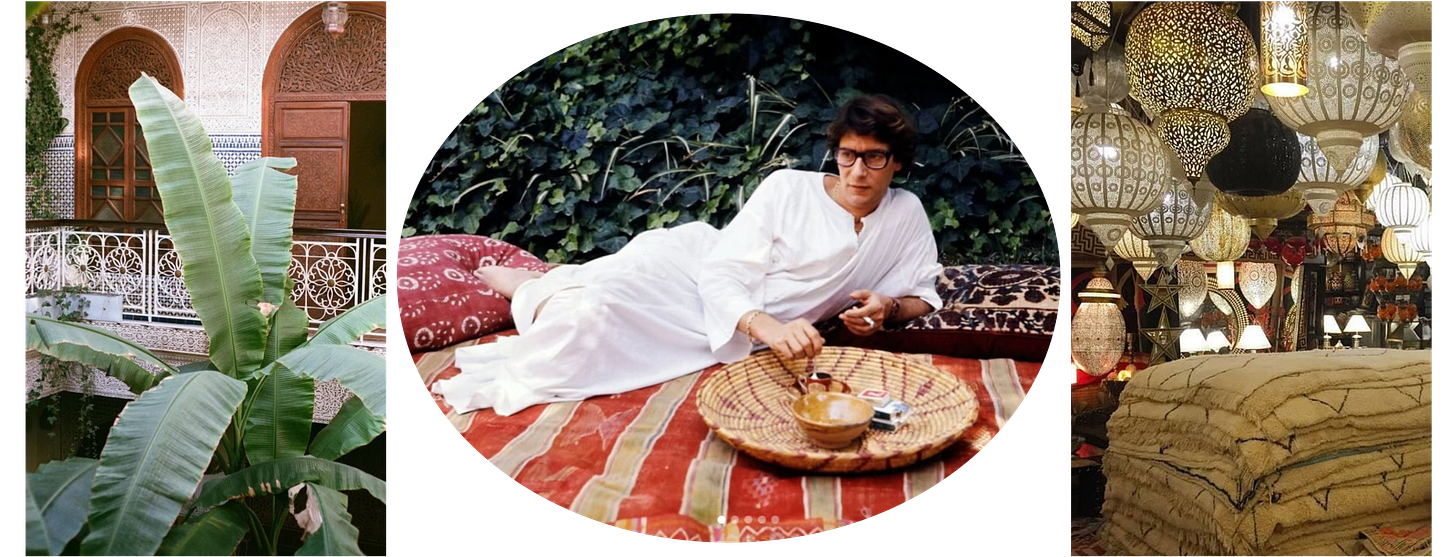
When Yves Saint Laurent first arrived in Marrakech in February 1966, the city was still a secret passed quietly among a coterie of artists and wanderers. He and his partner Pierre Bergé checked into La Mamounia - then a faded remnant of its glamorous past - and within days, they had bought their first home: Dar el-Hanch, the House of the Snake, named for a large serpent Saint Laurent painted across its living room wall.
Born in Algeria, YSL was no stranger to North Africa. But Morocco was different. The country’s sensuality, refinement, and quiet generosity drew him in: its cuisine, its artisans, its architecture. And above all, its colours. “Marrakech opened my eyes to color,” he would later say. From that moment, ochres and cobalt blues, deep purples and lush greens began to saturate his collections, alongside caftans, djellabas, gold embroidery, and flowing silhouettes; not as borrowed exoticism, but as a deeply personal reinterpretation.
From then on, Saint Laurent returned every June 1st and December 1st to design far from the stressful rhythms of Paris. In the 1970s, Marrakech was a bohemian mecca: Paul and Talitha Getty, Mick and Bianca Jagger, Andy Warhol, and a constellation of artists drifted through its gardens and palaces. For Saint Laurent, it became a “laboratory of the soul,” an oasis of creative experimentation where boundaries dissolved and his style took bold, unexpected turns, transforming the fashion house into the empire we know it as today.
The city has changed since those days: the crowds have grown, the pace quickened. And yet, Marrakech still holds pockets of the same magic; alleys humming with life, souks spilling over with colour and spice, courtyards where time seems to slow.
This is a Marrakech seen through a designer’s eyes; a city mapped not by every landmark, but by the places where Saint Laurent sketched, wandered, and gathered inspiration. Each stop is chosen for the way it ties back to his world, or to the spirit of creativity and craftsmanship that still runs through the city like an underground river.
Let’s trace those lines, from opulent gardens to hidden doorways, and see Marrakech through his eyes. This isn’t just a travel guide: it’s a map to a creative world, a way of reading a city through the lens of the designer it transformed.
The Aesthetic Map of Saint Laurent’s Marrakech
Each corner of Marrakech carries traces of the designer who loved it so deeply: ochre walls that echo in couture collections, Majorelle blue skies reflected in evening gowns, the shadows of palm leaves on carved cedar that become patterns, embroideries, entire silhouettes.
We’ll follow Saint Laurent’s footsteps through this city that shaped him: from quiet corners where he sketched in solitude, to the cobalt blue gardens he rescued from demolition, to the secret villa that hosted the likes of Winston Churchill and Mick Jagger. Along the way, we’ll discover the intimate restaurants where Saint Laurent held court over long dinners, the hidden ateliers of contemporary designers carrying on his legacy, and the souks where he first glimpsed the colors that would transform fashion forever.
But to truly understand how this city transformed Saint Laurent from a monochrome designer into a master of colour and cultural fusion, you need to walk where he walked, see what he saw, and feel the creative pulse of the places that expanded his entire artistic vocabulary.
Jemaa el-Fnaa Square & The Souks
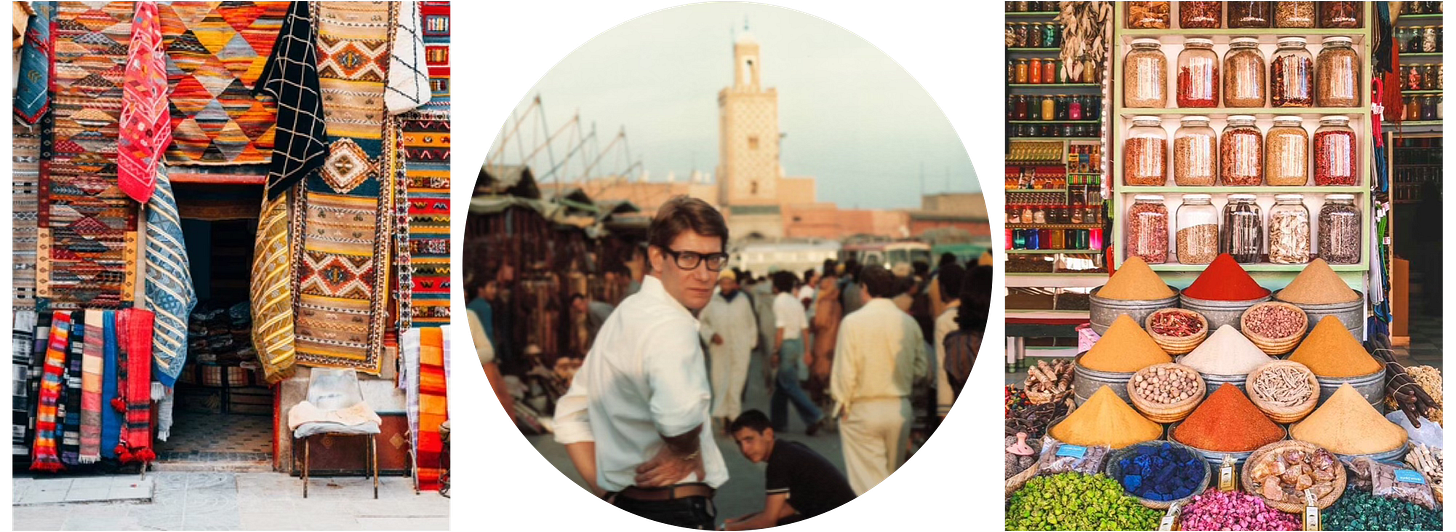
Step into the Medina - Marrakech’s walled city centre - and you step into another rhythm entirely. Here, life doesn’t unfold so much as spill, swirl, and sing. The heat rises off ochre walls in visible waves; spices scent the air in invisible clouds; metalworkers hammer somewhere down a side alley, their rhythm becoming the city’s heartbeat. Recognised as a UNESCO World Heritage site since 1985, it’s a maze of winding alleys, sunlit courtyards, and the constant hum of life being lived.
Read more
Read the full article https://whyyoushouldcare.substack.com/p/brandscapes-saint-laurents-marrakech
Write a comment