Self-Custody in the Quantum Era: What Exodus's 'One App' Vision Misses About Long-Term Key Security

Self-Custody in the Quantum Era: What Exodus’s ‘One App’ Vision Misses About Long-Term Key Security
For tech professionals and researchers at the frontier of Bitcoin, AI, and quantum computing.
01 · INTRODUCTION
Exodus wallet’s pivot to becoming the “one app for money” following regulatory setbacks reflects broader crypto industry consolidation around self-custody solutions. CEO JP Richardson’s vision emphasizes user sovereignty—controlling private keys rather than trusting exchanges. Yet as quantum computing commercializes (IonQ’s 2025 milestone being the latest marker), the cryptographic foundations of these self-custody solutions face existential questions.
Current hardware wallets and software key management systems rely on ECDSA or EdDSA signatures, both vulnerable to Shor’s algorithm once fault-tolerant quantum computers scale. The irony: self-custody advocates correctly identify custodial risk but may be storing keys in cryptographic formats obsolete within a decade.
02 · THE HIDDEN DEPENDENCY: CRYPTOGRAPHIC AGILITY IN CONSUMER WALLETS
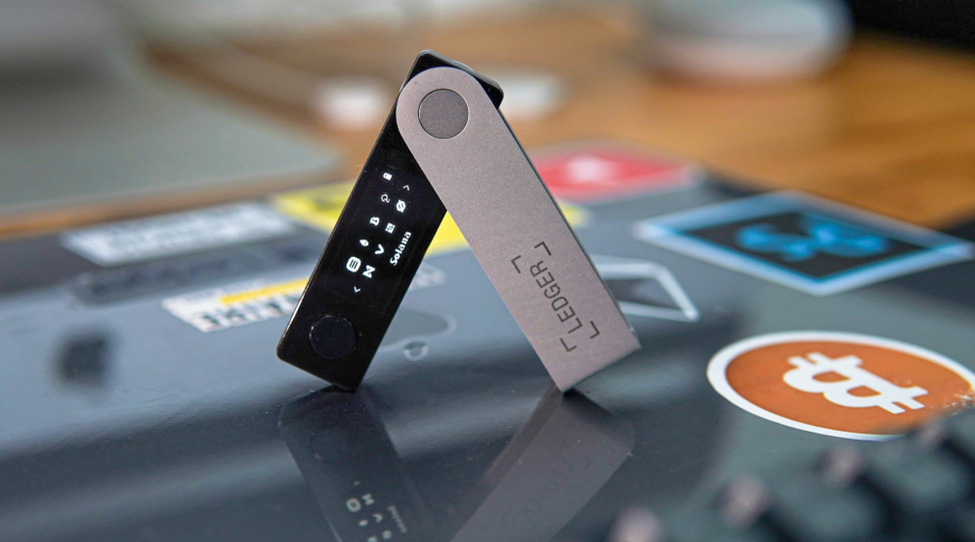
Modern Bitcoin wallets like Exodus, Ledger, and Trezor implement BIP-32 hierarchical deterministic (HD) key derivation, generating unlimited addresses from a single seed phrase. This elegance becomes a liability in quantum transitions. Migrating to post-quantum algorithms (such as hash-based XMSS or lattice-based Falcon) requires not just software updates but fundamental changes to key derivation paths, signature sizes (SPHINCS+ signatures can exceed 8KB vs. ECDSA’s 72 bytes), and transaction structure.
A 2024 analysis by Chainalysis found 43% of Bitcoin users still operate wallets last updated over two years ago—a dangerous lag when quantum timelines compress. Exodus’s mobile-first design optimizes for convenience, but building “quantum-safe” into user experience means dramatically larger transaction sizes and reduced throughput, trade-offs rarely discussed in consumer marketing.
03 · MALAYSIA’S SELF-CUSTODY LANDSCAPE AND REGULATORY PRESSURE
Malaysia’s 2024 Securities Commission guidelines mandate licensed exchanges implement custodial safeguards, inadvertently pushing tech-savvy users toward self-custody solutions like Exodus. Local adoption of hardware wallets grew 67% year-over-year among Kuala Lumpur’s tech community. However, Malaysian users face unique risks: frequent cross-border transactions (Singapore, Thailand) expose public keys during Lightning Network payments, and the prevalence of mobile-only access (68% of Malaysian crypto users) limits adoption of airgapped hardware solutions.
Universiti Teknologi Malaysia’s blockchain research lab recently proposed “quantum key distribution over Langkawi fiber networks” for institutional custodians, but retail self-custody solutions lack similar quantum preparedness initiatives.

04 · AI-ASSISTED KEY MANAGEMENT: A BRIDGE TO QUANTUM SAFETY?
Emerging research explores AI models for adaptive key management—systems that monitor quantum computing benchmarks and automatically trigger migration protocols. A 2024 MIT paper demonstrated machine learning models that analyze blockchain UTXO sets to prioritize high-value, quantum-vulnerable addresses for user alerts.
Applied to self-custody wallets, this could mean Exodus-style apps that warn: “Your 2015-era P2PKH address holds 0.8 BTC—migrate to Taproot before Q2 2027 quantum risk threshold.” The technical challenge: implementing this without introducing new attack vectors (malicious AI suggesting fake “safe” addresses) or privacy leaks. Malaysia’s AI regulatory sandbox under MDEC could pilot such systems, combining the nation’s growing AI expertise (20+ MSC-status AI firms) with urgent cryptographic needs.
05 · WHAT THIS MEANS FOR THE BITCOIN NETWORK
Self-custody is philosophically correct but cryptographically temporary. Bitcoin’s network security depends on users actually migrating keys—not just holding them. This requires wallet developers like Exodus to prioritize cryptographic agility: modular signature schemes, transparent quantum risk scoring for each address type, and seamless migration UX.
For Malaysia’s Bitcoin community, this intersects with national cybersecurity strategy: the CyberSecurity Malaysia agency’s 2025-2030 roadmap should explicitly include post-quantum cryptography education for fintech developers, potentially partnering with Bitcoin developers contributing to BIP-360. The self-custody movement must evolve from “not your keys, not your coins” to “not quantum-safe keys, not your future coins.”
⚡ KEY TAKEAWAY
Self-custody wallets secure today’s Bitcoin but lack quantum-safe migration paths users will desperately need before 2030.
📋 中文摘要 CHINESE SUMMARY
主题: 自托管钱包在量子计算时代的密码学脆弱性
核心观点: Exodus等自托管钱包强调用户掌控私钥,但当前密码学基础(ECDSA/EdDSA签名)在量子计算机成熟后将失效。后量子算法如SPHINCS+的签名大小达8KB(当前ECDSA仅72字节),迁移需要重构交易结构和密钥派生路径。Chainalysis数据显示43%比特币用户的钱包超过两年未更新。马来西亚68%加密用户依赖纯移动端方案,缺少硬件钱包的物理隔离保护。
Bitcoin网络影响: 钱包开发者需实现密码学敏捷性——模块化签名方案和量子风险评分系统。MIT研究展示AI模型可分析UTXO集,优先提醒高价值地址迁移。马来西亚CyberSecurity机构应将后量子密码学纳入2025-2030金融科技开发者培训路线图。
Bitcoin House Malaysia · FrontierBTC Weekly · For editorial use. Not financial advice. *#Bitcoin #QuantumComputing #Malaysia #BTC #Nostr


Write a comment