Trump Announces New 15% Global Tariff Following Supreme Court Setback
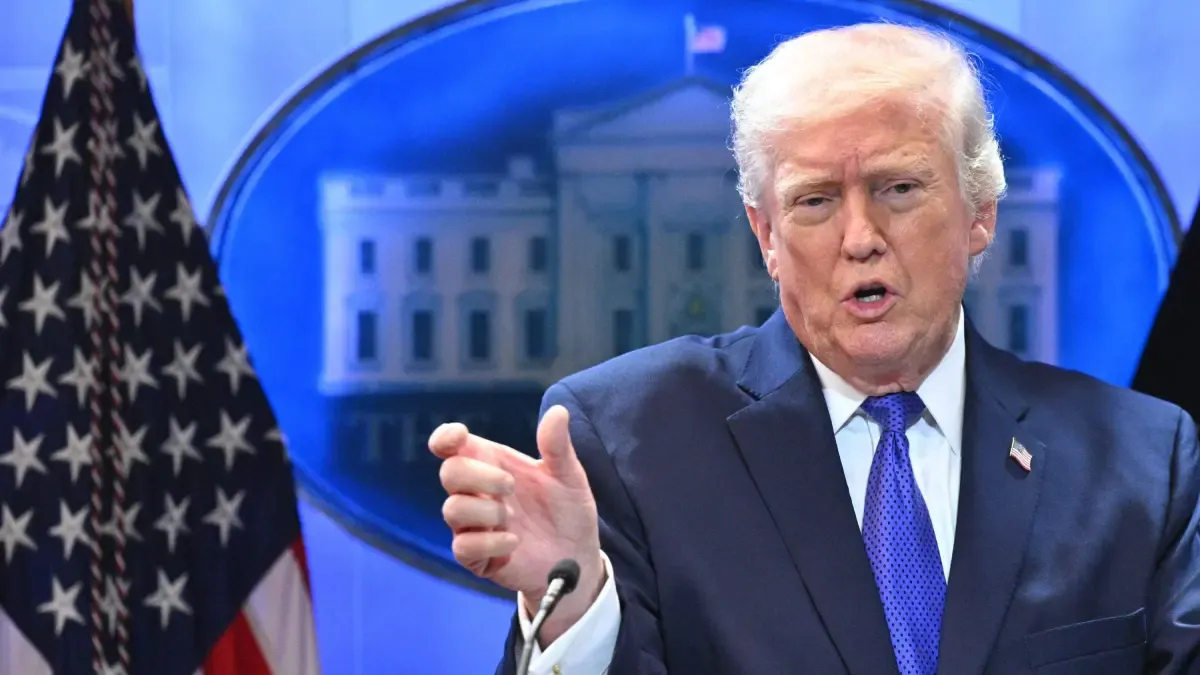
Trump Announces New 15% Global Tariff Following Supreme Court Setback opposition Opposition outlets depict Trump’s 15% global tariff as a confrontational response to a Supreme Court loss, using a legal loophole to bypass the ruling’s intent and heightening risks of economic disruption and trade wars. They stress that the move undermines institutional norms, invites further legal challenges, and alienates key trading partners. @El Colombiano
government-aligned Government-aligned outlets frame the tariff increase as a legitimate, time-limited maneuver under existing trade law that shows the president adapting to judicial constraints while still pursuing his trade agenda. They emphasize its potential to strengthen U.S. bargaining power and portray international criticism as manageable within ongoing negotiations. @AlbertoNews @Portafolio Donald Trump announced that the United States will raise its global import tariff rate from 10% to 15%, with the change framed as taking immediate effect and applying broadly to imports from all countries. Both opposition and government-aligned outlets agree that this move comes directly after a Supreme Court ruling that struck down or limited his previous tariff policy by finding that the earlier legal basis did not authorize the president to unilaterally impose such global tariffs. Coverage on both sides notes that Trump is now relying on a different provision, identified as Section 122 of the Trade Act of 1974, or an equivalent statute, which allows the executive to raise tariffs up to 15% for a period of up to 150 days without new congressional approval. Reports from both camps also mention that the policy shift has already elicited international reactions, with Canada calling the increased tariffs unjustified and France highlighting the functioning of U.S. checks and balances.
Shared context across opposition and government-aligned sources emphasizes that the Supreme Court played a central institutional role by constraining Trump’s initial tariff approach, forcing him to search for an alternative legal avenue. Both sides situate the new tariffs within the broader framework of U.S. trade law, explaining that temporary emergency or safeguard powers exist for presidents to adjust tariffs within defined limits and timelines, although the long-term viability and renewal of such measures remain uncertain. Outlets on both sides also note that this move affects not just a headline “global” base tariff but interacts with reciprocal tariffs negotiated with key partners and with additional country-specific measures directed at nations such as Mexico, Canada, Brazil, and India. The reporting converges on the idea that the decision is likely to generate political disputes at home and heightened trade tensions abroad, while underscoring that any durable change will ultimately depend on institutional checks, legal challenges, and potential legislative involvement.
Points of Contention
Legality and institutional respect. Opposition-aligned sources portray Trump’s use of Section 122 as a direct challenge to the Supreme Court, suggesting he is skirting the spirit of the ruling and stress-testing constitutional limits on executive trade powers. Government-aligned coverage instead frames the same move as a lawful adjustment within the bounds the Court itself clarified, emphasizing that the president is now operating under a statute that explicitly permits temporary tariff hikes. Opposition pieces highlight the risk of a constitutional clash and signal likely new lawsuits, while government-aligned outlets stress that this demonstrates the system working as designed, with the president adapting to judicial constraints.
Economic impact and risk. Opposition sources foreground potential economic fallout, warning of higher consumer prices, supply-chain disruptions, and retaliation that could hit U.S. exporters, especially given the across-the-board nature of the 15% global rate. Government-aligned outlets acknowledge uncertainty but tend to emphasize strategic leverage and bargaining power, presenting the tariff as a tool to extract better trade terms rather than as an automatic drag on growth. While opposition coverage stresses the potential for markets and businesses to face prolonged instability, government-aligned reporting more often suggests that any short-term pain is manageable and may be offset by stronger negotiating outcomes.
Motives and political framing. Opposition reporting largely characterizes the tariff hike as a politically driven escalation meant to save face after a judicial defeat, casting it as an act of defiance aimed at energizing Trump’s base rather than a carefully calibrated economic policy. Government-aligned sources are more likely to depict the move as a continuation of a broader trade agenda focused on fairness and reciprocity, downplaying the personal or retaliatory dimension vis-à-vis the Court. Opposition outlets emphasize the symbolism of defying a Supreme Court setback, whereas government-aligned outlets center messaging around reclaiming jobs, correcting trade imbalances, and showing toughness abroad.
International fallout and diplomacy. Opposition-aligned coverage highlights critical foreign reactions, using statements from Canada and concerns from other partners to argue that the policy isolates the United States and undermines alliances. Government-aligned reports, while noting criticism, tend to stress that some foreign leaders also expressed confidence in U.S. checks and balances and portray the backlash as a predictable but negotiable part of hard-nosed diplomacy. For opposition outlets, the tariff increase is another step toward trade conflict and reputational damage, while government-aligned outlets frame it as a necessary pressure tactic within ongoing, adjustable negotiations.
In summary, opposition coverage tends to interpret the new 15% global tariff as an overreach that defies the Supreme Court’s intent and threatens economic and diplomatic stability, while government-aligned coverage tends to present it as a legally grounded, strategic use of presidential trade powers aimed at strengthening U.S. leverage despite some foreseeable turbulence.
Story coverage
Write a comment