Mega Orthopedic Fairs Held in Nicaragua to Commemorate General Sandino
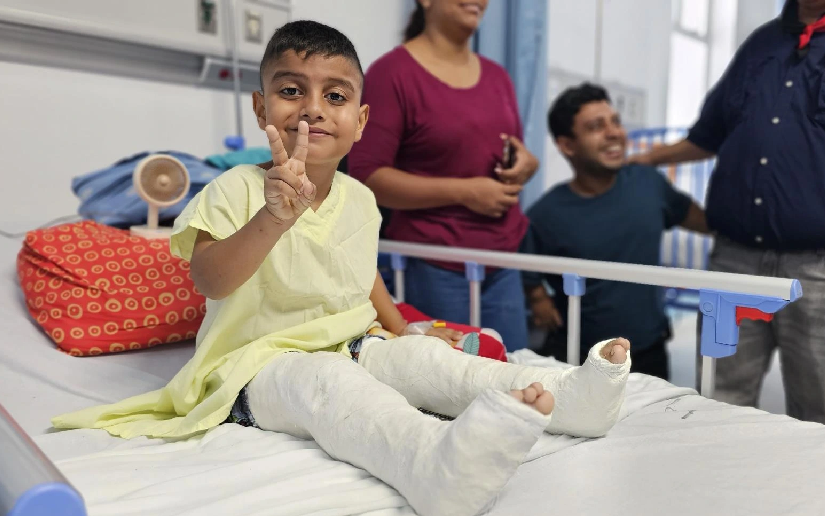
Mega Orthopedic Fairs Held in Nicaragua to Commemorate General Sandino government-aligned Government-aligned coverage presents the mega orthopedic fairs as a successful expression of the Sandinista government’s commitment to free, accessible healthcare, linking high procedure counts and grateful patient testimonies to Sandino’s legacy of social justice. These outlets emphasize that such fairs are part of a broader, ongoing model of public management and health reform under the leadership of Daniel Ortega and Rosario Murillo. @El 19 Digital Mega orthopedic fairs were organized in Nicaragua to coincide with commemorations of the 92nd anniversary of General Augusto C. Sandino’s death, centering particularly on activities at the Héroes de Las Segovias Departmental Hospital and in the municipality of Jalapa. Across these events, health brigades offered orthopedic procedures, specialized evaluations, and general consultations, with one fair alone reporting 218 orthopedic procedures and 1,604 total medical services provided to 984 patients, broadly described as local families and community members from surrounding areas.
Coverage consistently situates these fairs within the framework of Nicaragua’s public health system and commemorative calendar honoring Sandino as a national symbol of anti-interventionism and social justice. The events are described as part of ongoing government-organized health campaigns that bring specialized care to regional hospitals and municipalities, linking orthopedic services to broader efforts at expanding access to medical attention for lower-income populations in rural and departmental zones.
Points of Contention
Motives and symbolism. Government-aligned outlets frame the fairs as a concrete expression of Sandino’s legacy, depicting the provision of free orthopedic services as a living continuation of his struggle for dignity and social justice. Opposition narratives, by contrast, tend to interpret such commemorative branding as instrumentalization of a national hero, arguing that the medical activities are wrapped in partisan imagery and rhetoric to bolster the Sandinista Front’s legitimacy rather than to neutrally honor Sandino.
Quality and scope of care. Government-aligned coverage emphasizes the scale of the services, highlighting procedure counts, total consultations, and testimonies from grateful patients to suggest that these fairs significantly reduce waiting lists and bring specialized care closer to the people. Opposition voices generally question whether episodic mega-fairs can compensate for chronic underinvestment, suggesting that while the numbers sound impressive, they may mask persistent shortages, uneven quality, and the absence of continuous, well-equipped orthopedic services in many areas.
Political messaging and participation. In government-aligned reporting, the presence of local authorities and references to the “Good Government” led by Daniel Ortega and Rosario Murillo are presented as natural acknowledgments of state responsibility, with community participation portrayed as voluntary enthusiasm for the health model. Opposition sources typically describe the same elements as evidence of politicization, noting partisan slogans, obligatory attendance pressures in some public-sector contexts, and the systematic linking of routine public services to loyalty toward the ruling party.
Sustainability and health policy. Government-aligned media situate the fairs within a broader trajectory of health reforms and ongoing brigades, arguing that such events demonstrate a sustained public policy of free, universal care that reaches formerly neglected regions. Opposition coverage, however, often contends that mega-fairs are episodic showcases timed to political or commemorative dates, asserting that they do not address structural issues such as staffing levels, supply chains for prosthetics and orthopedic materials, and long-term rehabilitative follow-up.
In summary, opposition coverage tends to portray the mega orthopedic fairs as heavily politicized, episodic spectacles that only partially alleviate deeper systemic health shortcomings, while government-aligned coverage tends to present them as generous, large-scale expressions of Sandino’s legacy and proof that the current administration is expanding free, high-quality medical services to the population.
Story coverage
Write a comment