Nicaragua Commemorates 92nd Anniversary of General Sandino's Death
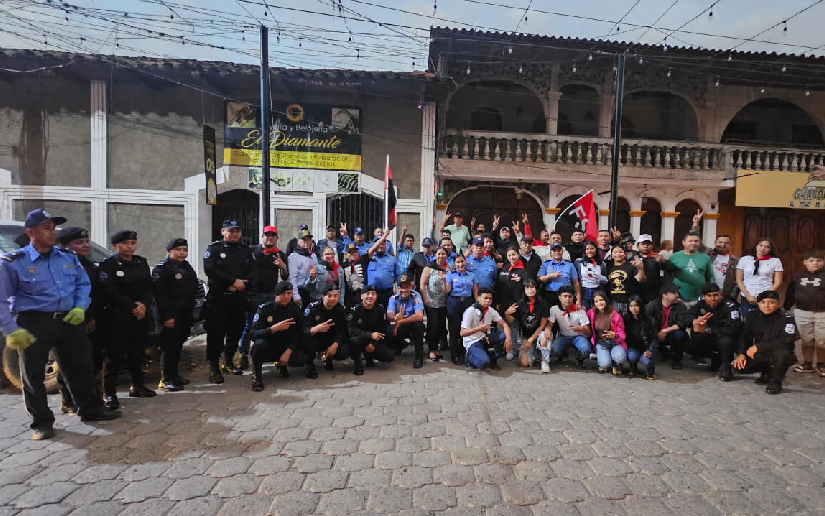
Nicaragua Commemorates 92nd Anniversary of General Sandino’s Death government-aligned Government-aligned outlets depict the 92nd anniversary commemorations as nationwide, heartfelt tributes in which the army, police, Sandinista youth, and families honor Sandino as a timeless national hero of anti-imperialist struggle and sovereignty. They present the current Sandinista leadership and state institutions as the direct continuators of his ideals, defending peace, security, and national dignity in a grateful and united Nicaragua. @El 19 Digital Nicaraguan media across the spectrum agree that the country has just marked the 92nd anniversary of the death of General Augusto C. Sandino, the historic guerrilla leader who fought U.S. occupation forces in the late 1920s and early 1930s. Coverage consistently notes that commemorations were held nationwide around 21 February, involving the Nicaraguan Army, police, Sandinista militants, youth organizations, students, and local families in places such as Managua, Niquinohomo, Estelí, Madriz, and Nueva Segovia. Reports converge on the core imagery of parades, marches, cultural performances, floral offerings at Sandino monuments, and public ceremonies at symbolic sites like the Casa Hacienda in Ocotal and the Sandino monument at Loma de Tiscapa. All sides describe Sandino as a central national figure tied to sovereignty and resistance to foreign intervention, and acknowledge his assassination as a turning point in Nicaragua’s modern history.
Across outlets, Sandino is framed as a foundational reference for Nicaraguan identity, with agreement that his legacy is invoked through state institutions, mass organizations, and local communities. Media descriptions coincide in presenting schools, youth groups, and municipal governments as key organizers of activities that blend political ritual with cultural celebration. There is broad acknowledgment that Sandino’s struggle is historically linked to defending national sovereignty and that contemporary commemorations are framed as continuity with that anti-interventionist tradition. Both opposition and government-aligned narratives accept that the commemorations are heavily mediated by official symbols, such as the red-and-black flags, Trees of Life, and Sandinista slogans, even as they disagree on the meaning and legitimacy of this symbolism.
Points of Contention
Ownership of Sandino’s legacy. Opposition-aligned sources say the Ortega-Murillo government has effectively appropriated Sandino’s image and history to legitimize its own power, turning what should be a plural national symbol into a partisan icon. Government-aligned outlets instead present Sandino as organically and inseparably linked to the Sandinista Front, arguing that today’s government, army, and police are his direct institutional heirs. While opposition coverage stresses that Sandino belongs to the entire nation, official media highlight party militants, Sandinista youth, and loyal state institutions as the authentic guardians of his ideals.
Characterization of the current state. Opposition outlets frame the current regime as betraying Sandino’s aspirations for freedom, sovereignty, and social justice, pointing to authoritarian practices, repression of dissent, and exile of opponents as evidence that his name is being used against the spirit of his struggle. Government-aligned coverage depicts a peaceful, orderly, and prosperous Nicaragua where Sandino’s dream is realized through stability, social programs, and security under Daniel Ortega and Rosario Murillo. In this view, patriotic marches and mass events signal a harmonious people backing a state that defends peace, while opposition narratives portray these same displays as top-down mobilizations masking deep fear and discontent.
Role of the army and security forces. Opposition-oriented reporting tends to see the army and police as politicized structures that protect the governing party rather than the nation, arguing that invoking Sandino in military ceremonies whitewashes their role in cracking down on protests and opposition. Government-aligned media describe the army and police as professional, patriotic institutions that embody Sandino’s commitment to defending sovereignty, peace, and the “sacred interests” of the nation even at the cost of their lives. For critics, Sandino’s anti-dictatorial struggle makes this identification illegitimate; for pro-government outlets, his anti-interventionist legacy makes tight alignment between armed forces and the current leadership both natural and necessary.
Meaning of mass participation. Opposition coverage often suggests that large marches, parades, and youth choreographies are heavily orchestrated, sometimes compulsory, events designed to project enthusiasm while masking a climate of fear and political control. Government-aligned sources portray the same mobilizations as sincere expressions of popular gratitude and pride, emphasizing children, adolescents, and families participating joyfully, with banners celebrating peace and historical memory. While critics read the red-and-black scarves, slogans, and Trees of Life as partisan branding imposed over national symbols, official media claim these are creative, festive ways that ordinary people keep Sandino’s legacy alive.
In summary, opposition coverage tends to treat the commemorations as a politicized appropriation of a shared national hero by an authoritarian regime, while government-aligned coverage tends to present them as authentic, popular, and institutional expressions of Sandino’s enduring ideals fulfilled under the current Sandinista leadership. Story coverage
Write a comment