"Don Orlando" University Center Inaugurated in Niquinohomo, Nicaragua
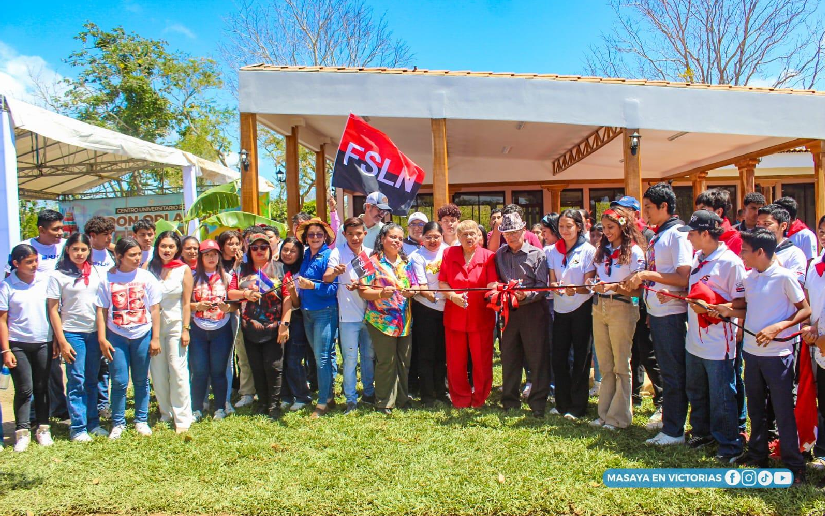
“Don Orlando” University Center Inaugurated in Niquinohomo, Nicaragua government-aligned Government-aligned coverage depicts the Don Orlando Regional University Center as a major expansion of free public higher education, bringing agro-industrial and veterinary programs to 460 local students without requiring them to leave Niquinohomo. It presents the inauguration, tied to Sandino symbolism, as proof that revolutionary ideals are being realized through practical educational and rural development projects. @El 19 Digital The Don Orlando Regional University Center has been inaugurated in the municipality of Niquinohomo, Masaya, as a new higher education facility associated with the National Agrarian University. Coverage from both sides agrees that the center is designed to expand local access to university-level, agriculture-oriented studies so that young people do not have to migrate to other cities to continue their education. Government-aligned sources specify that the campus can accommodate around 460 students, offers agro‑industrial and veterinary careers and related technical training, and was opened in a public ceremony attended by local and national authorities. Both perspectives acknowledge that the name “Don Orlando” and the inauguration event are embedded in broader symbolic references to national history and rural development.
Shared context across coverage emphasizes that this project fits into a larger pattern of expanding regional university centers outside Managua, tied institutionally to the National Agrarian University and framed as part of a push for inclusive rural development and specialized agricultural training. There is broad agreement that agricultural modernization, food production, and professionalization of rural youth are key policy goals, and that the new center is intended to serve students from Niquinohomo and surrounding municipalities. Both perspectives recognize that this initiative aligns formally with the government’s stated strategy of decentralizing higher education and strengthening public, tuition‑free offerings in technical and productive fields. There is also consensus that the center’s programs are meant to articulate with national development plans in agriculture, livestock, and agro‑industry.
Points of Contention
Significance and purpose. Government-aligned outlets frame the Don Orlando center as a major milestone in guaranteeing free, quality higher education and as concrete evidence that public policies are benefiting rural families, highlighting numbers, programs, and celebratory imagery. Opposition-aligned commentary, where it appears, tends to treat the same project as primarily a political display, arguing that its educational value is overstated and that it serves propaganda needs more than long-term structural change. While official coverage stresses opportunity and transformation for local youth, critical voices question whether resources, staffing, and academic rigor will match the rhetoric.
Political symbolism and ideology. Government-aligned coverage openly celebrates the delivery of a replica of General Sandino’s birthplace and links the center to revolutionary ideals, presenting it as a continuation of historic struggles for dignity and social justice. Opposition-aligned sources describe such symbolism as instrumentalization of history, suggesting that constant revolutionary references are used to mask present-day authoritarian practices and co‑opt national symbols. Thus, where official media see patriotic continuity and ideological coherence, opposition narratives see partisan branding of public infrastructure and the blurring of state, party, and educational space.
Governance and institutional autonomy. Government-aligned media emphasize the leadership of the National Agrarian University and portray coordination with local authorities as an efficient model of state-led development, without raising concerns about academic or institutional independence. Opposition-aligned outlets, in contrast, tend to question the autonomy of public universities in Nicaragua and suggest that new regional centers may deepen political control over curricula, staffing, and student life. For official narratives the center embodies a responsive, inclusive state; for critical narratives it risks entrenching centralized, party-aligned oversight in higher education.
Socioeconomic impact and priorities. Government-aligned coverage highlights the center as a lever for social mobility, promising direct benefits to low-income rural families through free degrees in productive sectors and implying that local economies will gain skilled professionals. Opposition-aligned sources cast doubt on the real employment and income gains graduates can expect, arguing that macroeconomic conditions, underinvestment, and limited private-sector absorption may leave many qualified youth underemployed. As official outlets foreground immediate access and enrollment capacity, critical reporting tends to situate the project within broader questions about economic stagnation, migration pressures, and whether similar investments might be needed in other regions or sectors.
In summary, opposition coverage tends to treat the Don Orlando center as a politically instrumental project whose educational and socioeconomic benefits may be limited or overstated, while government-aligned coverage tends to present it as a flagship achievement of free, inclusive higher education and a living expression of revolutionary development ideals. Story coverage
Write a comment