Winter Storm Puts 56 Million People Under Alert in Northeastern US
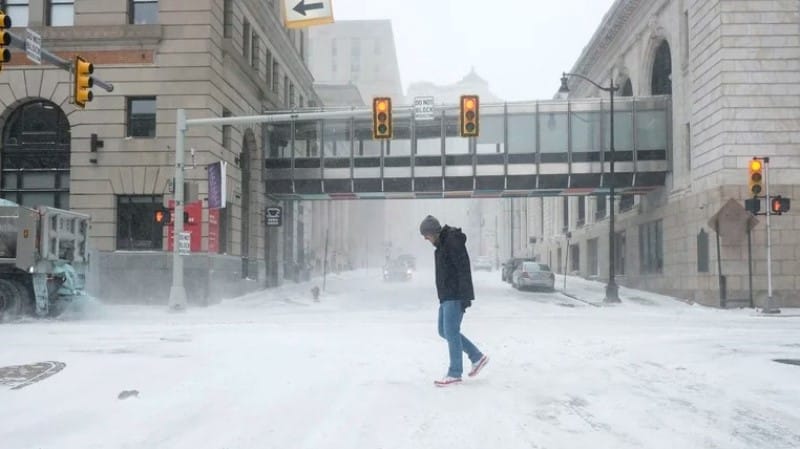
Winter Storm Puts 56 Million People Under Alert in Northeastern US opposition Opposition outlets portray the winter storm as an unusually severe threat that could paralyze the Northeast, especially New York City, underscoring large snowfall totals, dangerous winds, and major disruptions to travel and daily life. Their framing implies that infrastructure and government preparedness are fragile, with tens of millions of people at risk of significant disruption despite advance warnings. @100noticias.tv
government-aligned Government-aligned outlets frame the storm as a serious but anticipated weather event affecting multiple regions, from the Northeast and Mid-Atlantic to mountain areas, with authorities issuing timely alerts and discouraging travel. They stress the role of forecasting agencies and coordinated safety measures, presenting the storm as part of a broader, managed pattern of winter hazards rather than a singular systemic crisis. @AlbertoNews Approximately 56 million people in the northeastern United States are under winter storm alerts, with weather authorities warning of a powerful system bringing heavy snowfall, strong winds, and dangerous travel conditions. Both opposition and government-aligned outlets report that New York City and the broader New York area are under blizzard warnings affecting roughly 14 million residents, with forecasts of substantial snow accumulations that could disrupt daily life and transport through at least Monday. The National Weather Service is cited across the coverage as the primary source for projections, including expectations of up to roughly 45 centimeters of snow in some locations, high wind gusts, and the potential for widespread delays or cancellations in air and ground travel.
Shared context in both media camps emphasizes that this storm is part of a broader pattern of severe winter weather impacting large population centers in the Northeast and Mid-Atlantic, as well as mountainous regions such as the Appalachians. Reporting converges on the roles of federal and local agencies, especially the National Weather Service and municipal emergency management offices, in issuing warnings, coordinating responses, and advising residents to avoid nonessential travel. Both sides place the event within the seasonal backdrop of winter storm systems that can strain infrastructure, emergency services, and transportation networks, while also highlighting the heightened risk to vulnerable communities, commuters, and recreational areas, including ski resorts in other affected states.
Points of Contention
Severity framing and geographic focus. Opposition outlets stress the storm’s potential to “paralyze” the Northeast, highlighting dramatic language, higher-end snowfall estimates, and the exceptional nature of New York City’s first blizzard warning in nearly a decade, sometimes at the expense of broader regional nuance. Government-aligned coverage adopts a more measured tone, spreading attention across the Mid-Atlantic, Appalachians, and major cities rather than centering primarily on New York, and focuses on official forecast ranges rather than worst-case numbers. Both mention dangerous travel, but opposition reports tend to frame it as near-total shutdown, while government-aligned stories emphasize targeted disruptions and official advice.
Government preparedness and institutional competence. Opposition sources implicitly question readiness by focusing on how easily the region may become “paralyzed,” suggesting that infrastructure and contingency planning are insufficient for a storm that had been well-forecast. They highlight the possibility of overwhelmed transport systems and emergency services, inviting readers to infer shortcomings in government planning. Government-aligned outlets, by contrast, underscore the proactive role of agencies like the National Weather Service and local authorities, portraying the alerts and travel advisories as evidence of timely, coordinated action rather than vulnerability.
Risk scope and public safety narrative. Opposition coverage concentrates on urban centers in the Northeast, especially New York, presenting a narrative of densely populated areas facing acute disruption and elevated danger from snow and wind alone. Government-aligned reports widen the risk lens to include additional hazards, such as the separate avalanche incident in California impacting ski resorts, and portray the storm as one piece of a broader national winter risk environment. As a result, opposition stories read as an intense, localized emergency for tens of millions, while government-aligned stories frame a multi-regional, multi-hazard scenario in which authorities are actively managing diverse threats.
Causal framing and longer-term implications. Opposition outlets lean toward describing the storm as an extreme event straining systems, implying that recurring severe weather exposes structural weaknesses without explicitly crediting current reforms or investments. Government-aligned media more often integrate the storm into an ongoing narrative of institutional adaptation, hinting that improved forecasting, alert systems, and inter-agency coordination are mitigating impacts even as hazards grow more complex. Thus, opposition coverage hints at a pattern of recurring stress tests the state struggles to pass, whereas government-aligned coverage suggests the same pattern is prompting gradual improvements in resilience.
In summary, opposition coverage tends to highlight the storm’s paralyzing potential, systemic strain, and the vulnerability of major population centers, while government-aligned coverage tends to emphasize institutional responsiveness, broader geographic and hazard context, and the role of official warnings and coordination in managing public risk. Story coverage
Write a comment