LATAM Flight Aborts Takeoff in Bogotá After Helicopter Enters Runway
LATAM Flight Aborts Takeoff in Bogotá After Helicopter Enters Runway opposition Opposition-aligned outlets portray the runway incursion as a frightening near-tragedy that reveals systemic problems in airspace management, congestion, and civil–military coordination at El Dorado. They use the incident to criticize current authorities and argue for stronger accountability and structural safety reforms. @El Colombiano
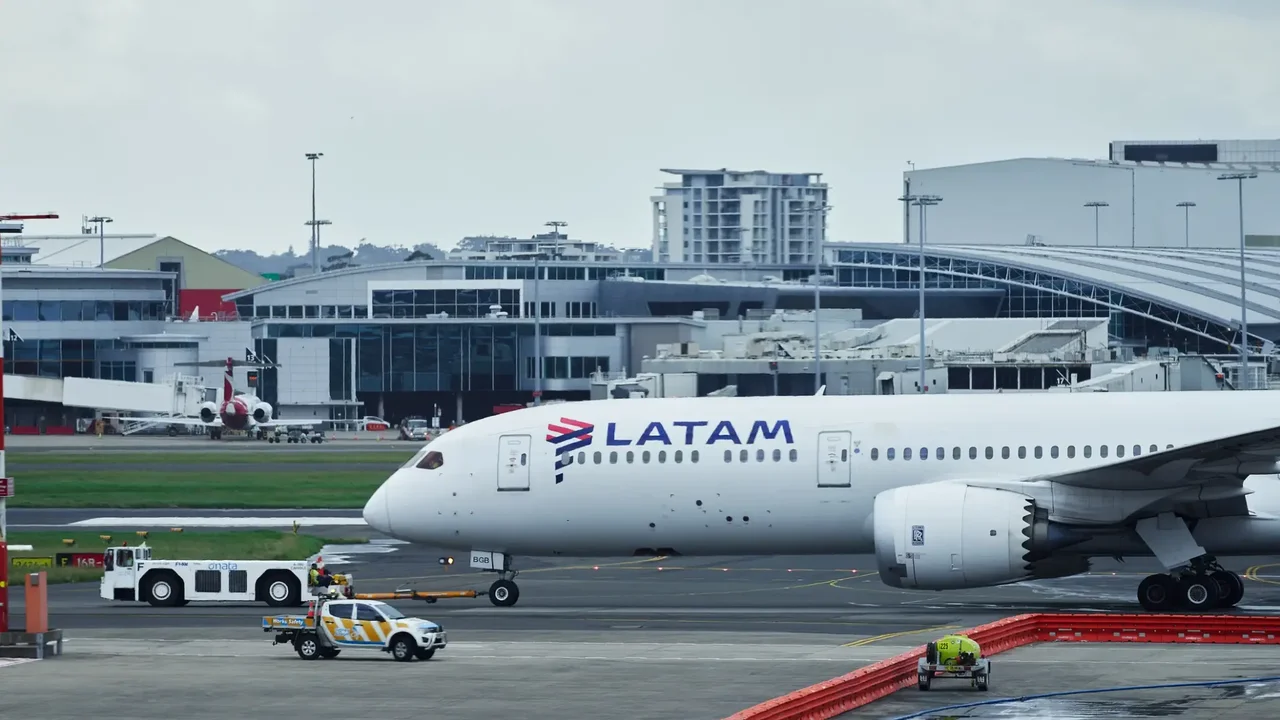
government-aligned Government-aligned outlets describe the event as a serious but controlled incident in which pilots and safety systems worked as intended, preventing injuries despite abrupt braking and tire damage. They emphasize the professionalism of aviation and military institutions and frame the investigation as a normal step rather than proof of deep institutional failure. @Noticias RCN A LATAM Airlines Colombia flight from Bogotá to San Andrés with 157 passengers aborted takeoff at El Dorado airport when a Colombian Air Force helicopter entered its path on the runway during the final acceleration phase. Both opposition and government-aligned outlets agree the pilots applied maximum braking, causing the aircraft’s wheels and landing gear tires to overheat and deflate, but no injuries were reported and all passengers were evacuated safely and later reaccommodated on other flights. Coverage on both sides notes that the incident occurred on the runway itself, involved a Colombian Aerospace/Air Force helicopter, and is now the subject of a formal investigation by the relevant aviation authorities.
Across the spectrum, reports reference Colombia’s civil aviation and military aviation coordination frameworks, highlighting existing air traffic control procedures at Bogotá’s El Dorado as the institutional backdrop. Both opposition and government-aligned media describe the event as a serious runway incursion that could have had catastrophic consequences, situating it within broader concerns about operational safety and runway congestion at one of Latin America’s busiest hubs. They also converge on the idea that technical safety mechanisms and crew training functioned as intended in an emergency, preventing an accident, while emphasizing that the official investigation will clarify precise causes, possible human error, and any needed procedural reforms.
Points of Contention
Responsibility and blame. Opposition-aligned outlets frame the incident as evidence of systemic failures in air traffic control and civil–military coordination, hinting at mismanagement or lax oversight by current authorities. Government-aligned coverage, while acknowledging the gravity of the event, tends to emphasize that the crew responded correctly and that investigations are routine after such episodes, thereby downplaying systemic culpability. The former stresses how a military helicopter could enter an active takeoff path as a symptom of deeper institutional problems, whereas the latter focuses on individual procedural breakdowns still under review.
Tone and risk characterization. Opposition sources highlight the “tremendous scare” and underscore that the situation was potentially catastrophic, often using emotionally charged language to convey the danger to passengers. Government-aligned media use more measured wording, describing a “forced” or “abrupt” braking maneuver but quickly emphasizing that the safety systems worked and there were no injuries. As a result, opposition coverage comes across as alarming and critical, while government-aligned reporting presents the same facts in a calmer, more technocratic tone.
Institutional performance and reforms. In opposition narratives, the episode is linked to recurring concerns about congestion, underinvestment, and poor planning at El Dorado, implicitly questioning whether the government and aviation regulators have adequately addressed long-standing safety warnings. Government-aligned outlets tend to isolate the event as an operational incident within otherwise robust safety and coordination frameworks, stressing the professionalism of the Air Force and aviation authorities. Opposition coverage uses the investigation as a springboard to demand accountability and potential reforms, while government-aligned reports mainly portray it as part of standard safety oversight.
Portrayal of the military’s role. Opposition-aligned media subtly question the priority and coordination given to military aircraft movements in shared airspace, suggesting that preferential treatment or unclear protocols may endanger commercial flights. Government-aligned coverage defends or normalizes the presence of the Air Force helicopter on or near the runway, implying that it was operating under authorized procedures pending clarification of what went wrong. Thus, opposition reports treat the military’s runway incursion as a central problem, while government-aligned stories cast it as one element in a broader operational scenario still being clarified.
In summary, opposition coverage tends to magnify the incident as symptomatic of broader safety and governance failures requiring strong accountability, while government-aligned coverage tends to contextualize it as a serious but contained operational mishap within generally functioning institutions.
Story coverage
Write a comment