Nicaragua to Award New 'Cardinal Miguel Obando' Medal for Peace and Reconciliation
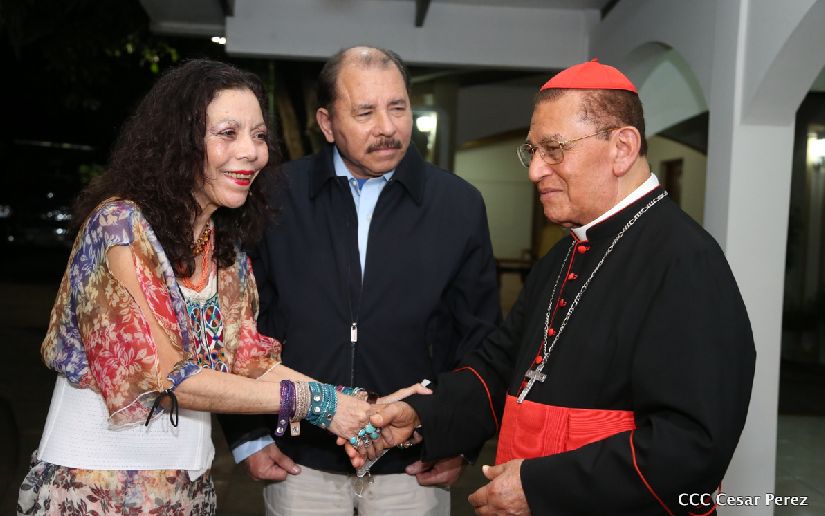
Nicaragua to Award New ‘Cardinal Miguel Obando’ Medal for Peace and Reconciliation government-aligned Government-aligned coverage depicts the “Cardinal Miguel Obando” medal as a sincere state honor that celebrates individuals who have strengthened peace in Nicaragua and pays homage to Cardinal Obando’s legacy as a figure of reconciliation. These outlets emphasize the positive symbolism of awarding the medal on National Reconciliation Day, presenting it as evidence of the country’s unity and spiritual commitment to peace under the current leadership. @@73cf…743m @@22zr…aud6 The Nicaraguan government has announced the creation and first-time awarding of a new “Cardinal Miguel Obando” (also referred to as “Medalla de la Reconciliación y la Paz Cardenal Miguel Obando” or “medalla ‘Cardenal Miguel’”) medal for peace and reconciliation. According to official statements cited broadly, Vice President Rosario Murillo said the decoration will be awarded on February 2, a date the government has designated as National Reconciliation Day, and it is intended to honor individuals deemed to have contributed to strengthening peace in Nicaragua, in homage to the late Cardinal Miguel Obando, who is widely described as a figure associated with peace and reconciliation.
Across coverage, there is agreement that this initiative is tightly linked to the government’s effort to symbolically frame February 2 as a national day focused on reconciliation, with the medal serving as a state-sanctioned recognition of purported peacemaking roles. Reports from both sides acknowledge that the decoration is part of a broader narrative in which the Ortega–Murillo administration invokes religious symbolism, the legacy of Cardinal Obando, and institutional language about peace and unity to structure public rituals, national holidays, and state-sponsored commemorations.
Points of Contention
Meaning of the medal. Government-aligned outlets portray the “Cardinal Miguel Obando” medal as a sincere state tribute that celebrates national harmony and honors those who have strengthened peace, emphasizing Cardinal Obando as a unifying figure of reconciliation. Opposition-aligned sources instead frame the medal as a political instrument or propaganda device, describing it as a way for the Ortega–Murillo regime to claim moral authority and co-opt religious symbols while facing deep internal dissent. While officials speak of gratitude and recognition, critical coverage stresses that the award serves primarily to reinforce the government’s narrative of being the guardian of peace.
Use of religious symbolism. Government-aligned media highlight the medal as an homage to Cardinal Miguel Obando’s legacy as the “Cardinal of Peace and Reconciliation,” presenting the state as upholding Christian values and continuity with his pastoral work. Opposition-oriented reports emphasize the contradiction between this religiously framed award and the regime’s broader conflict with the Catholic Church, arguing that the government selectively appropriates religious figures to validate its rule. Thus, pro-government narratives foreground reverence and continuity, whereas opposition narratives see instrumentalization and hypocrisy in the invocation of Obando’s name.
Context of church persecution. In government-aligned coverage, the broader context of church–state relations and reports of persecution of clergy are minimized or omitted, focusing instead on the positive message of peace and the celebratory nature of National Reconciliation Day. Opposition-aligned outlets foreground the Open Doors report and similar documentation, describing Nicaragua as a place of extreme Christian persecution characterized by surveillance, intimidation, imprisonment, and confiscation of church property. For critics, the medal is therefore presented against a backdrop of arrests and expulsions of clergy, making the award appear cynical, whereas official narratives detach the initiative from these conflicts and cast it as purely commemorative.
Framing of National Reconciliation Day. Government-aligned reporting presents February 2 as a unifying national holiday that institutionalizes peace and reconciliation, linking the new medal to a broader process of healing and stability under the current leadership. Opposition coverage, by contrast, questions the authenticity of this framing, arguing that declaring a reconciliation holiday does not reflect the lived reality of political repression, exiles, and curtailed freedoms. As a result, state media describe the holiday and medal as evidence of social cohesion and progress, while critical outlets depict them as symbolic cover for continued authoritarian practices.
In summary, opposition coverage tends to portray the new Cardinal Miguel Obando medal and National Reconciliation Day as symbolic tools that mask or contradict ongoing persecution of the Catholic Church and political repression, while government-aligned coverage tends to present the medal as a genuine expression of gratitude, religious homage, and national peace-building centered on the legacy of Cardinal Obando. Story coverage nevent1qqsvdcy8guvj8ltwvsszyt74mqnz8rmh8ddnef9qdce6tupp0mwls6qgarmsz nevent1qqsd3ujwwxp7f9pzdk08w435ye9k3pnjs7jw7nwuhjmhsp7j8qhz9xcq97yvv
Write a comment